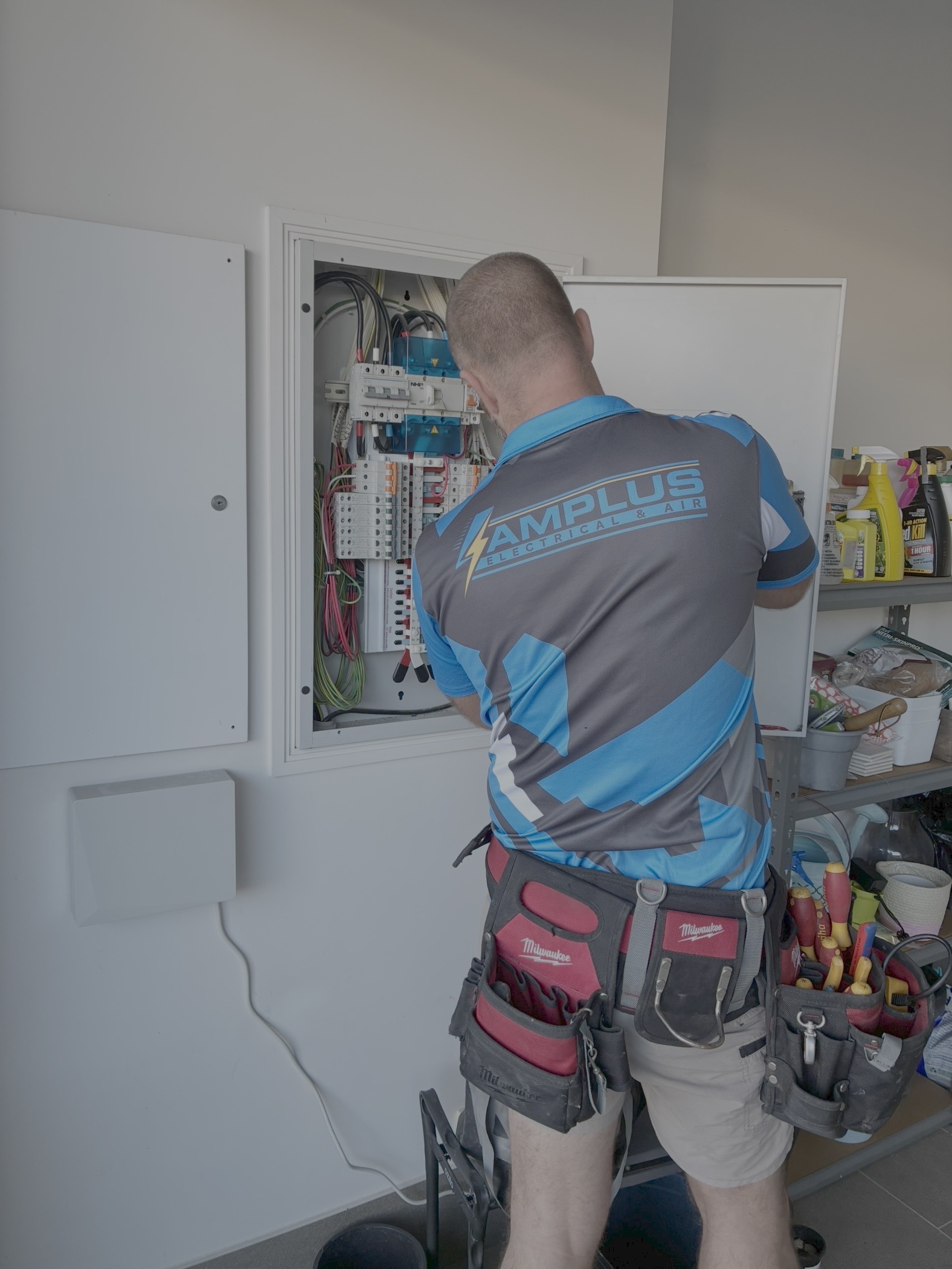
Signs Your Switchboard Needs Replacing
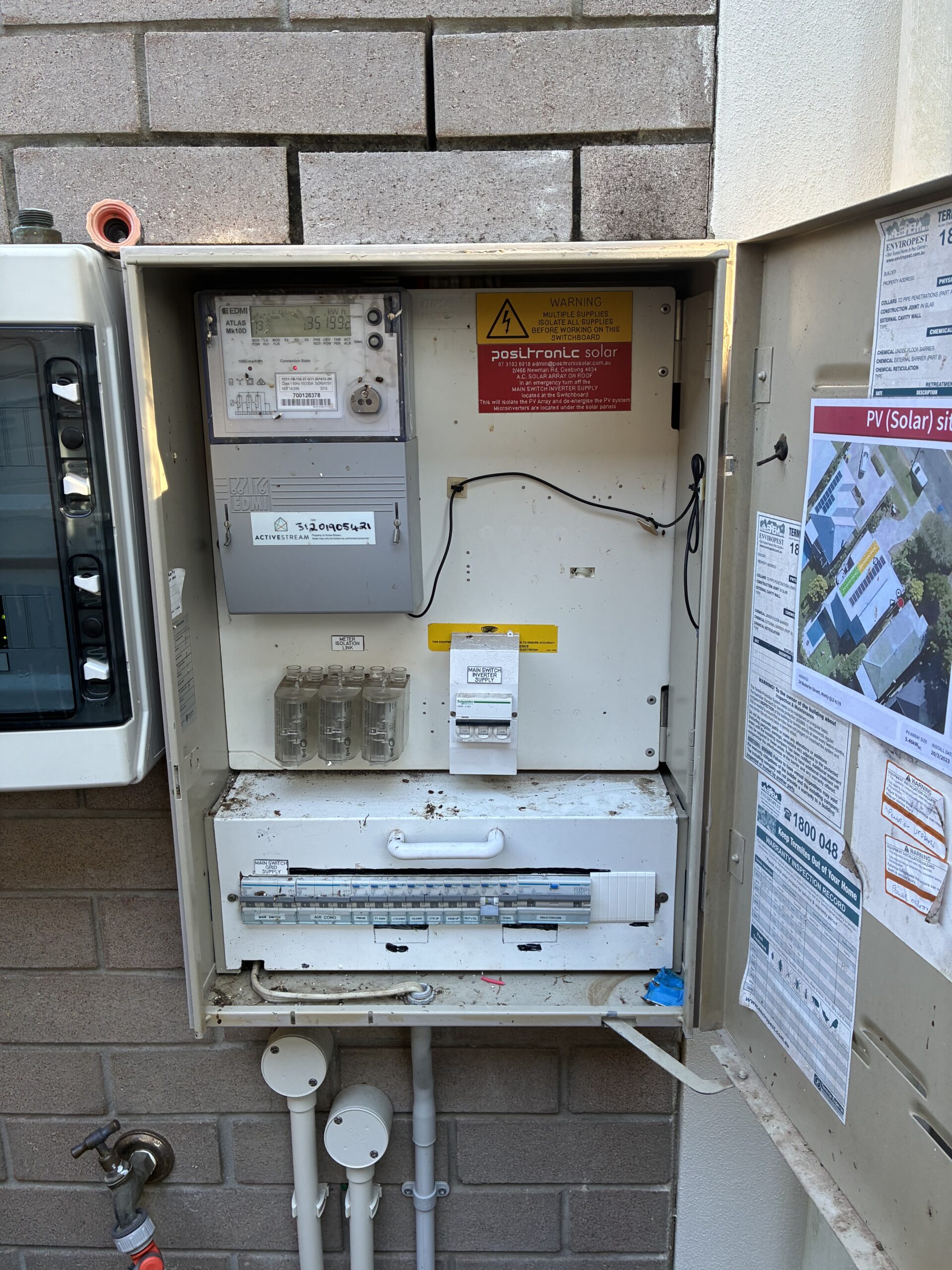
Ceramic fuses, tripping breakers, burning smells — 10 real warning signs your switchboard needs replacing, and why ignoring them is dangerous.
The short version: If your switchboard has ceramic fuses, breakers keep tripping, you smell burning, or your home is 25+ years old without an upgrade, your switchboard likely needs replacing. Ignoring these signs risks electrical fires, shock hazards, and invalidated insurance. A switchboard upgrade in Brisbane costs $800-$1,800 and takes 3-5 hours. Don’t wait for an emergency — book an inspection with a licensed electrician. If you’re unsure whether your situation qualifies as an emergency, our electrical emergency guide explains exactly when to call immediately vs. when to schedule a regular appointment.
If your switchboard still has ceramic fuses, keeps tripping, has no safety switches, or shows signs of heat damage, it likely needs urgent attention. If you need a complete guide on the upgrade process, see our switchboard upgrade guide. For many Brisbane homes, especially older properties, the switchboard is the weak link that stops the whole electrical system from being safe, compliant, or ready for modern loads like air conditioning, induction cooking, and EV charging. If you’re comparing quotes for a new cooling system, our licensed Brisbane air conditioning installers guide explains what a proper install looks like and why the electrical side matters just as much as the unit itself. If you’re costing up a new split or ducted system, our Brisbane air conditioning installation cost guide explains where switchboard upgrades and dedicated circuits affect the final install price. If you’re experiencing electrical faults, see our electrical fault finding cost guide for pricing. An outdated or failing switchboard isn’t just inconvenient. It’s a genuine safety hazard. Electrical fires, shock risks, and insurance complications can all stem from a switchboard that’s past its prime.
📖 Source: WorkSafe Queensland — Electrical safety
Here are the warning signs Brisbane homeowners — especially across Capalaba, Alexandra Hills, and the Redlands — should watch for.
1. Your Switchboard Still Has Ceramic Fuses
This is the biggest red flag. If your switchboard has old ceramic fuse holders with rewirable fuse wire, it’s seriously outdated. These were standard in homes built before the 1980s, but they offer nowhere near the protection of modern circuit breakers. Here’s why ceramic fuses are a problem:
- They don’t trip — they blow. When a circuit overloads, the fuse wire melts. You then have to manually replace it. If the wrong gauge wire is used (which happens often), it creates a fire risk.
- No RCD protection. Ceramic fuse boards can’t accommodate safety switches (RCDs). That means no protection against electric shock.
- They can’t handle modern loads. Air conditioning, EV chargers, home offices, and entertainment systems draw far more power than these old boards were designed for.
If you still have ceramic fuses, a switchboard upgrade should be your top priority. This isn’t a “nice to have” — it’s a safety essential.
If your home still has ceramic fuses, it’s not just outdated — it’s a genuine safety risk. Our ceramic fuse box upgrade guide explains why they’re dangerous and what a full replacement costs in Brisbane.
For a comprehensive electrical safety inspection at $199, see our electrical safety inspection cost guide. For more on signs your switchboard needs replacing, see our safety switch keeps tripping guide.
2. Circuit Breakers Keep Tripping
The occasional trip is normal. That’s what circuit breakers are designed to do — cut power when something goes wrong. However, if the same breaker trips regularly, there’s an underlying issue. Common causes include:
- Overloaded circuits. Too many appliances drawing power from a single circuit. Power fluctuations can also cause smoke alarms to beep — see our smoke alarm beeping guide for what each chirp means. This is especially common in older Brisbane homes where the kitchen, lounge, and bedrooms share circuits.
- Faulty appliances. A single faulty appliance can cause repeated trips. Try unplugging devices one at a time to isolate the culprit.
- Wiring faults. Damaged or deteriorating wiring behind walls can cause intermittent shorts. This needs professional fault finding to diagnose.
- Undersized switchboard. Your home’s electrical demands may have outgrown your switchboard’s capacity. Adding air conditioning, a home EV charger, or a granny flat can push an older board past its limits.
If you’re resetting breakers more than once a month, get a licensed electrician to investigate. Frequent tripping is your switchboard telling you something is wrong.
3. You Don’t Have Safety Switches (RCDs)
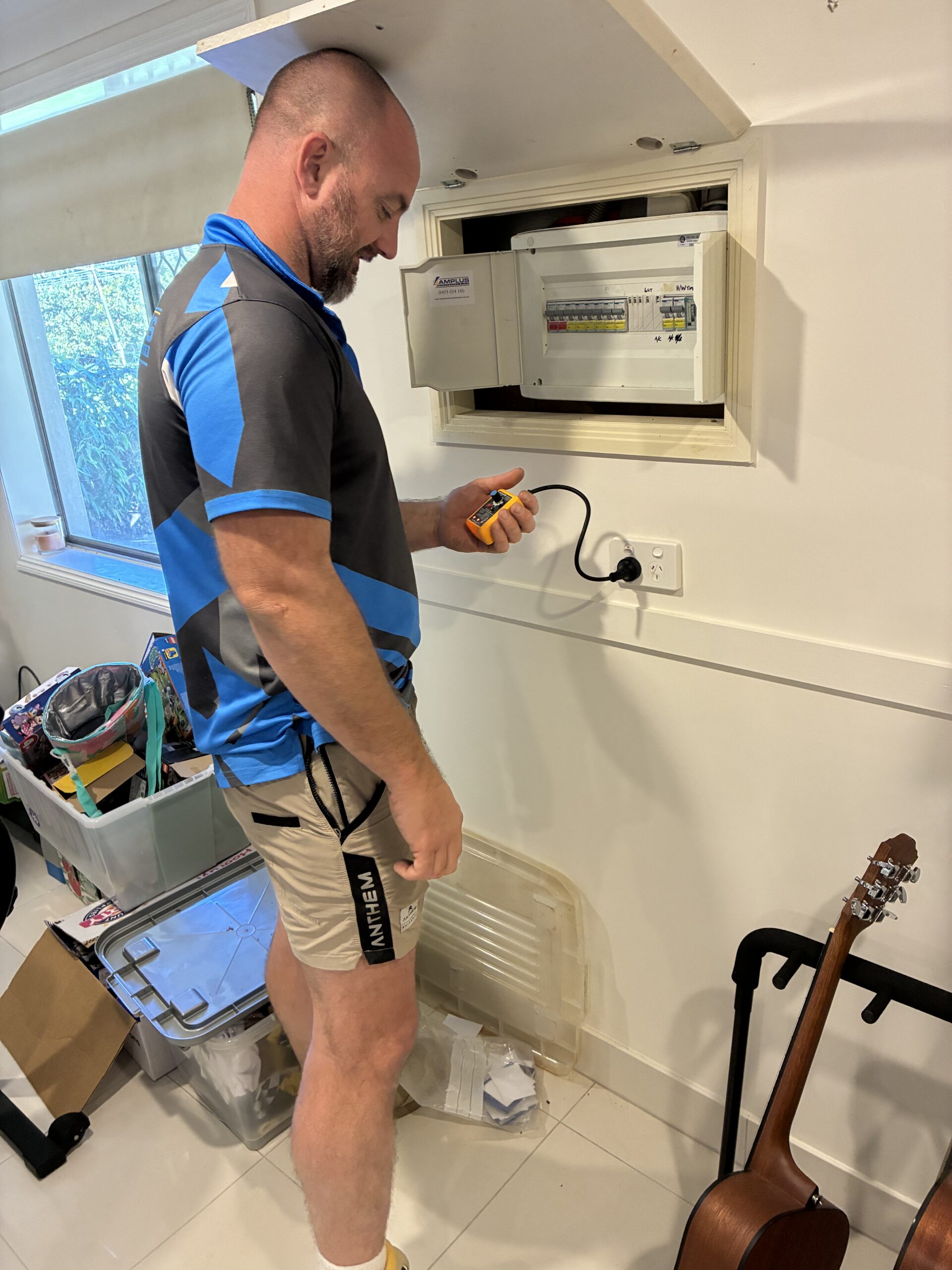
Safety switches — also called RCDs (Residual Current Devices) — are life-saving devices. They detect current leaking to earth, which happens when someone gets an electric shock or when faulty wiring creates a hazard. When triggered, they cut power within 30 milliseconds. That speed saves lives. Under Queensland law, all homes must have safety switches on power and lighting circuits. In fact, the 2027 electrical safety deadline is pushing many homeowners to check their overall compliance — and switchboards are often the first thing that needs attention. If your switchboard doesn’t have RCDs on every circuit, you need an upgrade. It’s not optional — it’s a legal requirement and a critical safety measure. Learn more about safety switch installation and what’s required. See our safety switch installation cost guide for Brisbane pricing and what’s included.
4. Burning Smell or Visible Scorch Marks
This is an emergency. If you notice a burning smell near your switchboard, or you can see scorch marks, discolouration, or melted plastic on any components — act immediately. Here’s what to do:
- Turn off the main switch at the switchboard
- Do not touch any damaged components
- Call a licensed electrician immediately
- Do not turn the power back on until it’s been inspected
Scorch marks and burning smells indicate overheating. This can be caused by loose connections, corroded terminals, or overloaded circuits. Left unchecked, it can lead to an electrical fire. This is one of the most dangerous signs on this list — don’t ignore it.
5. Buzzing, Crackling, or Humming Sounds
A properly functioning switchboard should be completely silent. If you hear any of these sounds coming from your switchboard, something is wrong:
- Buzzing — usually indicates loose connections or a failing breaker
- Crackling — suggests arcing, where electricity jumps across a gap. This is a fire risk.
- Humming — can indicate an overloaded circuit or a problem with the main supply
Don’t wait to see if the noise stops. Any sound from your switchboard warrants a professional inspection. These issues tend to get worse, not better.
6. Your Home Is 25+ Years Old and Never Been Upgraded
If your home was built before 2000 and the switchboard has never been upgraded, there’s a strong chance it doesn’t meet current Australian Standards. Consider how much has changed since your home was built:
- Air conditioning is now standard in most Brisbane homes
- Home offices with multiple computers and monitors are common
- Entertainment systems, gaming setups, and smart home devices draw constant power
- EV chargers require dedicated high-power circuits
- Solar systems and battery storage need compatible switchboards
Older switchboards were designed for a fraction of today’s electrical demand. Even if yours seems to be working, it may be operating beyond its safe capacity. Homes across Capalaba, Alexandra Hills, Cleveland, and Thornlands commonly have original switchboards from the 1980s and 1990s. If that sounds like your home, it’s time for an assessment.
7. You Can’t Run Multiple Appliances at Once
Does running the air conditioning and the kettle at the same time trip a breaker? Can you not use the microwave and the toaster together without losing power? This means your switchboard — or your wiring — can’t handle the load. It’s a common problem in older Brisbane homes where the original electrical system was designed for much lower power consumption. The fix is usually a combination of a switchboard upgrade and additional circuit installation. A modern switchboard with properly distributed circuits means you can run your home without playing “electrical Tetris.”
8. You’re Relying on Power Boards and Double Adaptors
If every room in your house has power boards daisy-chained from a single outlet, your home doesn’t have enough power points — and your switchboard may not have enough circuits to support more. Consider adding more power points to reduce the load on individual circuits. Power boards and double adaptors are a common workaround, but they’re not a permanent solution. They increase the load on existing circuits, create tripping hazards, and raise the risk of overheating. A switchboard upgrade combined with additional power point installation solves this properly.
9. Flickering or Dimming Lights
Lights that flicker or dim when you turn on other appliances are a sign of voltage fluctuation. This often points to:
- Overloaded circuits sharing too many devices
- Loose connections within the switchboard
- Aging wiring that can’t maintain stable voltage
- A switchboard that’s at or beyond its rated capacity
One common cause of circuit overload is outdated halogen downlights. Each halogen downlight draws 50W of power, while modern LED alternatives use just 8-10W for the same light output. If you’re experiencing flickering lights alongside frequent breaker trips, upgrading from halogen to LED can significantly reduce your circuit load. Our halogen vs LED downlights technical guide explains the power consumption differences in detail.
While the occasional flicker during a storm is normal, consistent flickering during everyday use needs investigation. It can damage sensitive electronics over time and indicates your electrical system is under strain. For a complete breakdown of what you should expect to pay for electrical work in 2026, see our comprehensive guide to electrician costs in Brisbane. One quick win that reduces circuit load: swapping halogen downlights for LED lighting upgrades. LEDs use 80% less power, which takes pressure off aging wiring and can help with flickering issues while you’re sorting the switchboard.
10. Your Insurance Company Requires an Upgrade
This one catches many homeowners off guard. Some home insurance policies now require that your electrical system meets current standards. If your switchboard has ceramic fuses, no safety switches, or visible damage, your insurer may:
- Increase your premium
- Require an upgrade as a condition of renewal
- Reduce or reject a claim related to electrical fire or damage
It’s worth checking your policy. The cost of a switchboard upgrade ($800–$2,500 for most Brisbane homes) is a fraction of what you’d lose if a claim is denied. In this way, a switchboard upgrade is as much a financial decision as a safety one.
What Does a Switchboard Upgrade Cost in Brisbane?
The cost depends on your home’s size, the condition of your existing board, and how many circuits you need. Here’s a general guide:
| Upgrade Type | Typical Cost (Installed) |
|---|---|
| Basic switchboard replacement (like-for-like) | $800 – $1,200 |
| Full upgrade with safety switches on all circuits | $1,200 – $1,800 |
| Upgrade + additional circuits (air con, EV, etc.) | $1,500 – $2,500 |
| Three-phase switchboard upgrade | $2,000 – $3,500 |
Every home is different. If you’re adding an EV charger as part of the upgrade, see our complete EV charger installation guide for Brisbane — it covers everything from charger selection through to compliance. The best approach is to get a licensed electrician to inspect your current switchboard and provide a specific quote. For a detailed look at what’s involved, see our switchboard upgrade service page. Adding an EV charger is one of the most common reasons a Brisbane home suddenly outgrows its old switchboard. If that sounds like your situation, our EV charger installation cost guide for Brisbane breaks down what the charger work itself costs on top of the switchboard upgrade. For a detailed breakdown of switchboard upgrade costs in Brisbane with real job examples, see our complete switchboard upgrade cost guide. If you’re in the Redlands area, our Capalaba switchboard upgrade guide covers local pricing and real examples from 1960s-1990s homes.
What Happens During a Switchboard Upgrade?
A
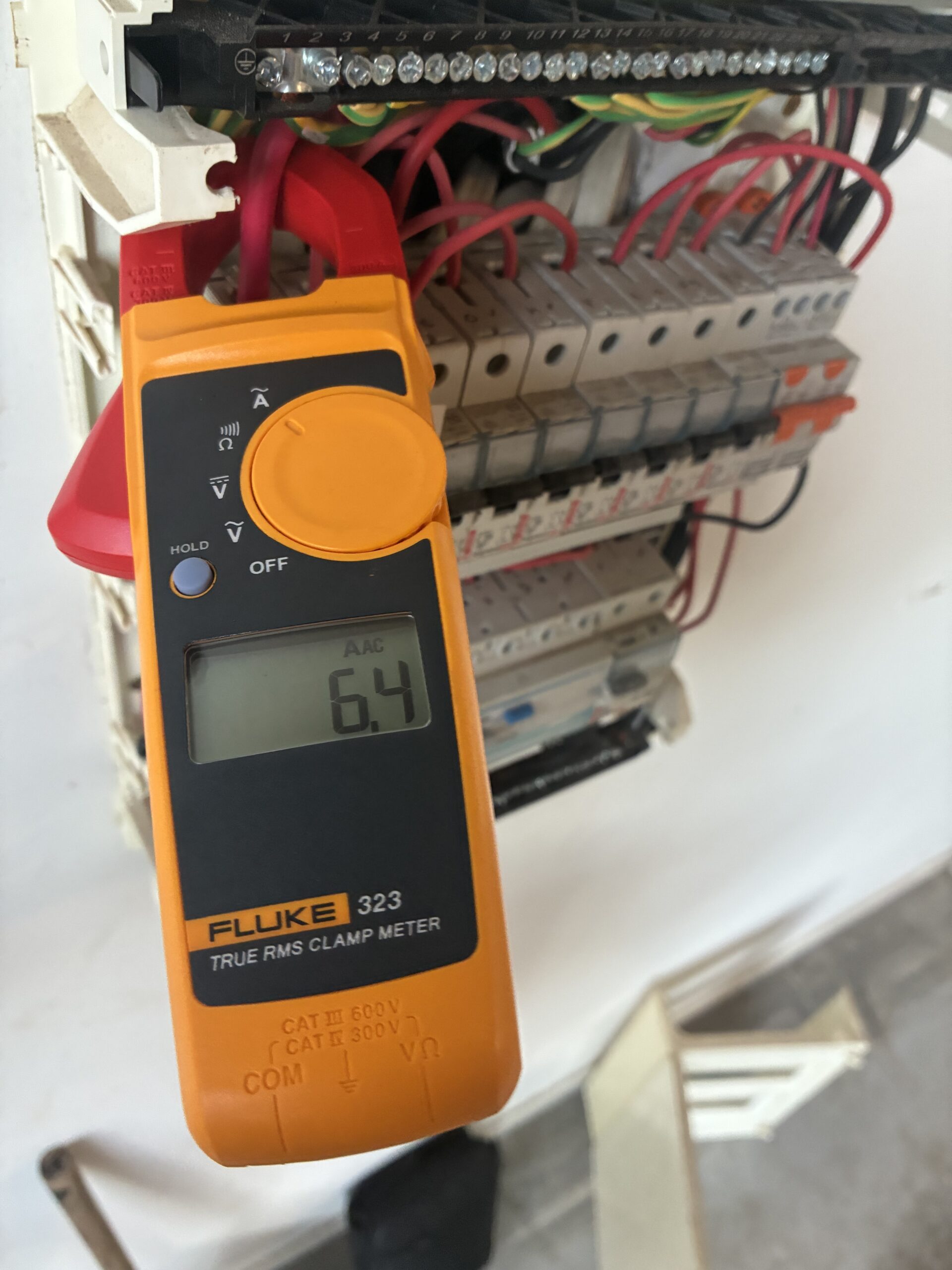
professional switchboard upgrade typically takes 3–5 hours. Here’s what’s involved:
- Assessment. Your electrician inspects the existing board, wiring, and circuits. They identify what needs replacing and what can stay.
- New switchboard installation. The old board is removed and replaced with a modern unit. All circuit breakers and safety switches are installed.
- Circuit redistribution. Circuits are reorganised for better load distribution. Additional circuits are added if needed.
- Testing and labelling. Every circuit is tested for correct operation. All breakers and switches are clearly labelled.
- Compliance certificate. You receive documentation confirming the work meets current Australian Standards.
Power is typically off for 2–4 hours during the upgrade. Your electrician will let you know the expected timeframe in advance. During a switchboard upgrade, your electrician will often install new safety switches and circuit breakers. You may also want to add new power points or light switches at the same time. See our light switch installation cost guide for pricing.
Brisbane-Specific Considerations
Brisbane’s climate and housing stock create some unique switchboard challenges:
- Humidity and corrosion. Brisbane’s humidity accelerates corrosion on switchboard connections. Coastal Bayside suburbs like Wynnum, Manly, and Cleveland are especially affected. Regular inspections catch corrosion before it becomes dangerous.
- Storm surge damage. Brisbane’s storm season can cause power surges that damage switchboard components. If your home has been through a major storm, it’s worth having the switchboard checked.
- Older Queenslander homes. Many Queenslanders and highset homes in Capalaba, Alexandra Hills, and surrounding suburbs have original switchboards from the 1970s–1990s. These almost always need upgrading.
- Air conditioning demand. Most Brisbane homes now run air conditioning. Adding a split system or ducted AC system to an older switchboard can overload it. A switchboard upgrade is often recommended alongside AC installation.
- Bundle with smoke alarm compliance. If your switchboard needs replacing before 1 January 2027, it’s the perfect visit to also book your Brisbane smoke alarm installer — one call-out, one certificate, everything done together.
For more details, see our guide on switchboard compliance for rentals.
For more details, see our guide on switchboard compliance.
Frequently Asked Questions
How do I know if my switchboard is safe?
Check for these basics: Does it have circuit breakers (not ceramic fuses)? Are there safety switches (RCDs) on all circuits? Is the board free from scorch marks, burning smells, and unusual sounds? If you answered “no” to any of these, book an inspection with a licensed electrician.
How long does a switchboard last?
A well-maintained switchboard typically lasts 25–30 years. However, increasing electrical demands can shorten this lifespan. If your board is over 20 years old, it’s worth having it inspected — even if it appears to be working fine.
Is a switchboard upgrade worth the cost?
Absolutely. A modern switchboard improves safety, reduces the risk of electrical fires, ensures insurance compliance, and supports your home’s current and future electrical needs. The cost ($800–$2,500 for most homes) is small compared to the risks of an outdated system.
Can I upgrade my switchboard myself?
No. All switchboard work in Queensland must be performed by a licensed electrician. This is non-negotiable under the Electrical Safety Act 2002. Working inside a switchboard involves mains-voltage electricity and is genuinely dangerous without proper training and equipment.
Do I need to upgrade my switchboard for solar panels?
In most cases, yes. Solar systems require additional circuits and compatible switchboard components. If your switchboard is older, a solar installation will usually require an upgrade. Your solar installer and electrician can advise on what’s needed.
Will a switchboard upgrade increase my home’s value?
Yes. A modern, compliant switchboard is a selling point. Buyers and their building inspectors check for electrical compliance. An upgraded switchboard signals that the home has been properly maintained — and removes a potential negotiation point during the sale. If you’re buying a home in Brisbane, our electrical inspection checklist for house buyers covers exactly what to look for before you commit.
What’s the difference between a switchboard upgrade and a rewire?
A switchboard upgrade replaces the board itself — the circuit breakers, safety switches, and distribution components. A rewire replaces the actual wiring running through your walls and ceiling. Some older homes need both, but many only need the switchboard replaced while the existing wiring remains serviceable.
How long does the power need to be off?
Typically 2–4 hours during the upgrade. Your electrician will confirm the expected timeframe before starting. It’s a good idea to plan around it — charge your devices, avoid opening the fridge unnecessarily, and schedule the work when it’s least disruptive.
Don’t Wait for a Problem to Become an Emergency
Switchboard issues tend to get worse, not better. A small problem today — a tripping breaker, a faint buzzing sound, flickering lights — can become a serious safety hazard if left unchecked. If you’ve noticed any of the signs in this article, get a licensed electrician to inspect your switchboard sooner rather than later. Early action is always cheaper and safer than emergency repairs. Amplus Electrical & Air upgrades switchboards across Capalaba, Alexandra Hills, Cleveland, Thornlands, Wellington Point, Birkdale, Victoria Point, Ormiston, Wynnum, Manly, and surrounding Bayside suburbs. Aaron is a fully licensed Queensland electrician (Lic. #1500996) who handles switchboard inspections and upgrades daily. He’ll assess your current setup, give you an honest recommendation, and provide upfront pricing — no surprises. 📞 Call Aaron: 0419 014 146 📅 Book a switchboard inspection online
Need a Licensed Electrician in Brisbane Bayside?
Aaron is a licensed electrician (Lic. 1500996) and ARC-certified A/C technician serving Capalaba, Cleveland, Wynnum, Manly, Birkdale, Thornlands, Victoria Point and surrounding suburbs. Honest advice, upfront pricing, and quality work guaranteed.