Smoke Alarm Compliance in Brisbane: Queensland’s 2027 Rules Explained
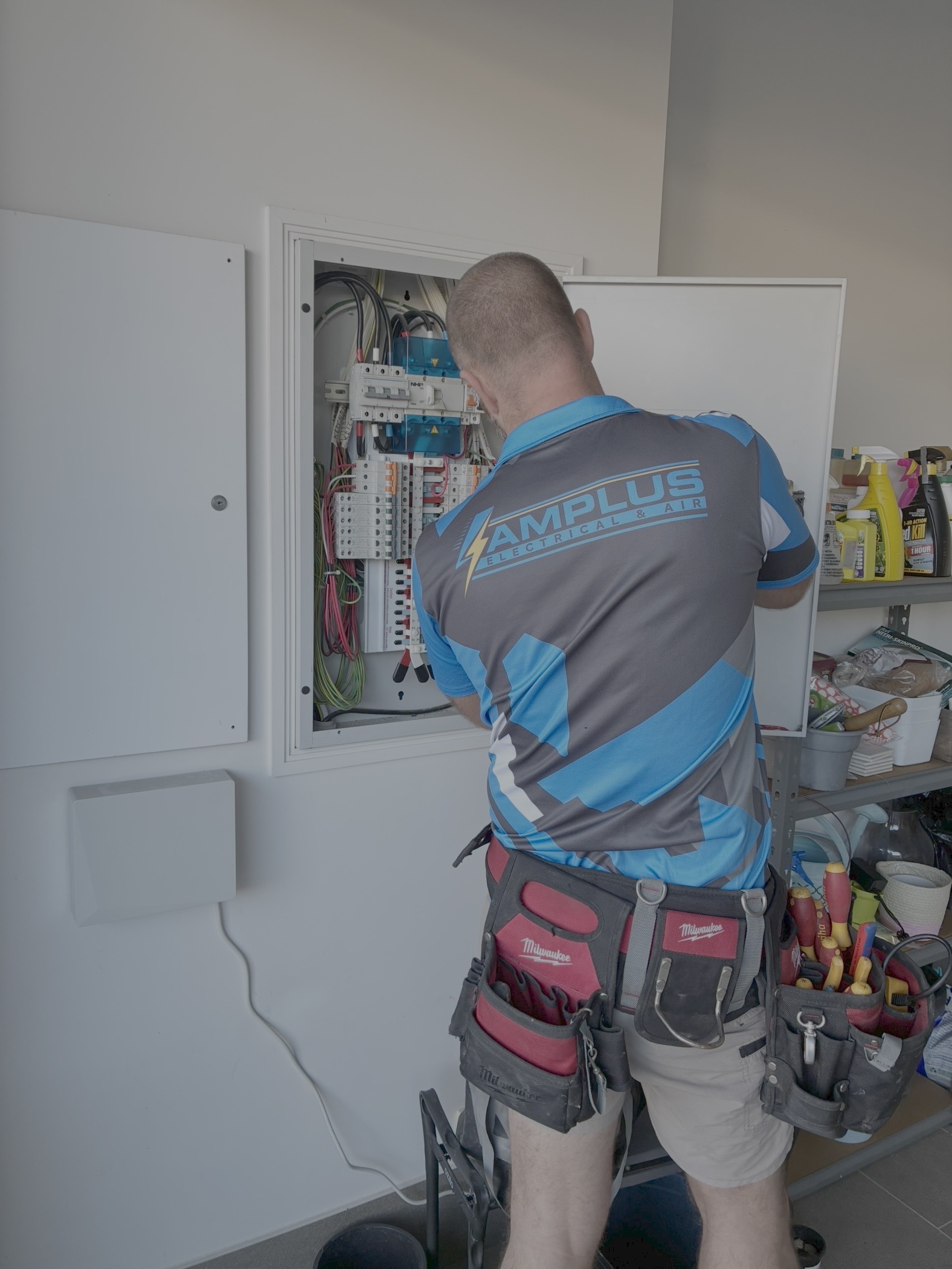
I’m Aaron, licensed QLD electrician #1500996. I’ve installed compliant smoke alarms in hundreds of Brisbane homes. Here’s what you need to know: January 1, 2027, every Brisbane home must have photoelectric, interconnected smoke alarms in every bedroom, hallway, and on every level. Cost is typically $480–$840 for most homes (4–7 alarms at $120 each). If your alarms are old ionisation units or not interconnected, you need to upgrade now — electricians are booking out fast as the deadline approaches.
🔑 Key Takeaways
- January 1, 2027 deadline: Every Brisbane home — including owner-occupied — must have compliant smoke alarms.
- Compliant means: Photoelectric, interconnected, in every bedroom + hallway + every level, powered by 240V or sealed 10-year battery.
- Typical Brisbane smoke alarm installation cost: $480–$840 for most homes (4–7 alarms at $120 each).
- Don’t wait: Electricians are booking out fast as the deadline approaches. Get compliant now.
- Free assessment: We’ll check your home and give you a fixed price — no obligation.
This guide is written by Aaron Ross, licensed electrician and owner of Amplus Electrical & Air in Capalaba, Brisbane. Aaron holds Queensland Electrical Contractor Licence #1500996 and has installed compliant smoke alarms in hundreds of Brisbane homes across the Redlands and Bayside suburbs.
Why Brisbane Smoke Alarm Laws Are Changing in 2027
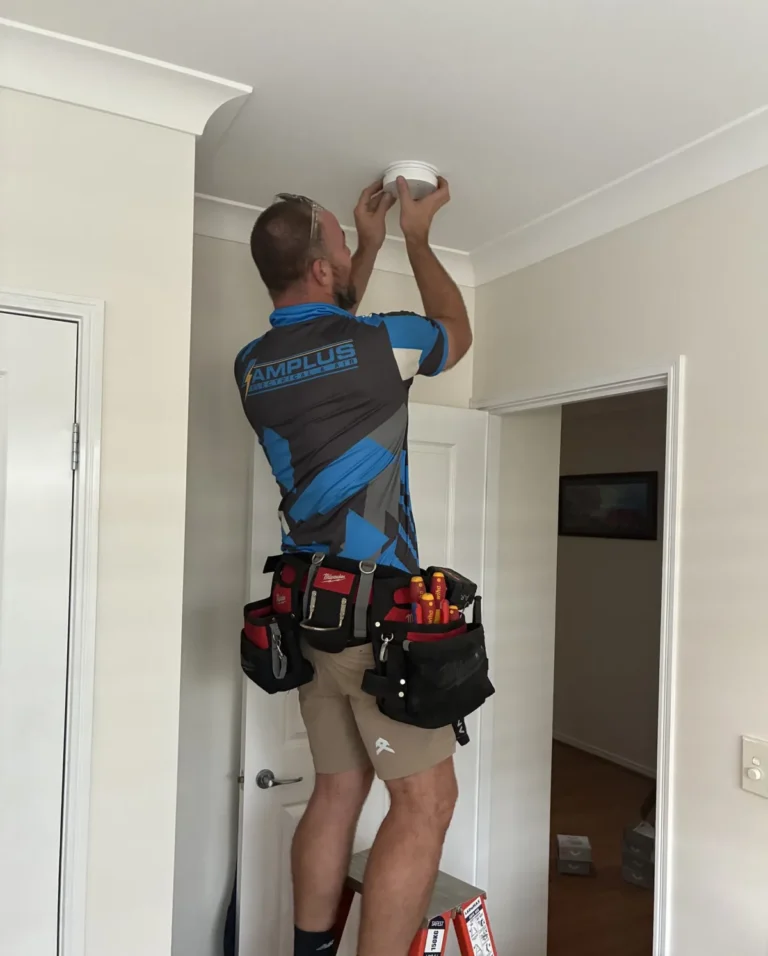
Queensland’s smoke alarm legislation has been rolling out in stages since 2017. Now, January 1, 2027 marks the final — and biggest — deadline. From that date, every Queensland dwelling, including owner-occupied homes, must have fully compliant smoke alarm systems installed. This isn’t a minor update. The Queensland Fire and Emergency Services legislation requires all homes to have compliant alarms — and if your home needs a switchboard upgrade to support hardwired smoke alarms, that’s part of the compliance picture too.
- Photoelectric smoke alarms (not ionisation)
- Interconnected so when one alarm sounds, they all sound
- Alarms in every bedroom, every hallway, and on every level
- Powered by 240V mains or a sealed 10-year lithium battery
If your Brisbane home still has old ionisation alarms, or they’re not interconnected, or you’re missing alarms in bedrooms — you’re not compliant. And after January 1, 2027, that becomes a legal problem. Here’s the thing most Brisbane homeowners don’t realise: this isn’t just about passing a building inspection. Non-compliant smoke alarms can void your home insurance, reduce your property value, and most importantly, fail to protect your family in a fire.
What Does Smoke Alarm Compliance Mean in Brisbane?
Brisbane smoke alarm compliance means your home meets the requirements set out in Queensland’s Building Fire Safety Regulation 2008 and the Smoke Alarm Legislation that’s been phased in since 2017. For a Brisbane smoke alarm system to be compliant, it must meet four criteria:
1. Photoelectric Type Only
Photoelectric smoke alarms detect smouldering fires faster than ionisation alarms. They’re more reliable for the type of fires that typically occur in Queensland homes — furniture fires, electrical fires, and smouldering materials. Ionisation smoke alarms are being phased out entirely. If you still have them, they need to be replaced with photoelectric units. While you’re at it, check if your home needs safety switch installation — another critical electrical safety requirement.
2. Interconnected
When one alarm detects smoke, all alarms in the home sound simultaneously. This is critical because a fire in the garage at 2am won’t help you if the alarm in your bedroom doesn’t sound. Interconnection can be achieved through:
- Hardwired systems — physically connected through your home’s wiring
- Wireless interconnection — alarms communicate via radio frequency (WiFi or RF)
3. In the Correct Locations
The Queensland Fire positioning guidelines require alarms in:
- Every bedroom — no exceptions
- Every hallway that connects a bedroom to the rest of the home
- Every level of the home — including basements and split-level areas
- If there’s no hallway between a bedroom and the rest of the home, an alarm must be installed between the bedroom door and the nearest exit
4. Correct Power Source
Each alarm must be either:
- Hardwired to 240V mains power (with battery backup), OR
- Powered by a sealed 10-year lithium battery (non-replaceable, non-removable)
Replaceable 9-volt battery alarms are not compliant after 2027. If you still have them, they need to be replaced.
What’s Changing on January 1, 2027?
Here’s the timeline that’s been rolling out since 2017:
| Date | Who Was Affected | What Changed |
|---|---|---|
| Jan 1, 2017 | New builds and substantially renovated homes | Must install compliant alarms from day one |
| Jan 1, 2022 | Rental properties and social housing | All rentals must be compliant |
| Jan 1, 2027 | ALL homes — including owner-occupied | Every dwelling must be fully compliant |
The 2027 deadline is the big one. It means every single home in Brisbane — whether you own it, rent it, or are selling it — must have a compliant Brisbane smoke alarm system. No exemptions. No extensions.
Am I Already Compliant? — Self-Assessment Checklist
Here’s a quick checklist to see if your Brisbane home’s smoke alarms meet the 2027 requirements:
- Are your alarms photoelectric? Check the label on the back or side. If it says “ionisation” or “radioactive,” they need replacing.
- Are they interconnected? Press the test button on one alarm. Do ALL alarms in the home sound? If not, they’re not interconnected.
- Is there an alarm in every bedroom? Count your bedrooms. Count your alarms. If the numbers don’t match, you need more.
- Is there an alarm in every hallway? Every hallway that connects a bedroom to the rest of the home needs an alarm.
- Is there an alarm on every level? Even if you don’t sleep on that level.
- Are they powered correctly? Hardwired (240V) or sealed 10-year battery. If they take replaceable 9V batteries, they’re not compliant.
- Are they less than 10 years old? Check the manufacture date on the back. Smoke alarms expire after 10 years.
If you answered “no” to any of these, your Brisbane smoke alarm system is not compliant. The good news? Getting compliant is straightforward and usually costs $480–$840 for a typical Brisbane home.
Brisbane Smoke Alarm Placement Rules — Where They Must Go
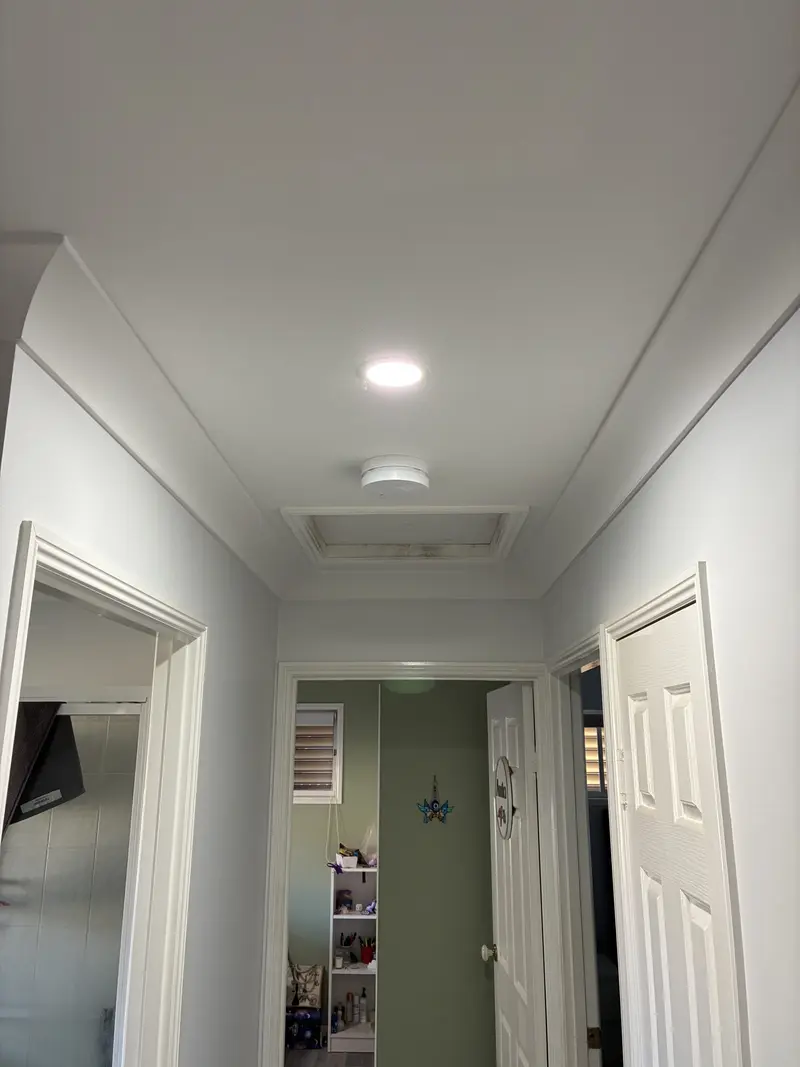
One of the most common questions we get about Brisbane smoke alarm compliance is: exactly where do the alarms need to go? Here’s the full breakdown based on Queensland legislation:
Bedrooms
Every bedroom must have a smoke alarm. This includes guest rooms, home offices that double as bedrooms, and any room where someone might sleep. The alarm should be mounted on the ceiling, positioned to detect smoke before it reaches the sleeping occupant.
Hallways
Every hallway that connects a bedroom to the rest of the home needs an alarm. If your bedrooms open directly into a living area (no hallway), you need an alarm between the bedroom door and the nearest exit path.
Every Level
Even if you don’t sleep on a particular level, it still needs an alarm. This includes:
- Ground floor living areas
- Upper floors with bedrooms
- Basements and sub-floors (if habitable)
- Split-level homes — each split level counts
Where NOT to place alarms
Avoid placing alarms in:
- Kitchens (too many false alarms from cooking)
- Bathrooms (steam triggers false alarms)
- Garages (exhaust fumes and temperature extremes)
- Within 300mm of a wall or ceiling fan
- Directly above air conditioning vents
If you’re also planning downlight installation or ceiling fan replacement, coordinate the work to avoid placement conflicts.
Why Photoelectric and Interconnected?
You might be wondering why Queensland specifically requires photoelectric and interconnected alarms. Here’s the reasoning:
Photoelectric vs Ionisation
Photoelectric alarms use a light beam to detect smoke particles. They’re better at detecting smouldering fires — the type that produce a lot of smoke before flames appear. In a Queensland home, where furniture, bedding, and soft furnishings are the most common fire fuel, photoelectric alarms give you earlier warning. Ionisation alarms use a small amount of radioactive material to detect fast-flaming fires. They’re cheaper but more prone to false alarms from cooking, and they don’t detect smouldering fires as quickly. That’s why they’re being phased out.
Why Interconnected?
When alarms are interconnected, one alarm detecting smoke triggers all alarms in the home. This is critical because:
- A fire in the garage at 2am won’t help you if only the garage alarm sounds
- Children sleeping in the back of the house need the same warning as adults in the front
- You might not hear an alarm in another room if doors are closed or music is playing
Research shows interconnected alarms give occupants significantly more time to escape — and that extra time can be the difference between life and death.
What If My Home Already Has Smoke Alarms?
Many Brisbane homes already have some smoke alarms — but they’re often not fully compliant. Here’s what we commonly find when inspecting Brisbane homes:
- Ionisation alarms only — need full replacement with photoelectric
- Only one alarm in the hallway — missing bedroom alarms
- Standalone alarms — not interconnected
- Replaceable battery alarms — need upgrading to 10-year sealed or hardwired
- Alarms over 10 years old — expired, need replacement regardless of type
The good news is that in most cases, we can upgrade your existing Brisbane smoke alarm system to full compliance without major rewiring. Sealed 10-year battery alarms can often be installed without cutting into ceilings, which keeps costs down. For a detailed cost breakdown, see our smoke alarm installation cost guide — most Brisbane homes spend $480–$840 to get fully compliant.
Owner-Occupied vs Rental Properties — What’s the Difference?
The 2027 Brisbane smoke alarm laws apply to all dwellings, but the timeline and enforcement differ:
| Property Type | Compliance Deadline | Who’s Responsible |
|---|---|---|
| Rental properties | January 1, 2022 (already passed) | Landlord |
| Social housing | January 1, 2022 (already passed) | Government / housing provider |
| Owner-occupied homes | January 1, 2027 | Homeowner |
| Properties being sold or leased | At time of sale or new lease | Seller / landlord |
If you’re a landlord in Brisbane, your rental properties should already be compliant. If they’re not, you’re in breach of the Residential Tenancies and Rooming Accommodation Act and could face penalties. If you’re an owner-occupier, you have until January 1, 2027. But as we said — don’t wait. Electricians are booking out fast.
What Happens If You Don’t Comply?
Here’s what could happen if your Brisbane smoke alarm system isn’t compliant after January 1, 2027:
Insurance Problems
Most home insurance policies require you to maintain your property to legal standards. If you have a fire and your smoke alarms aren’t compliant, your insurer may:
- Reduce your payout
- Refuse your claim entirely
- Increase your premiums at renewal
Sale and Lease Issues
When you sell or lease a property in Queensland, the seller/landlord must provide a compliant smoke alarm system and a smoke alarm compliance certificate. Non-compliance can:
- Delay your settlement
- Give the buyer grounds to negotiate a lower price
- Result in fines under the building safety legislation
Safety Risk
The most important consequence isn’t financial — it’s safety. Non-compliant smoke alarms may not detect a fire in time to wake sleeping occupants. That’s not a risk worth taking.
How Much Does Brisbane Smoke Alarm Compliance Cost?
Here’s what most Brisbane homeowners actually pay to get compliant:
| Home Size | Alarms Needed | Typical Cost |
|---|---|---|
| 2-bedroom home/unit | 3–4 alarms | $360–$480 |
| 3-bedroom home | 4–5 alarms | $480–$600 |
| 4-bedroom home | 5–7 alarms | $600–$840 |
| 5+ bedroom / multi-level | 7–10 alarms | $840–$1,200 |
At Amplus Electrical & Air, we charge $120 per alarm — fully installed, compliant, with a certificate. No call-out fee. No hidden extras. For a detailed breakdown of what’s included and how our pricing compares to other Brisbane electricians, see our smoke alarm installation cost guide.
What’s included in the $120 per alarm?
- Supply of a compliant photoelectric smoke alarm (sealed 10-year battery or hardwired)
- Professional installation by a licensed electrician
- Testing and interconnection with your existing system
- Removal and disposal of old non-compliant alarms
- Electrical Safety Certificate
If your home has older wiring or needs electrical fault finding before alarms can be installed, we’ll sort that too. Learn about safety certificate costs and requirements. For homes that need a full safety switch upgrade, we can bundle the work and save you money.
What Should Brisbane Homeowners Do Right Now?
If you’ve read this far, here’s your action plan:
- Do the self-assessment checklist above. Work out how many alarms you have, what type they are, and where they’re located.
- Check the manufacture date. If any alarm is over 10 years old, it needs replacing regardless of type.
- Get a free on-site assessment. We’ll come out, check your home, and give you a fixed price for full compliance. No obligation. We also offer general electrical services if you need other work done at the same time.
- Book the installation. Don’t wait until December 2026 — electricians across Brisbane will be flat out. Book now and get it sorted.
- Keep your certificate. You’ll receive an Electrical Safety Certificate after installation. Keep it for your records and for any future property sale.
Brisbane Smoke Alarm Compliance Across the Redlands and Bayside
We install compliant Brisbane smoke alarms across all Redlands and Bayside suburbs, including:
- Capalaba — many 1970s-1980s homes with old ionisation alarms
- Cleveland — mix of older homes and newer builds
- Wellington Point — waterfront properties with specific placement challenges
- Victoria Point — high proportion of rental properties needing compliance
- Thornlands — newer estates with some already-compliant homes
- Birkdale — older homes often need full upgrades
- Alexandra Hills — mix of property ages
- Sheldon — larger properties with more alarms needed
- Redland Bay — newer developments plus older waterfront homes
- Mount Cotton — rural-residential properties with unique requirements
- Ormiston — heritage homes with specific installation considerations
- Wynnum & Manly — bayside suburbs with older housing stock
For a suburb-by-suburb breakdown of compliance requirements, see our Redlands smoke alarm compliance guide.
Common Brisbane Smoke Alarm Mistakes We See
After inspecting hundreds of Brisbane homes, here are the most common mistakes homeowners make:
1. Only one alarm for the whole house
We regularly find homes with a single alarm in the hallway and nothing in bedrooms. This is not compliant and won’t protect sleeping occupants.
2. Using replaceable battery alarms
9-volt battery alarms with replaceable batteries are not compliant after 2027. You need sealed 10-year lithium batteries or hardwired units.
3. Mixing alarm types
Some homes have a mix of photoelectric and ionisation alarms. While this was technically okay under older rules, all alarms must be photoelectric from 2027.
4. Alarms not interconnected
Even if you have the right type of alarm, they must all sound together. Standalone alarms are not compliant.
5. Expired alarms
Smoke alarms have a 10-year lifespan. Check the manufacture date on the back — if it’s over 10 years old, it needs replacing.
6. Forgetting accessibility needs
If anyone in your home is deaf or hard of hearing, standard alarms won’t wake them. You need bed shakers, strobe lights, or 520Hz alarms. See my smoke alarms for deaf and hearing impaired households guide for the full breakdown.
6. Wrong placement
Alarms in kitchens, bathrooms, or garages are usually in the wrong spot. They should be in bedrooms, hallways, and on every level — but away from steam, cooking fumes, and exhaust.
7. Ignoring accessibility needs
If someone in your household is deaf or hard of hearing, standard smoke alarms may not wake them. You need accessible alarms with bed shakers, strobe lights, or 520Hz low-frequency alerts. See our guide to smoke alarms for deaf and hard-of-hearing Brisbane homes.
Frequently Asked Questions
Do Brisbane homeowners need smoke alarms by law?
Yes. Queensland law requires all homes to have compliant smoke alarms by January 1, 2027. This includes owner-occupied homes, rental properties, and social housing. The legislation is enforced under the Building Fire Safety Regulation 2008.
Can I install smoke alarms myself in Brisbane?
You can install battery-powered smoke alarms yourself. However, hardwired smoke alarms must be installed by a licensed electrician. We recommend professional installation regardless — a licensed electrician will ensure correct placement, interconnection, and compliance with all regulations. Learn more from Electrical Safety Queensland.
Do I need hardwired smoke alarms in Brisbane?
Not necessarily. You can use either hardwired (240V) or sealed 10-year battery alarms. Both are compliant. Hardwired alarms are often preferred for new builds, while sealed battery alarms are popular for retrofits because they don’t require ceiling cutting.
Who can install smoke alarms in Queensland?
Any licensed electrician can install hardwired smoke alarms. For battery-powered alarms, anyone can install them, but we recommend using a licensed electrician to ensure compliance. Check our smoke alarm installers guide for what to look for.
What is the penalty for not having smoke alarms in Brisbane?
Penalties vary depending on the situation. Landlords with non-compliant rentals can face fines up to $7,071. Homeowners selling non-compliant properties may face reduced sale prices or settlement delays. The biggest penalty, however, is safety — non-compliant alarms may not protect your family in a fire.
What’s the difference between ionisation and photoelectric smoke alarms?
Ionisation alarms use a small radioactive source to detect fast-flaming fires. Photoelectric alarms use a light beam to detect smouldering fires. Photoelectric alarms are more effective for the types of fires that commonly occur in homes, which is why Queensland law now requires them exclusively.
How long do smoke alarms last?
Smoke alarms have a 10-year lifespan from the date of manufacture. Check the date on the back of the alarm. After 10 years, the sensor degrades and the alarm becomes less reliable — it must be replaced regardless of whether it still appears to work.
Do I need to upgrade if I’m selling my home after 2027?
Yes. When selling a property in Queensland, the seller must provide a compliant smoke alarm system. Buyers and their building inspectors will check compliance. Non-compliance can delay settlement or reduce your sale price.
How much does it cost to make my Brisbane home compliant?
Most Brisbane homes spend $480–$840 to get fully compliant (4–7 alarms at $120 each). The exact cost depends on how many alarms you need and whether hardwiring is required. For a detailed breakdown, see our smoke alarm installation cost guide.
Can I mix hardwired and battery alarms?
Yes, you can mix hardwired and sealed 10-year battery alarms in the same home, as long as they’re all photoelectric and interconnected. We often use hardwired alarms in main living areas and battery alarms in bedrooms where ceiling access is limited.
Need Help Getting Compliant?
If you’re a Brisbane homeowner and you’re not sure whether your smoke alarms are compliant, we can help. We offer free on-site assessments — we’ll check your current alarms, tell you exactly what needs upgrading, and give you a fixed price. Call us on 0419 014 146 or book online. We service all Brisbane suburbs and the Redlands area, including Capalaba, Cleveland, Wellington Point, Victoria Point, Thornlands, Birkdale, and surrounding Bayside suburbs. Don’t wait until December 2026. Electricians across Brisbane are already booking out for smoke alarm upgrades. Get compliant now and have peace of mind knowing your family is protected.
Aaron Ross is a Master Electricians member, licensed electrician and owner of Amplus Electrical & Air in Capalaba, Brisbane. He holds Queensland Electrical Contractor Licence #1500996. Amplus serves Brisbane, the Redlands, and Bayside suburbs with same-day electrical services. For urgent electrical issues, we also offer emergency electrician services.
Need a Licensed Electrician in Brisbane Bayside?
Aaron is a licensed electrician (Lic. 1500996) and ARC-certified A/C technician serving Capalaba, Cleveland, Wynnum, Manly, Birkdale, Thornlands, Victoria Point and surrounding suburbs. Honest advice, upfront pricing, and quality work guaranteed.