Can My Home Handle an EV Charger? — A Pre-Purchase Electrical Checklist for Brisbane Homeowners (2026)
Wondering if your home can handle an EV charger? Here’s the quick answer: Most Brisbane homes with a 63A or 80A main switch and a spare breaker slot can handle a standard 7kW (32A) EV charger. Older homes with fuse boxes, 1950s-70s wiring, or 40A main switches will likely need a switchboard upgrade first. Here’s exactly what to check before you buy.
The short version: Most Brisbane homes with a 63A or 80A main switch, a modern switchboard (post-1990s), and at least one spare breaker slot can handle a standard 7kW (32A) EV charger without any upgrade. Older homes with ceramic fuse boxes, 40A main switches, or wiring from the 1950s-70s will almost certainly need a switchboard upgrade before an EV charger can be safely installed. Apartment dwellers and body corporate residents face additional considerations around strata approval, parking proximity, and shared electrical infrastructure. This guide walks you through every check you need to make before you sign for the car.
Why Check Before You Buy? The Cost of Assuming Your Home Is Ready
Here is a scenario we see every month at Amplus Electrical: a Brisbane homeowner buys a shiny new EV, gets the delivery date, and then calls an electrician to install the charger only to discover their 1960s switchboard cant handle a 32A continuous load. Suddenly they are facing a $1,200 to $2,500 switchboard upgrade on top of the charger installation, and their EV sits on trickle charge from a standard wall outlet for two weeks while they wait for parts.
Dont be that person. The pre-purchase electrical check takes a licensed electrician about 30 minutes and costs far less than the panic upgrade. Read our full EV charger installation cost guide for pricing, but first let us figure out what your home actually needs.
This guide is written for Brisbane homeowners, with specific attention to the types of homes you will find across Capalaba, Cleveland, Redlands, Wynnum, Carindale, and the wider Brisbane metro area from 1950s post-war cottages to brand-new Redland Bay estates.
The 6-Point Pre-Purchase EV Charger Checklist for Brisbane Homes
Before you buy an EV, work through these six checks. Each one answers a specific question about your homes readiness. Tick them all off, and you can order your charger installation with confidence.
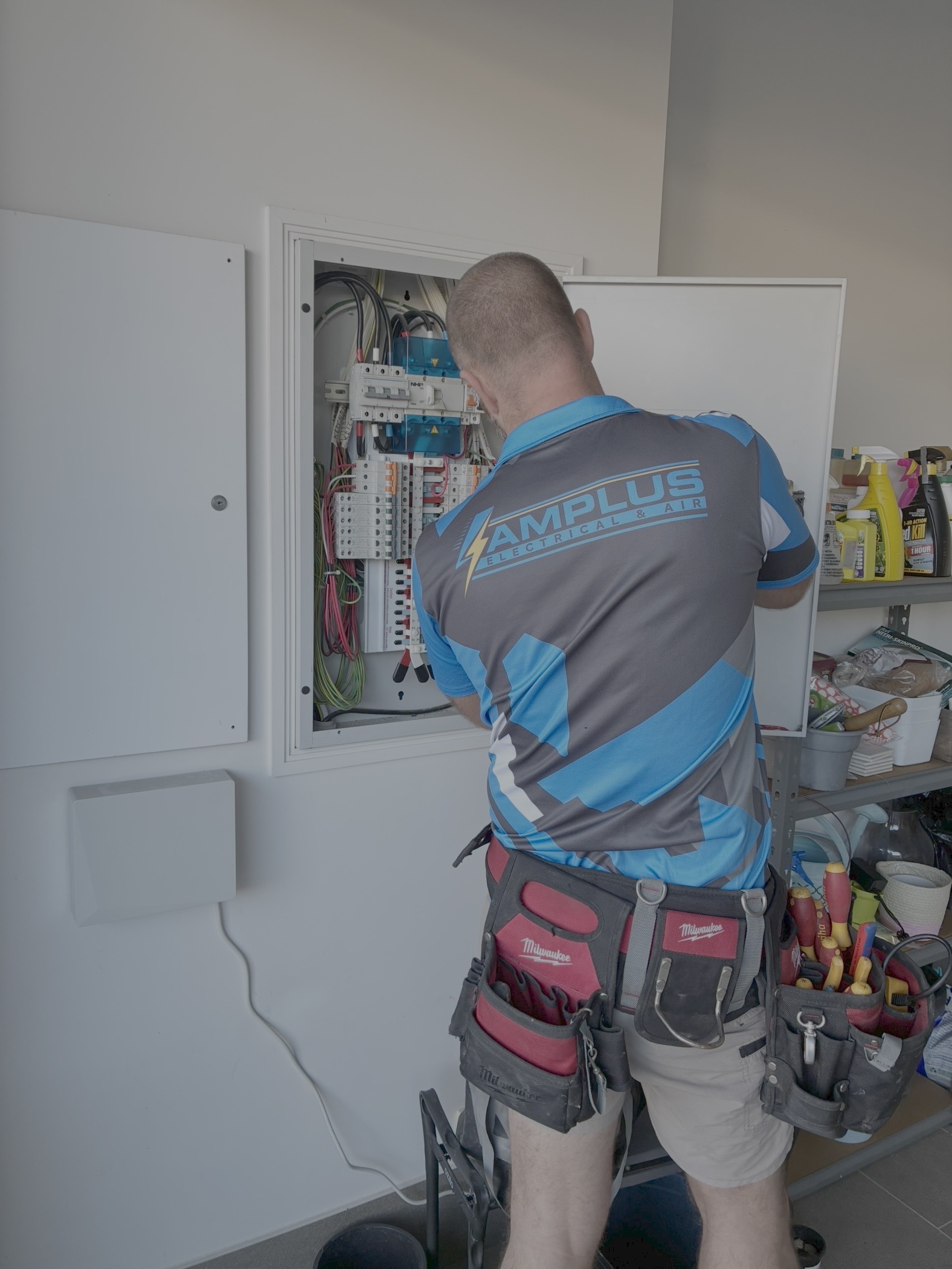
1. What Type of Switchboard Do You Have?
This is the single most important check. Your switchboard is the gateway for EV charging, and not all switchboards are created equal.
Modern switchboard (circuit breakers, post-1990s): You are in good shape. If there is a spare slot (or two), a 32A breaker for the EV charger can be added easily. Most Brisbane homes built or rewired after the 1990s fall into this category.
Older switchboard with ceramic fuse holders (pre-1970s): These are common in Brisbane older suburbs like Paddington, Ashgrove, Holland Park, Camp Hill, Coorparoo, and many of the post-war homes in Wynnum, Manly, and Cannon Hill. Ceramic fuse boards cannot safely handle a 32A continuous EV load. They need a full switchboard upgrade to modern circuit breakers before any EV charger installation. See our complete switchboard upgrade guide for Brisbane homes.
1980s-90s switchboard (HRC fuses or early circuit breakers): These are a grey area. Some can handle an EV charger with just a breaker swap; others need a partial upgrade. A licensed electrician can tell you in minutes.
2. What is Your Main Switch Rating?
The main switch (or main circuit breaker) controls how much total electrical load your home can draw. Common ratings in Brisbane homes:
- 40A main switch Common in 1950s-70s homes. Adding a 32A EV charger uses 80% of your entire homes capacity. You need a switchboard upgrade.
- 63A main switch Standard for most 1980s-2000s homes. A 32A EV charger is manageable, but you may need load shedding or an energy management device if you run the AC, oven, and EV simultaneously.
- 80A main switch Modern standard. A 32A EV charger is no problem alongside normal household loads.
- 100A main switch Common in newer homes or homes with ducted air conditioning. Plenty of headroom for EV charging.
If you are in a smaller home or apartment with a 40A or 50A supply, consider a 16A (3.6kW) portable charger or a load-managed EV charger instead of a full 7kW unit. Our EV home charging guide explains the difference between AC and DC charging and what amperage you actually need.
3. Do You Have a Spare Breaker Slot?
An EV charger needs its own dedicated circuit with a 32A Type-A RCBO (residual current breaker with overcurrent protection). If your switchboard is full with no empty slots the electrician will need to either consolidate existing circuits or install a sub-board. This adds labour but is usually straightforward.
Our switchboard upgrade for EV charger installation guide covers exactly what happens when there is no spare slot, including real examples from Brisbane homes we have worked on in Capalaba, Alexandra Hills, and Thornlands.
4. Single-Phase or Three-Phase Power Supply?
Most Brisbane homes have single-phase power (standard 230V). This is perfectly fine for a 7kW (32A) EV charger. You will get about 35-50 km of range per hour of charging, which is plenty for overnight top-ups.
Three-phase power is less common in residential areas but you will sometimes find it in newer estates in Redland Bay, Thornlands, and North Lakes. If you have three-phase, you can install an 11kW or 22kW charger for faster charging but most homeowners do not actually need this. A 7kW charger fills a typical EV battery overnight on either supply.
How to check: Look at your switchboard main switch. A single-phase switch has two thick wires going into it. Three-phase has three or four. Or just ask your electrician during a pre-purchase site visit.
Our complete EV charger installation guide covers the technical setup for both single and three-phase installations.
5. Where Will the Charger Go? Parking and Clearance Checks
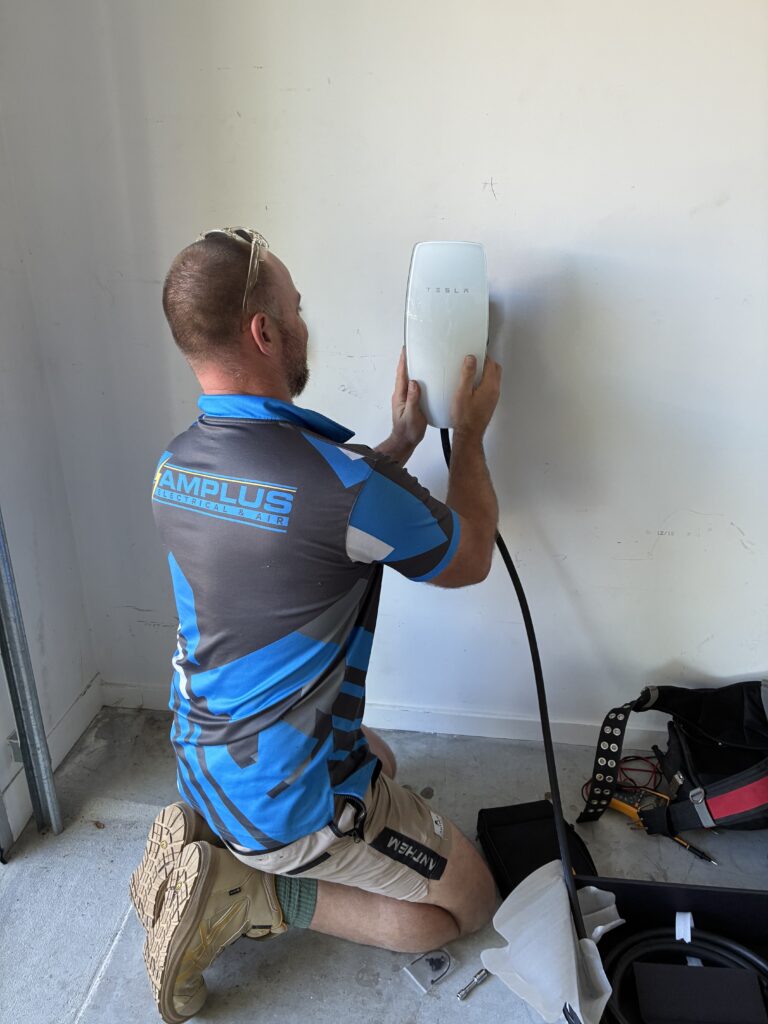
Your EV charger needs to be within reach of where you park. The charger cable typically reaches 4-5 metres. Check these practical points:
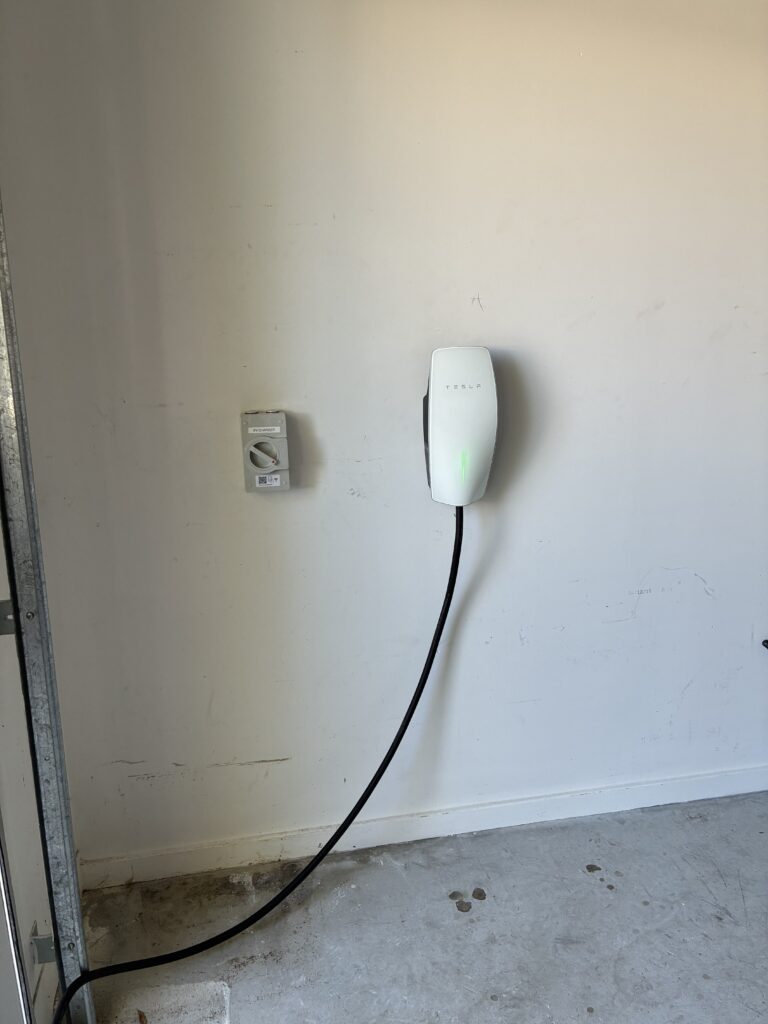
- Off-street parking: Is your carport, garage, or driveway within 5 metres of an external wall where the charger can be mounted? Most Brisbane homes with a garage against the house wall are fine.
- Crossing paths or driveways: If the cable needs to cross a footpath or shared driveway, it needs to be in conduit buried at least 600mm deep which adds trenching costs.
- Heritage or character homes: Brisbane older suburbs like Highgate Hill, West End, New Farm, Hamilton often have raised timber homes where the charger can be mounted on a verandah post or under the house. This is usually straightforward but the electrician needs to route the cable through the subfloor.
- Rental properties: You will need landlord approval before installing a hardwired EV charger. A portable 10A or 15A charger that plugs into a standard powerpoint may be a simpler starting point.
Check out our Brisbane EV charger installers guide for what to expect from the site inspection and installation process.
6. What About Apartments, Townhouses, and Body Corporate?
If you live in a strata complex, you have an extra layer of checks:
- Body corporate approval: In QLD, you have a legal right to install an EV charger in your allocated parking space under the Body Corporate and Community Management Act (improvements to lot), but you still need to follow the approval process. Your body corporate cannot unreasonably refuse, but they can set conditions around installation standards and insurance.
- Parking proximity: Is your parking spot close enough to the buildings electrical infrastructure? Basement parking in apartment buildings often has meter boards nearby ideal. Remote parking bays may need expensive trenching or overhead cabling.
- Load sharing: Older apartment buildings may not have enough spare capacity in their main supply for multiple EV chargers. Load management systems can distribute available power across several chargers so no single unit draws full load.
- Caravan parks and manufactured home estates: If you live in a park or estate, check your site agreement and speak to park management. Some newer parks are installing shared EV charging infrastructure.
Our Redlands EV charger suburb-by-suburb guide covers local considerations for apartment dwellers across the Redlands council area.
What to Do Next: The 3-Step Action Plan
Based on the checklist above, here is your plan of attack:
Step 1: DIY Visual Check (5 minutes)
Open your switchboard and look for: (a) circuit breakers or ceramic fuses, (b) the main switch amp rating (stamped on the switch), (c) any spare slots. Take a photo and send it to your electrician.
Step 2: Book a Pre-Purchase Electrical Inspection (30 minutes)
Call a licensed electrician who specialises in EV charger installations. We charge a flat fee for pre-purchase inspections and will give you a written report on: switchboard condition, main switch rating, available breaker slots, supply type (single/three phase), wiring condition, and any upgrade costs.
If you are in Brisbane or the Redlands, contact us at Amplus Electrical for a pre-purchase EV inspection. Aaron can usually get to your property within 48 hours.
Step 3: Budget for the Full Installation
Once you know what your home needs, you can budget accurately. Our EV charger installation cost guide breaks down the full pricing, including switchboard upgrades and trenching.
Brisbane and Redlands-Specific Considerations for EV Charger Installation
Housing Stock Variations Across Brisbane
Brisbane’s housing stock varies enormously by suburb, and this directly affects EV charger readiness. Here is how the most common home types stack up:
Pre-war Queenslanders (pre-1945) in Highgate Hill, West End, New Farm, Paddington, Red Hill, Auchenflower: These homes typically have original or partially upgraded switchboards. Many still have ceramic fuse holders and 40A main switches. The raised timber construction makes cable routing easier (under the house) but the switchboard almost always needs upgrading. Budget for the full $1,200 to $2,500 switchboard upgrade. The good news is that off-street parking in these suburbs is usually in a carport or garage under the house, so the charger can be mounted on a stumps post or internal wall.
Post-war cottages (1950s-60s) in Wynnum, Manly, Cannon Hill, Camp Hill, Coorparoo, Holland Park, Salisbury, Moorooka: These brick or timber homes often have 1950s wiring and 40A switchboards. Many have been partially renovated but the switchboard is frequently overlooked. The switchboard is typically in the laundry or hallway. Most have a carport or single garage within 5 metres of the house. Expect a switchboard upgrade for most of these homes.
1970s-80s brick homes in Capalaba, Alexandra Hills, Thornlands, Carindale, Mansfield, Wishart, Mount Gravatt: These are the sweet spot for EV charger readiness. Most have circuit breaker boards (not fuses), 63A main switches, and at least one spare slot. The garage is usually attached or within 3 metres of the switchboard. In Capalaba specifically, we find about 70% of homes can take a 7kW EV charger with zero switchboard work. The other 30% need a breaker swap or partial upgrade, which is much cheaper than a full board replacement.
1990s-2000s homes in Cleveland, Redland Bay, Ormiston, Sheldon, Mount Cotton, Burbank: These are typically ready to go. Circuit breaker boards, 63A or 80A main switches, attached garages. Most need only a breaker install and cable run. In Redland Bay and the newer Thornlands estates, you will sometimes find three-phase power as standard.
New estates (2010s-present) in Redland Bay, Thornlands, North Lakes, Murrumba Downs: These homes are EV-ready from the factory. 80A or 100A main switches, plenty of spare breaker slots, attached garages. The only check needed is parking clearance and choosing the right charger location.
Council and Regulatory Considerations for Brisbane Homeowners
Brisbane City Council: No specific council approval is needed for a residential EV charger installation. However, if your cable trench crosses a footpath or council verge, you may need a permit from Brisbane City Council. Your electrician will handle this as part of the installation quote.
Redland City Council: Same situation no specific EV charger approval needed for standard residential installations. If your property is in a character or heritage overlay area (parts of Cleveland, Ormiston, Birkdale), there may be additional considerations for external mounting. Your electrician can advise.
Queensland Electrical Safety Office: All EV charger installations must comply with AS/NZS 3000 (Wiring Rules) and AS/NZS 4777 (Grid Connection). Your licensed electrician will ensure compliance. Visit the Electrical Safety Office website for the latest requirements.
Climate Considerations for Brisbane EV Charging
Brisbane’s subtropical climate affects EV charger installation in a few ways:
- Heat and sun exposure: Mount the charger in a shaded location if possible. Direct sun on the charger unit can reduce its lifespan and affect charging speed on 40-degree days. Garages and carports are ideal.
- Storm season (October to March): Brisbane’s severe storms and potential for flooding mean the charger and any external cabling should be mounted above potential flood levels. Your electrician will ensure weatherproof installation standards.
- Humidity: Internal garage installations are preferable to external wall mounts in Brisbane’s humid climate. If external mounting is the only option, ensure the charger has an IP65 or higher rating.
Solar Integration: A Brisbane Advantage
Brisbane averages 283 sunny days per year, making solar-integrated EV charging a no-brainer for homeowners with existing solar panels. If you have solar, your EV charger can be configured to charge during daylight hours when your panels are generating, effectively reducing your charging cost to near zero.
Our EVnex solar EV charging guide covers how solar-battery-charger integration works in Brisbane homes. We install EVnex chargers that support dynamic load balancing and solar divert, meaning the charger automatically adjusts charging speed based on your solar generation and home consumption.
Key number for Brisbane solar homes: A typical 6.6kW solar system generates about 26 kWh per day in Brisbane. A 7kW EV charger running for 3-4 hours during peak solar generation (10am-2pm) can add 100-150 km of range using mostly free solar power.
Frequently Asked Questions
Can I install an EV charger myself?
No. Under Queensland law (Electrical Safety Act 2002), any electrical work including EV charger installation must be carried out by a licensed electrical contractor. DIY installation is illegal and voids your home insurance.
How much does a switchboard upgrade cost if I need one?
For a full switchboard upgrade from ceramic fuses to modern circuit breakers, expect $1,200 to $2,500 depending on the number of circuits and your homes wiring condition. See our switchboard upgrade guide for detailed pricing.
Do I need to upgrade my switchboard before buying an EV?
Only if your switchboard has ceramic fuses, a 40A main switch, or no spare breaker slots. Homes with modern circuit breaker boards and a 63A or higher main switch are typically ready to go.
Can I use a standard wall outlet to charge my EV while I sort out the charger installation?
Yes but it is slow. A standard 10A GPO gives you about 10-15 km of range per hour. That is fine for overnight top-ups if you drive less than 50 km/day, but it is not a long-term solution. Also ensure the circuit is not shared with other high-load appliances to avoid tripping the breaker.
Will a 7kW EV charger increase my electricity bill significantly?
Charging a typical EV (60 kWh battery) from empty to full costs around $15 to $25 on a standard residential tariff. If you are on a time-of-use tariff and charge overnight, it can be as low as $8 to $12. Read our EV home charging guide for running cost comparisons.
What if I move house? Can I take my EV charger with me?
Yes hardwired EV chargers can be disconnected and relocated. The cost to disconnect and reinstall is typically $300 to $500 depending on the new sites electrical setup.
Summary: Know Before You Buy
Getting an EV is exciting. Getting stuck with an EV you cannot charge properly is not. The pre-purchase electrical check is a small investment that saves you from unexpected costs, delayed installations, and the frustration of relying on trickle charging for weeks.
Here is what to remember:
- Most Brisbane homes built or rewired after the 1990s can handle a 7kW EV charger with minimal work
- Older homes with ceramic fuse boards and 40A main switches need a switchboard upgrade budget $1,200 to $2,500
- A licensed electrician can do a pre-purchase inspection in 30 minutes
- Apartment dwellers need body corporate approval and proximity checks
- Single-phase power is fine for 7kW charging three-phase is a bonus, not a requirement
Ready to check your home? Contact Aaron at Amplus Electrical we service Brisbane and the Redlands, including Capalaba, Cleveland, Alexandra Hills, Thornlands, Redland Bay, Wynnum, Manly, Carindale, and all surrounding suburbs. We are licensed electrical contractors (Licence #1500996) with real experience installing EV chargers in Brisbane homes.
Need a Licensed Electrician in Brisbane Bayside?
Aaron is a licensed electrician (Lic. 1500996) and ARC-certified A/C technician serving Capalaba, Cleveland, Wynnum, Manly, Birkdale, Thornlands, Victoria Point and surrounding suburbs. Honest advice, upfront pricing, and quality work guaranteed.