EV Charger Installation Cost Brisbane (2026 Guide)
In Brisbane (2026), a fully installed home EV charger typically costs $1,400–$2,200 for single-phase 7kW, $1,900–$2,800 for three-phase 11kW, or $2,400–$3,500 for 22kW. Add $1,200–$2,500 if your switchboard needs an upgrade first. Solar-aware smart chargers like the Zappi sit at $2,200–$3,000 installed. Running costs are tiny: a full charge of a typical 60kWh EV is $12–$20 at home, or close to zero on solar.
EV charger installation cost in Brisbane in 2026? You’re looking at from $990 to $3,500 depending on your charger type, switchboard condition, and cable run complexity. Most Brisbane homes spend $1,400–$2,200 for a standard single-phase 7kW install.
What Does a 32A / 7.4kW EV Charger Installation Cost?
From 1 October 2026, Queensland’s former 20A ceiling and blanket active-device-management requirement for standard single-phase home EV charger installations are being removed. That can make a full 32A charger—approximately 7.4kW—an option for suitable properties.
The rule change does not make every home automatically suitable. Your quote still depends on maximum demand, switchboard and service capacity, the dedicated circuit and protection design, cable route, and the vehicle’s onboard AC charging limit. Load management may still be useful where a property has several large loads, limited supply, two EVs, or solar and battery coordination.
Practical cost guide: a basic/simple install starts from $990; most standard 7kW single-phase installations sit around $1,400–$2,200; and complex or 22kW three-phase installations can be around $2,400–$3,500.
That’s the quick answer. But here’s what most cost guides won’t tell you: the final price on your quote depends on details specific to your home — your switchboard age, cable run length, whether you need three-phase, and if your switchboard needs upgrading first. Before you even buy the car, check your home’s EV readiness with our pre-purchase checklist to avoid surprises. I’ve installed hundreds of EV chargers across Brisbane, Capalaba, Cleveland, and the Redlands. In this guide, I’ll break down exactly what you’re paying for, where the hidden costs hide, and how to avoid overpaying. No fluff, no affiliate links — just real Brisbane prices from real quotes.
⚡ Brisbane EV Charger Installation Cost: Quick Answer
Here’s what EV charger installation actually costs in Brisbane right now:
| Charger Type | Speed | Typical Installed Cost (Brisbane 2026) |
|---|---|---|
| Basic 7kW unit, short run, no switchboard work | ~40 km/hour | From $990 |
| Single-phase 7kW smart charger | ~40 km/hour | $1,400–$2,200 |
| Three-phase 11kW smart charger | ~60 km/hour | $1,900–$2,800 |
| Three-phase 22kW smart charger | ~120 km/hour | $2,400–$3,500 |
| Solar-aware smart charger (EVnex, Zappi, etc.) | ~40 km/hour + solar diversion | $2,200–$3,000 |
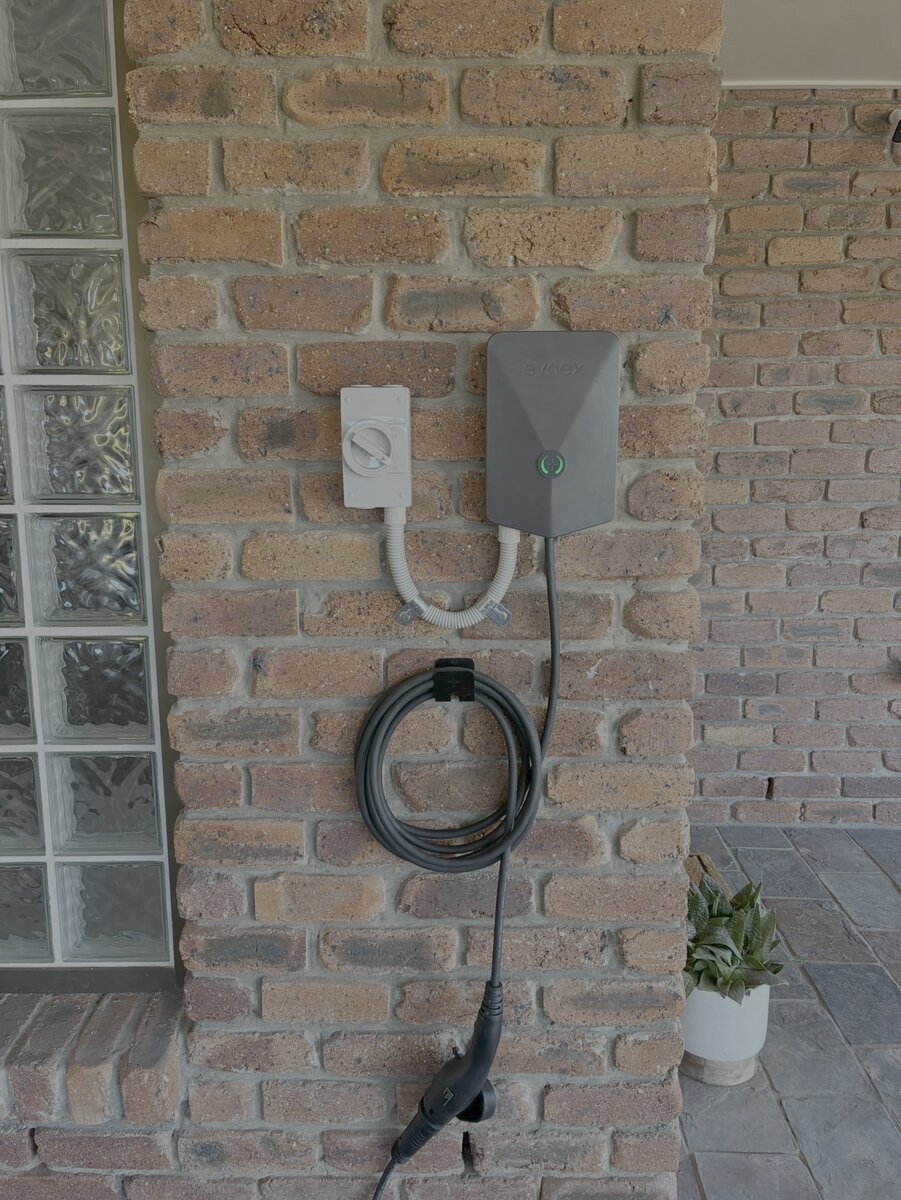
Important: These prices assume your switchboard is compliant and your cable run is reasonable (3–5 metres). Add $1,200–$2,500 if you need a switchboard upgrade (common in older Brisbane homes), plus extra for long cable runs, brick walls, or detached garages.
What’s Included in EV Charger Installation Cost?
When you get a quote for EV charger installation in Brisbane, here’s what you’re actually paying for:
1. The Charger Unit ($700–$1,800)
The wall unit itself. Prices vary by brand and smart features:
- Basic 7kW units (EVSE Wall, Wallbox Pulsar Lite): $700–$900 for the unit alone; basic installed jobs start from $990
- Smart chargers (Wallbox Pulsar Plus, Tesla Wall Connector): $1,000–$1,500
- Solar-aware chargers (Zappi v2, EVnex, Fronius Wattpilot): $1,300–$1,800
2. Dedicated Circuit and Cable ($300–$800)
EV chargers need their own 32A circuit from your switchboard. This includes:
- 6mm² or 10mm² copper cable (depending on run length)
- Cable clips, conduit, or trunking
- Labour to run the cable (3–5 metres is standard)
Cost drivers: Long cable runs, brick walls, slab penetrations, or detached garages add $400–$800.
3. RCD Protection ($150–$300)
EV chargers need Type A or Type B RCDs (not standard Type AC) because they generate DC fault currents. This is a safety requirement, not optional.
4. Switchboard Work ($100–$400, or $1,200–$2,500 for upgrade)
Adding the new circuit breaker, labelling, and confirming your switchboard can handle the load. If your board is old, full, or non-compliant, you’ll need a switchboard upgrade first.
5. Earth Bonding and Protection Checks ($50–$150)
EV chargers stress your home’s earth path. Your electrician will check and upgrade earthing if needed.
6. Commissioning and App Setup ($50–$100)
If your charger is smart, your electrician will connect it to your Wi-Fi, set up the manufacturer’s app, and (if you have solar) configure solar diversion.
7. QLD Electrical Safety Certificate ($50–$100)
You need this for insurance, your charger warranty, and any future home sale. It’s included in the quote — if it’s not, walk away.
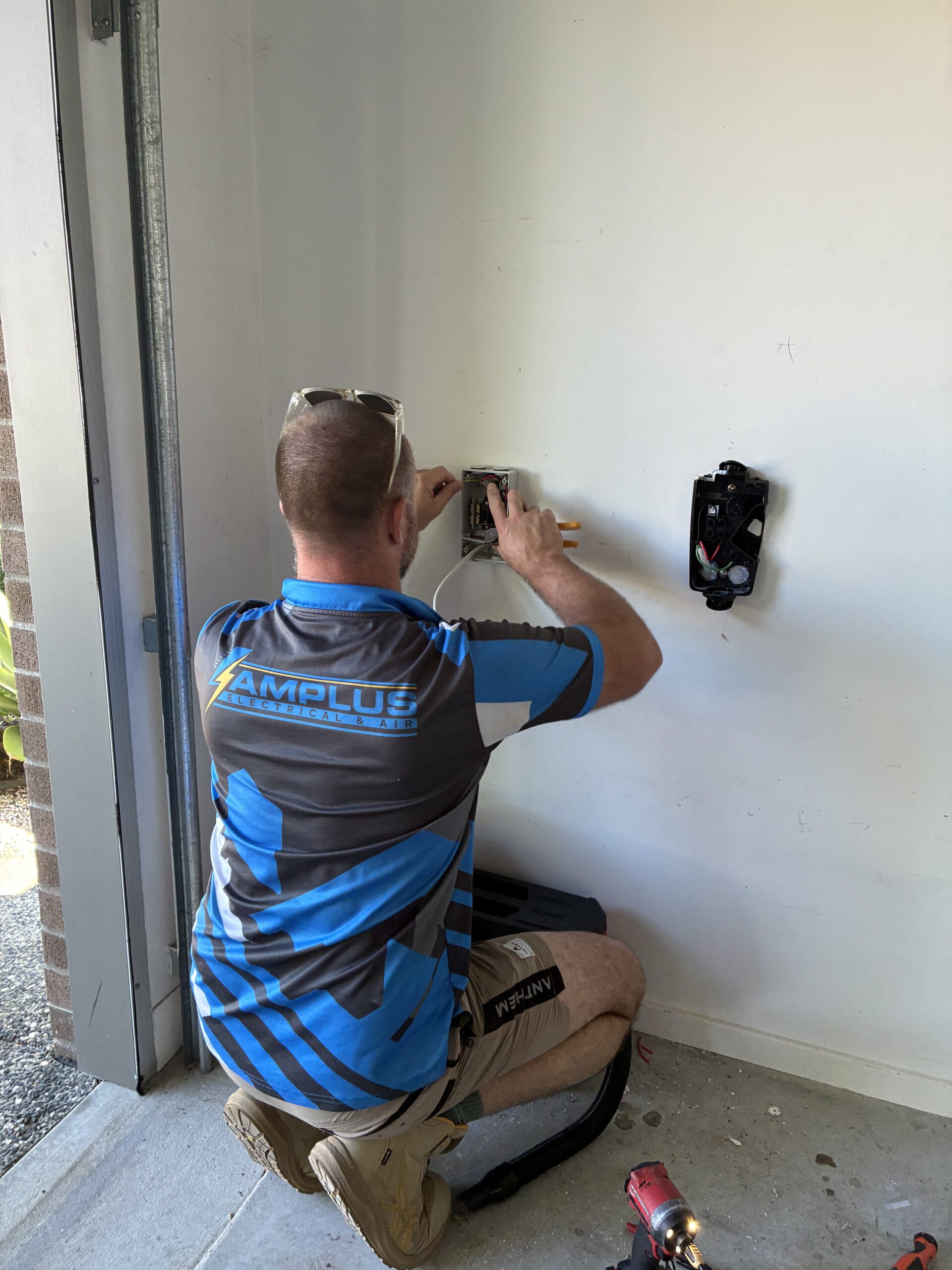
EV Charger Installation Cost Breakdown: Labour vs Materials vs Certificate
Here’s a typical $1,800 EV charger installation cost breakdown:
| Component | Cost | % of Total |
|---|---|---|
| Charger unit (smart 7kW) | $1,200 | 67% |
| Cable and dedicated circuit | $350 | 19% |
| RCD protection | $200 | 11% |
| Switchboard work | $150 | 8% |
| Earthing checks | $100 | 6% |
| Commissioning and app setup | $80 | 4% |
| QLD safety certificate | $70 | 4% |
| Total | $2,150 | 100% |
Key takeaway: The charger unit is the biggest cost (60–70%). Labour is bundled into the other line items. If a quote looks suspiciously cheap, check what’s included — they may be skipping the certificate or using inferior RCDs.
What Does a $990 Install Look Like vs $3,500?
Here’s the difference between the cheapest and most expensive installs:
$990 Install (Basic)
- Basic 7kW charger (no smart features, no app)
- Short cable run (3 metres, no walls to drill through)
- Switchboard already compliant, spare capacity available
- Standard Type A RCD
- No solar integration
Who it’s for: Budget-conscious EV owners who just want to charge at home, don’t care about app control or solar diversion, and have a modern switchboard.
$3,500 Install (Premium)
- 22kW three-phase smart charger (Zappi, Wallbox Pulsar Max)
- Long cable run (15+ metres, brick walls, detached garage)
- Switchboard upgrade required ($1,200–$2,500)
- Type B RCD (required for some three-phase chargers)
- Full solar integration with diversion
- App setup, Wi-Fi configuration, firmware updates
Who it’s for: EV owners with solar panels who want to maximise self-consumption, or homes with three-phase power who want the fastest possible charging.
What Drives EV Charger Installation Cost Up or Down?
Three things move the needle most on EV charger installation cost in Brisbane:
1. Cable Run Length and Complexity
The shorter and straighter the cable run from your switchboard to the charger, the cheaper. A typical $1,400 install assumes the charger goes in a garage right next to or behind the switchboard — a 3–5 metre cable run. Cost adders:
- Brick walls to drill through: +$100–$200 per wall
- Slab penetrations: +$150–$300
- Detached garage (needs trenching): +$400–$800
- Double-storey work: +$300–$600
- Long runs (15+ metres): +$200–$500

2. Switchboard Compliance
Many older Brisbane homes — especially in Capalaba, Alexandra Hills, Cleveland, Wynnum, and similar 1970s–1990s suburbs — have switchboards that can’t take a new 32A circuit safely. Signs you need a switchboard upgrade:
- Old ceramic fuses instead of circuit breakers
- No main switch RCD
- Board is full (no spare slots)
- Switchboard shows signs of heat damage
Cost: $1,200–$2,500 for a switchboard upgrade. The good news: a modern board makes the rest of your home safer and unlocks future jobs (solar, AC, induction cooktop).
3. Single-Phase vs Three-Phase
If you’ve got three-phase power coming into your home already, a 22kW three-phase charger is on the table. If you only have single-phase (the standard for most Brisbane homes), you’re capped at 7kW — unless you want to add three-phase service from Energex, which is a separate $3,000+ job and rarely justified just for EV charging. For many Brisbane homeowners, single-phase 7kW is the practical choice. It adds about 40km of range per hour, which means a full overnight charge for any commute.
EV Charger Installation Cost: Common Extras and Hidden Costs
A few things buyers don’t always think about until they’re on the quote:
Wi-Fi Extender ($50–$120)
Most smart chargers live in a garage where Wi-Fi signal dies. Budget for a mesh node if you want full app control.
Solar Inverter Compatibility Check ($0–$200)
Older inverters may not talk to your charger for solar diversion. Check before you buy a Zappi or Wattpilot. If your inverter needs upgrading, add $1,500–$3,000.
Tariff Change ($0, but saves you money)
Your retailer may not put you on the right time-of-use tariff automatically. A quick phone call after install can halve your charging cost. Ask for an off-peak or EV-specific tariff.
Insurance Notification ($0)
Most home insurers want to know you’ve had an EV charger installed. Ask your insurer what notification or documentation they require, and retain the electrical safety certificate and installation records. Some insurers offer discounts for compliant EV charger installs.
Earth Rod ($100–$200)
If your home’s earthing is inadequate, your electrician may need to install an earth rod. This is common in older Brisbane homes.
Trenching to Detached Garage ($400–$800)
If your charger needs to go in a detached garage, you’ll need to trench the cable underground. Cost depends on distance and soil type.
Is It Worth Upgrading to Three-Phase for EV Charging?
Three-phase 22kW charging is 3x faster than single-phase 7kW, but it costs more — both for the charger and the install.
Three-Phase Costs
- Charger unit: $1,300–$1,800 (vs $700–$1,500 for single-phase)
- Install cost: $2,400–$3,500 (vs $1,400–$2,200 for single-phase)
- Three-phase supply upgrade: priced separately if your property does not already have three-phase power
When Three-Phase Makes Sense
- You already have three-phase power at home
- You have two EVs to charge overnight
- You regularly drive 200km+ per day and need fast top-ups
- You want to future-proof for faster chargers
When Single-Phase Is Fine
- You only have one EV
- You drive less than 200km per day (most people)
- You charge overnight (7kW adds 40km/hour — plenty for a full charge)
- You don’t want to pay the three-phase premium
Bottom line: For most Brisbane homes, single-phase 7kW is the sweet spot. Three-phase is a luxury, not a necessity.
EV Charger Running Costs: Petrol vs Electricity
Here’s where EVs genuinely shine. The Brisbane residential rate in 2026 sits around $0.33/kWh on peak, and as low as $0.20/kWh on an off-peak tariff.
Electricity Cost to Charge an EV
- Typical EV battery (60 kWh): $12–$20 for a full charge from empty
- Daily commute (40 km): $2–$3 per day in electricity
- Solar-diverted charging: Close to $0 per day if you have 6kW+ solar and charge during sunshine hours
Petrol Cost for the Same Distance
- Typical petrol car (7L/100km): $90–$120 for the same 400km range as a full EV charge
- Daily commute (40 km): $9–$12 per day in petrol
Cost Comparison Over Time
| Timeframe | EV (Electricity) | Petrol Car | Savings |
|---|---|---|---|
| 1 year (15,000 km) | $750–$1,000 | $3,375–$4,500 | $2,625–$3,500 |
| 5 years (75,000 km) | $3,750–$5,000 | $16,875–$22,500 | $13,125–$17,500 |
| 10 years (150,000 km) | $7,500–$10,000 | $33,750–$45,000 | $26,250–$35,000 |
For most Brisbane EV owners, “fuel” costs drop by around 75–90% compared to a petrol car. That’s the real return on the install.
EV Charger Installation Cost for Apartments and Body Corporate
If you live in an apartment or townhouse with body corporate, EV charger installation is more complex — and more expensive.
Additional Costs
- Body corporate approval: $0–$500 (depends on your strata scheme)
- Shared infrastructure contribution: $500–$2,000 (if the body corporate is installing a shared charging system)
- Longer cable runs: $500–$1,500 (parking garages are often far from switchboards)
- Fire-rated cable or containment: $300–$800 (required in some buildings)
Total Cost for Apartment Install
Typical range: $2,500–$5,000 for a compliant apartment EV charger installation. Key considerations:
- You need body corporate approval before installing
- The charger must be installed on your own meter (not common property)
- Some buildings are installing shared charging infrastructure — check if your scheme has plans for this
- If you’re renting, you’ll need landlord approval too
EV Charger Installation Cost Across Brisbane and the Redlands
Kilowatt for kilowatt, install costs are the same wherever you are in the Bayside — what changes is the home. Older Cleveland and Wynnum homes are more likely to need a switchboard upgrade; newer builds around Victoria Point and Thornlands usually plug straight in. I install EV chargers right across the Redlands — Capalaba, Cleveland, Victoria Point, Wynnum, Alexandra Hills, Birkdale, Redland Bay, and the surrounding suburbs — and quote each home properly, not from a calculator.
Frequently Asked Questions
How much does it cost to install an EV charger in Brisbane?
For most Brisbane homes in 2026, a fully installed 7kW single-phase EV charger costs between $1,400 and $2,200. That covers the charger unit, a dedicated 32A circuit from your switchboard, RCD protection, install labour, commissioning and testing, and the QLD electrical certificate. Three-phase 22kW installs sit higher at $2,400 to $3,500, and tricky runs (long cable, switchboard upgrade, brick walls) can push either price higher.
Can I install an EV charger myself in Queensland?
No. Under Queensland law, any work connected to your home’s fixed wiring — including running a dedicated EV charger circuit — must be done by a licensed electrician. Fixed-wiring EV charger installation must be carried out by a licensed electrician in Queensland. DIY work can create electrical-safety, compliance, warranty and insurance problems. EV chargers pull continuous high current, so the circuit, cable size, protection and earthing must be designed and tested correctly.
Do I need a 3-phase EV charger or is single-phase enough?
For most Brisbane homes, single-phase 7kW is plenty. It adds about 40km of range per hour, which means a full overnight charge for any commute. Go three-phase 22kW only if (a) your home already has three-phase power, (b) you have two EVs to charge overnight, or (c) you regularly drive 200km+ a day and need fast top-ups. Three-phase costs more for the charger AND the install, and the speed difference is wasted if you only plug in once a day.
Will I need a switchboard upgrade for my EV charger?
Often, yes — especially in older Brisbane and Redlands homes. EV chargers need a dedicated 32A circuit with its own RCD, and many older switchboards either don’t have spare capacity, run old ceramic fuses, or fail the current QLD compliance standard. Budget $1,200–$2,500 for a switchboard upgrade if yours needs it. I’ll check this for free as part of the quote so there are no surprises on install day.
Is the $3,000 federal EV charger rebate still available?
There is no universal rebate I can safely quote for every Brisbane homeowner. Any current incentive, network program or tax treatment depends on your property, electricity arrangement and whether the vehicle is privately owned or business-related. Check the current position with the relevant authority or your accountant rather than relying on an old rebate figure.
What’s the cheapest EV charger I can install legally?
A basic/simple 7kW wall-mounted EV charger installation starts from $990. Straightforward installations with a compliant switchboard and short cable route sit at the lower end of the overall range. Below that you’re looking at portable cables that plug into a standard 10A socket — legal, but they only deliver around 2kW and take 24+ hours for a full charge, so they’re really a backup, not a primary solution.
How long does an EV charger installation take?
A standard residential install — single-phase 7kW, sensible cable run, switchboard already compliant — takes 3 to 5 hours start to finish. That includes mounting the unit, running the new circuit, switchboard work, RCD installation, commissioning, app pairing if smart, testing, and handing you the QLD electrical safety certificate. Trickier installs (three-phase, long runs, switchboard upgrade, double-storey) can stretch to a full day.
Will an EV charger fit my solar setup?
Yes — and pairing them is one of the biggest cost wins available. A smart charger like the Zappi, Fronius Wattpilot, or Tesla Wall Connector can prioritise excess solar over grid power, meaning your “fuel” cost during the day is effectively zero. We can either install a charger that talks to your existing inverter, or set it up on a controllable load circuit so it ramps with available solar. Worth raising at quote time.
How much does it cost to run an EV charger in Brisbane?
At Brisbane’s residential electricity rate of $0.33/kWh (peak) or $0.20/kWh (off-peak), charging a typical 60kWh EV battery costs $12–$20 for a full charge. That’s about $2–$3 per day for a 40km commute. If you have solar panels and charge during the day, your running cost drops to close to zero. Compare that to $9–$12 per day in petrol for the same distance — most EV owners save 75–90% on “fuel” costs.
Do I need to notify my insurance company about my EV charger?
Check with your insurer whether they require notification and what documentation they want. Keep the Queensland electrical safety certificate and installation records, but do not assume one document guarantees cover. Some insurers offer discounts for compliant EV charger installs, so it’s worth asking.
Get a Real Brisbane EV Charger Installation Quote
The cheapest EV install is the one that’s done right the first time — sized properly, on a compliant switchboard, with the right RCD and the right cable. If you want straight pricing on what your home will actually cost — including whether your switchboard is up to it — I’m happy to take a look. 📋 Request a Quote · 📞 Call Aaron 0419 014 146 Aaron is a licensed electrician (Lic. 1500996) and ARC-certified air conditioning technician (ARC Lic. L183747) at Amplus Electrical & Air, serving Capalaba, Cleveland, Victoria Point, Wynnum, the Redlands and Brisbane’s Bayside. Upfront pricing, no call-out fees, all EV installs come with a QLD electrical safety certificate. Aaron is a licensed electrician covering every Redlands suburb — if you’re in the Redlands, you’re getting a local tradie who knows your suburb. Free solar EV charging Brisbane guide — it covers EVnex specifically, with real savings math for Brisbane homes.
Need a Licensed Electrician in Brisbane Bayside?
Aaron is a licensed electrician (Lic. 1500996) and ARC-certified A/C technician serving Capalaba, Cleveland, Wynnum, Manly, Birkdale, Thornlands, Victoria Point and surrounding suburbs. Honest advice, upfront pricing, and quality work guaranteed.
One Response