Switchboard Upgrade for EV Charger Installation in Brisbane (2026 Guide)
Thinking about installing an EV charger at home? If your switchboard is older than 20 years or has ceramic fuses, you'll likely need an upgrade first. Complete guide to switchboard requirements, costs ($2,600–$4,700 combined), and what to expect. Licensed electrician advice from Amplus Electrical & Air, Brisbane.
Thinking about installing an EV charger at home? Here’s the quick answer: if your switchboard is older than 20 years, has ceramic fuses, or has limited spare capacity, you’ll likely need a switchboard upgrade before an EV charger can be safely connected. At Amplus Electrical & Air, a combined switchboard upgrade and EV charger installation in Brisbane typically costs $2,600–$4,700 all-in — upgrade ($1,200–$2,500) plus charger install (typically $1,400–$2,200, from $990 for simple runs). For a complete breakdown of charger-only pricing, see our EV charger installation cost guide.
For homes still running old ceramic fuses, our ceramic fuse box upgrade guide covers everything from safety risks to replacement costs.
I do this combination job regularly across Capalaba, Cleveland, Victoria Point, and the wider Redlands. The number one mistake I see Brisbane homeowners make is buying an EV charger online, then discovering their switchboard can’t handle it. Avoid this — run our pre-purchase EV readiness checklist before you buy anything. The charger sits in the box for weeks while they scramble to get the electrical infrastructure sorted. This guide walks you through exactly when you need a switchboard upgrade, what it costs, and how to avoid the most common pitfalls.
For the full picture on EV charging at home — including charger types, ATO tax benefits, and single-phase vs three-phase explained — read our complete EV home charging guide. And if you want the broader switchboard picture (not just EV-related), our switchboard upgrade guide covers everything from signs you need one to compliance requirements.
Do You Need a Switchboard Upgrade for an EV Charger?
Not every home needs a switchboard upgrade before installing an EV charger. But a surprising number do. Here’s how to tell which category you’re in:
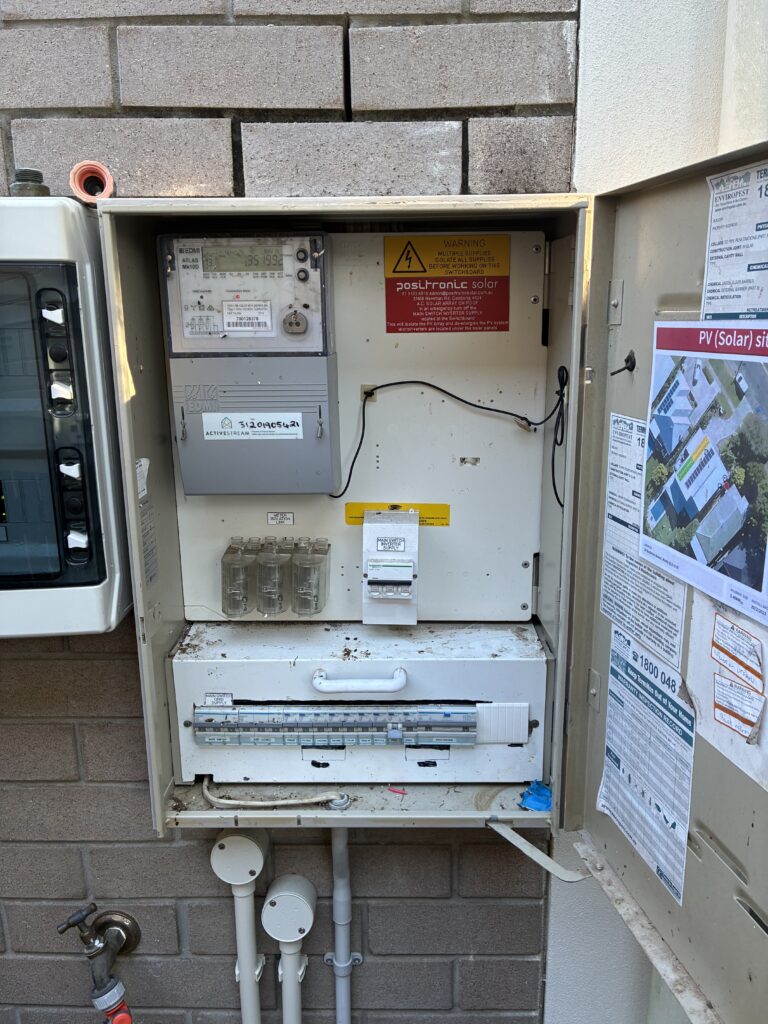
Your Switchboard is Probably Fine If:
- It’s less than 20 years old
- It has circuit breakers (not ceramic fuses)
- It has safety switches (RCDs) on power and lighting circuits
- It has spare slots for at least one new 32A or 40A breaker
- Your main switch is rated 63A or higher
If all five of those are true, you can likely install a 7kW single-phase EV charger without touching the switchboard. The charger just needs its own dedicated circuit — a new 32A breaker and a run of 6mm² cable from the switchboard to the charger location.
You Almost Certainly Need an Upgrade If:
- You still have ceramic fuses (the old screw-in type)
- Your switchboard has no safety switches
- It’s a 6-circuit or 8-circuit board with no spare slots
- Your main switch is rated 40A or 50A
- The switchboard is mounted on a fibrous plaster (sheetrock) wall without a backing plate
- You want to install an 11kW or 22kW three-phase charger but only have single-phase supply
If any of those apply, you need a switchboard upgrade before the EV charger can be installed. Running a 32A EV charging circuit on an old, undersized switchboard is a genuine safety risk — and it can’t be certified as compliant.
For a detailed look at the warning signs, read our guide on signs your switchboard needs replacing.
Single-Phase vs Three-Phase: What Your Switchboard Can Handle
This is the single most important thing to understand before buying an EV charger. Your home’s electrical supply type determines what charger you can run — and whether you need a switchboard upgrade.
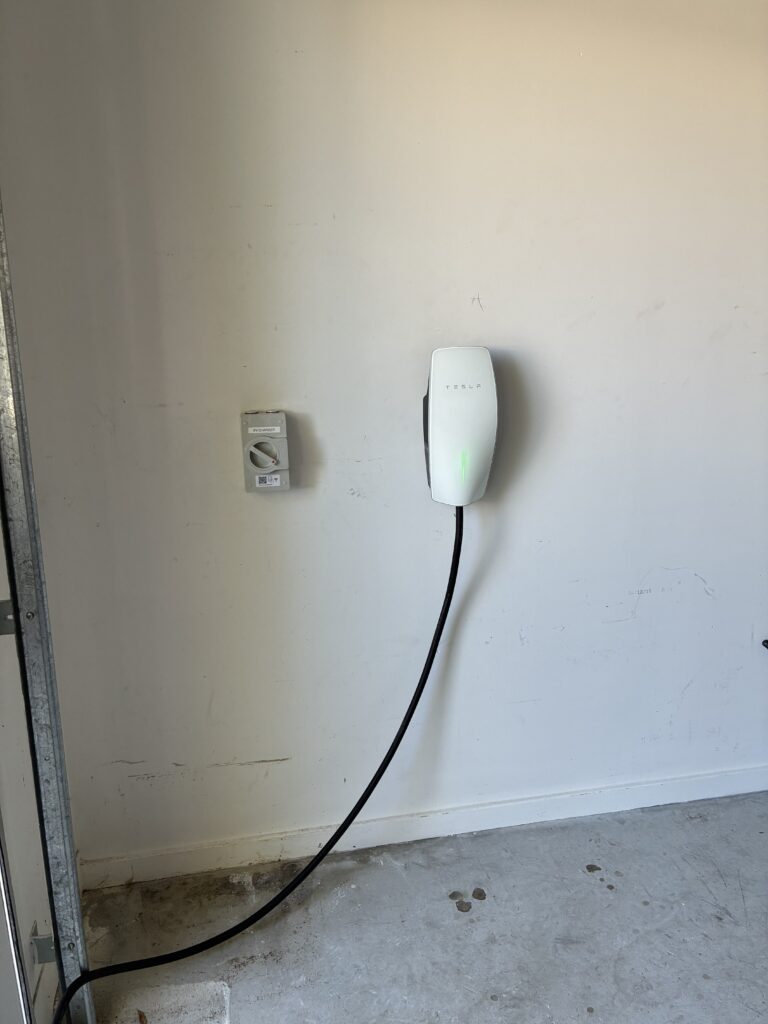
Single-Phase Supply (Most Brisbane Homes)
Most homes in Brisbane and the Redlands have single-phase power. That means your switchboard receives electricity on one active wire plus neutral. Single-phase supply can handle a 7kW EV charger (32A) without issue — as long as your switchboard is modern enough and your main switch is rated 63A or higher.
A 7kW charger adds about 30-40km of range per hour of charging. For most Brisbane commuters who drive 40-60km per day, that’s more than enough. You plug in when you get home, and by morning your car is fully charged.
Three-Phase Supply (Larger Homes and Newer Builds)
Three-phase supply gives you three active wires, effectively tripling your capacity. Homes with three-phase can run 11kW or 22kW EV chargers, which charge significantly faster — up to 70-100km of range per hour.
But here’s the catch: if your home only has single-phase supply and you want a three-phase charger, you need to contact your electricity distributor (Energex in Brisbane) to upgrade your supply. That’s a separate process from the switchboard upgrade, and it can cost $1,000–$3,000+ depending on your location and the work required.
The Quick Decision Matrix
| Your Supply | Max Charger | Switchboard Upgrade Needed? | Approx Cost |
|---|---|---|---|
| Single-phase, modern board | 7kW | Probably not | $1,400–$2,200 (charger only, from $990) |
| Single-phase, old board | 7kW | Yes | $2,600–$4,700 (upgrade + charger) |
| Three-phase, modern board | 11kW–22kW | Probably not | $2,400–$3,500 (charger only) |
| Single-phase, want three-phase charger | 11kW–22kW | Yes + supply upgrade | $4,600–$9,000 (supply + board + charger) |
For most Brisbane homeowners, a 7kW single-phase charger on a modern switchboard is the sweet spot. It’s the cheapest option, charges fast enough for daily use, and doesn’t require any infrastructure upgrades.
How to Check if Your Switchboard is EV-Ready
Before you book anything, you can do a quick self-assessment. Open your switchboard and check these five things:
1. Count Your Circuits
How many breakers do you have? If you have 12 or fewer, your switchboard is probably old and may not have room for a new dedicated EV circuit. Modern switchboards typically have 16-24 circuits.
2. Check Your Main Switch Rating
Look at the main switch (usually the largest breaker, often at the top). It should have a number on it — 40A, 63A, 80A, or 100A. If it’s 40A or 50A, the board may be undersized for an EV charger — most 7kW installs end up on a 63A or larger main switch, and 80A+ gives headroom for future upgrades. The exact requirement depends on the load assessment.
3. Look for Safety Switches
Safety switches (RCDs) are wider than normal circuit breakers and have a small “T” or “Test” button. If your switchboard doesn’t have them, you need an upgrade — not just for the EV charger, but for basic safety. See our safety switch installation cost guide for pricing.
4. Check for Spare Slots
An EV charger needs its own dedicated circuit breaker. If your switchboard is completely full with no spare slots, you either need to add a sub-board or upgrade the main switchboard entirely.
5. Look at the Age and Condition
If your switchboard looks old, has burn marks, makes buzzing sounds, or still uses ceramic fuses, it needs replacing regardless of the EV charger. Adding a high-draw appliance like an EV charger to a deteriorating switchboard is asking for trouble.
If you’re unsure about any of these checks, don’t guess — get a licensed electrician to do a load assessment. It’s usually included as part of the quoting process for the EV charger installation.
What Happens During a Switchboard Upgrade for EV Charging
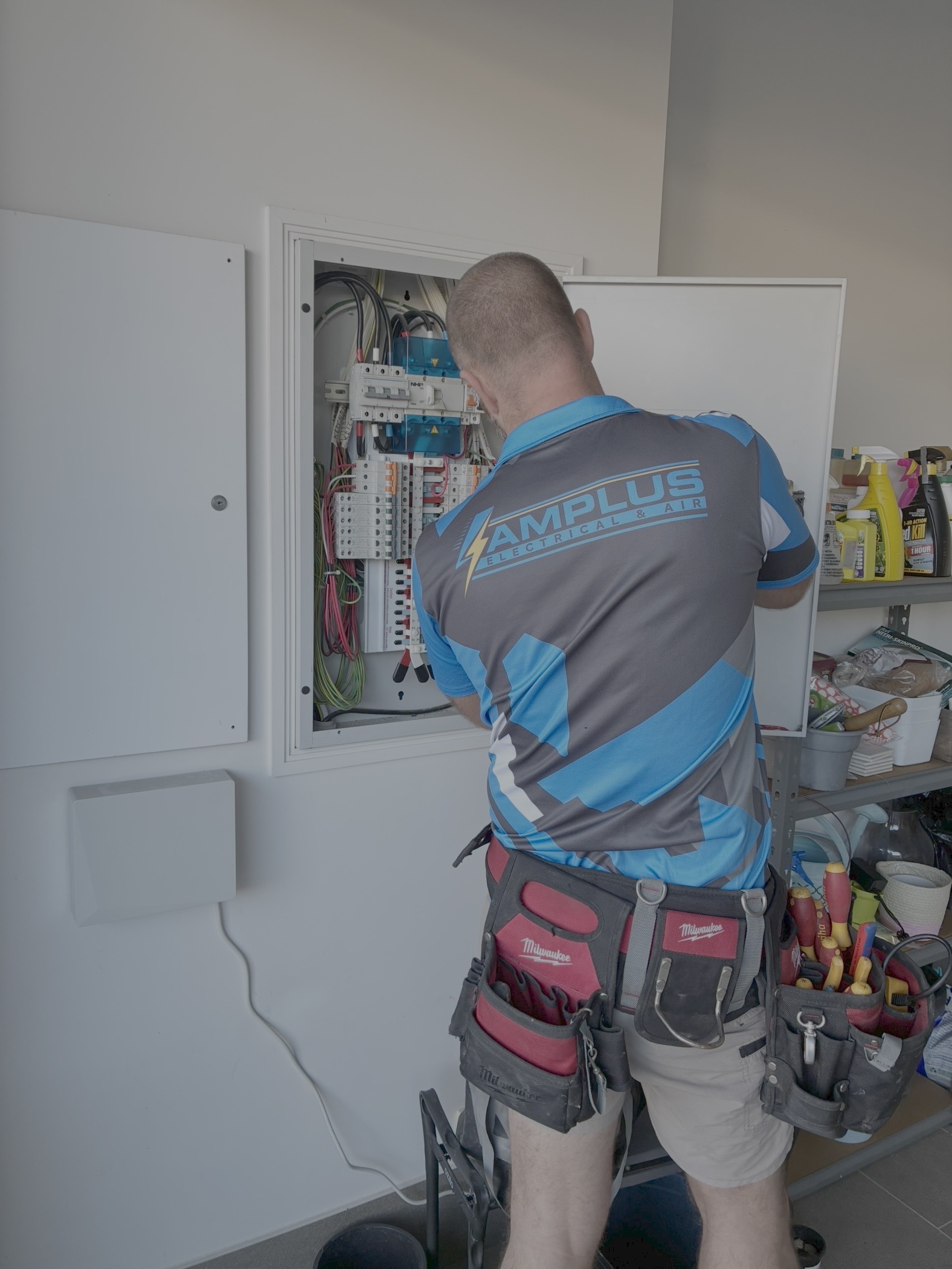
Here’s the step-by-step process when we do a combined switchboard upgrade and EV charger installation:
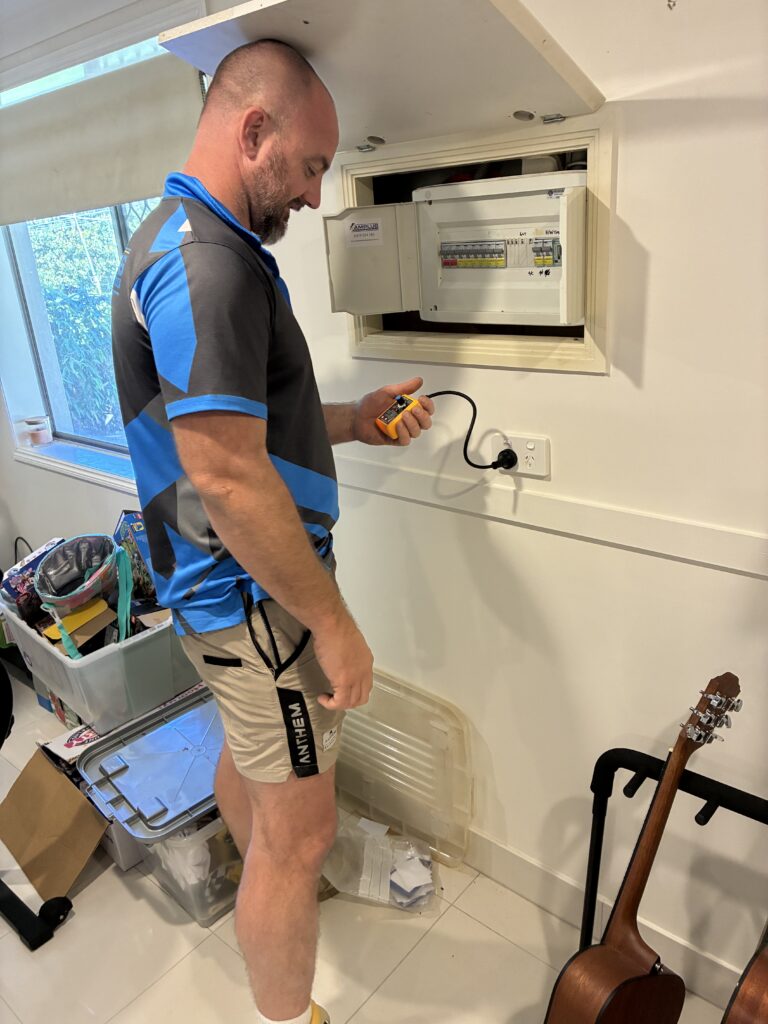
Step 1: Load Assessment (30 minutes)
Before touching anything, we assess your home’s maximum demand — the total electrical load your supply can support. We check your main switch rating, existing circuit draw, and calculate whether your supply can handle the additional 32A (or more) that an EV charger demands. This determines whether you need a basic upgrade or a more extensive one.
Step 2: Switchboard Upgrade (4–8 hours)
If the upgrade is needed, we replace your old switchboard with a modern one. This includes:
- New switchboard enclosure (metal, properly earthed)
- Circuit breakers for all existing circuits
- Safety switches (RCDs) on power and lighting circuits
- A dedicated 32A or 40A breaker for the EV charger
- Upgraded main switch if needed (40A → 63A or 80A)
- Labelled circuits so you know what controls what
Your power will be off for most of this work — typically 4-6 hours. We’ll let you know in advance so you can plan accordingly.
Step 3: EV Charger Installation (2–3 hours)
Once the switchboard is upgraded, we run a dedicated cable (usually 6mm² or 10mm² depending on distance) from the new breaker to your charger location — typically the garage. We mount the charger, connect it, test it, and commission it.
Step 4: Compliance Testing and Certificate (30 minutes)
Every job gets full compliance testing — earth resistance, insulation resistance, RCD trip times, and polarity checks. You receive an Electrical Safety Certificate on completion, issued through Queensland’s eSafe system. This covers both the switchboard upgrade and the charger installation.
Typical Scenarios: What Brisbane EV Owners Usually Need
Every job is priced on its own switchboard, supply and cable route, but these are the typical scenarios we see across Brisbane and the Redlands:
Scenario 1: 1990s board, few circuits, no safety switches
Common in brick homes built through the 80s and 90s around Capalaba and Cleveland: circuit breakers but no safety switches and little spare capacity. Typical outcome: upgrade to a modern board with RCD protection and a dedicated 32A EV circuit, then a 7kW wall charger in the garage. Combined cost typically $2,600–$4,700.
Scenario 2: 1970s home with ceramic fuses
Older bayside homes often still run ceramic fuses with no safety switches. Typical outcome: full switchboard replacement with RCDs on every circuit, plus the new EV circuit and charger. Combined cost typically $3,200–$4,700 depending on the board and cable route.
Scenario 3: Switchboard in an awkward location
Some older boards sit in cupboards or hallways where a clean cable route is impractical. Relocating the board to the garage wall during the upgrade makes the charger install neater. Combined cost typically $3,200–$4,700 with relocation included.
Scenario 4: Single-phase home wanting three-phase charging
Fast 11kW–22kW charging needs a three-phase supply. If the property only has single-phase, a three-phase board and charger typically run $3,600–$6,000, plus the Energex supply upgrade (typically $1,000–$3,000, quoted separately) which can take several weeks to arrange.
Scenario 5: Modern board with spare capacity
Newer homes with a modern board, RCD protection and a 63A+ main switch often just need a dedicated 32A circuit and the charger. Charger-only install typically $1,400–$2,200, from $990 for simple runs.
These scenarios are a guide, not a quote. The actual cost depends on the condition of your existing switchboard, your supply and the cable route. The only way to know for sure is to get a licensed electrician to assess your setup.
Combined Cost: Switchboard Upgrade + EV Charger Installation
Here’s a clear breakdown of what you can expect to pay in Brisbane for the combined job:
| Scenario | Switchboard Cost | Charger Cost | Total |
|---|---|---|---|
| No upgrade needed — just charger | $0 | $1,400–$2,200 | $1,400–$2,200 |
| Basic upgrade (fuse box → circuit breakers) | $1,200–$2,500 | $1,400–$2,200 | $2,600–$4,700 |
| Full upgrade + relocation | $1,800–$2,500 | $1,400–$2,200 | $3,200–$4,700 |
| Three-phase supply upgrade + charger | $1,200–$2,500 (three-phase board) | $2,400–$3,500 | $3,600–$6,000 |
At Amplus Electrical & Air, every job is flat-quoted before work starts — no hourly surprises. Simple charger runs can start from $990, while combined switchboard and charger jobs depend on the board and cable route. For a detailed breakdown of charger-only pricing, see our EV charger installation cost guide. For switchboard-only pricing, see our switchboard upgrade cost guide.
How Long Does the Combined Job Take?
Timing depends on the complexity:
- No switchboard upgrade needed: 2–3 hours. We arrive, run the cable, mount the charger, connect it, test it, and you’re charging that afternoon.
- Basic switchboard upgrade + charger: 6–8 hours. Usually completed in one day. Your power is off for 4-6 hours during the switchboard work, then we install the charger while the system is live again.
- Full upgrade with relocation: 8–10 hours. May require two days if the cable run is complex or the new switchboard location needs structural work.
- Three-phase supply upgrade + charger: 1–2 days. The Energex supply upgrade is a separate process that can take 2-4 weeks to arrange. The actual electrical work on the day takes 8-10 hours.
We give you a clear timeline before we start. If your power needs to be off, we’ll tell you exactly when so you can plan around it — move perishables from the fridge, charge phones and laptops, let family members know.
Common Mistakes Brisbane EV Owners Make with Their Switchboard
After doing this job regularly across the Redlands, here are the most common mistakes I see:
1. Buying the Charger Before Getting an Assessment
People order a charger online, it arrives, and then they call an electrician — only to discover their switchboard can’t handle it. The charger sits in the box for weeks. Always get a load assessment first. Most electricians (including us) include this as part of the quoting process.
2. Not Getting a Dedicated Circuit
Some homeowners try to run their EV charger through an existing power point or shared circuit. This is extremely dangerous. EV chargers draw sustained high current for hours — they need their own dedicated circuit with the correct breaker size and cable. Sharing a circuit risks overheating and fire.
3. Ignoring Cable Distance
The distance from your switchboard to where you want the charger matters. Longer cable runs need thicker cables (to prevent voltage drop), which costs more. A charger mounted 3 metres from the switchboard costs significantly less to install than one 20 metres away. Plan your charger location carefully.
4. Forgetting About Future-Proofing
If you’re already paying for a switchboard upgrade, it makes sense to future-proof. Installing a 63A or 80A main switch now (instead of the minimum 40A) gives you headroom for a second EV, a larger charger, or additional circuits down the track. The incremental cost is small — but retrofitting later is expensive.
5. Using an Unlicensed Sparky
Queensland law requires a licensed electrician for all switchboard work and EV charger installation. Unlicensed work is illegal, may affect your home insurance, and can’t be certified as compliant. You’ll also miss out on the Electrical Safety Certificate that insurers and accountants typically ask to see. Always check your electrician holds a current Queensland electrical contractor licence.
6. Not Claiming ATO Tax Benefits
If you use your EV for work, part of the cost may be tax-deductible. Keep your invoices and talk to your accountant about what applies to your situation.
Future-Proofing Your Switchboard for EV Upgrades
If you’re getting a switchboard upgrade anyway, here’s how to make sure it’s ready for whatever comes next:
Install a Larger Main Switch
If your supply can handle it, go for an 80A or 100A main switch rather than the smallest option. This gives you capacity for a second EV charger, a large workshop, or future high-draw appliances like heat pumps.
Leave Spare Circuits
A 16-circuit board might be enough today, but a 20 or 24-circuit board gives you room to grow. The price difference is usually $100–$200 — cheap insurance against needing another upgrade in five years.
Run Conduit to the Charger Location
Even if you’re not installing the charger today, running empty conduit from the switchboard to your garage during the upgrade makes future charger installation much cheaper. Pulling cable through existing conduit is far cheaper than drilling through walls and running new cable.
Consider a Smart Charger
Smart EV chargers can schedule charging during off-peak hours (when electricity is cheaper), monitor your energy usage, and even integrate with solar panels. If you have or are considering solar, a smart charger can prioritise charging from available surplus solar. Our surplus solar EV charging guide covers how solar-smart chargers like EVnex work and what Brisbane homeowners can save. We install smart charger brands including Tesla Wall Connector, EVnex, Zappi, and Wallbox.
Choosing the Right Electrician for EV Switchboard Upgrades in Brisbane
Not all electricians are comfortable with EV charger installations and switchboard upgrades. Here’s what to look for:
- Current Queensland electrical contractor licence — non-negotiable. Check it on the Electrical Safety Office website.
- Experience with EV chargers — ask how many they’ve installed and how recently.
- Transparent pricing — you should know the cost before work starts. No surprises.
- Compliance certificate included — every job must come with an Electrical Safety Certificate.
- Local knowledge — Brisbane homes have specific quirks (salt air corrosion near the bayside, older fibrous plaster walls, Energex supply variations). A local electrician knows these issues.
When you book with Amplus Electrical & Air, you get Aaron — a licensed electrician (QLD Electrical Contractor Licence #1500996) serving Brisbane homes across the Bayside and Redlands. Not a junior tech, not a subcontractor. Aaron does the load assessment, the switchboard upgrade, and the charger installation himself. We’re proud members of Master Electricians Australia.
For a broader look at what to expect from the full installation process — from quote to first charge — read our complete EV charger installation guide.
Frequently Asked Questions
Do I need a switchboard upgrade for a 7kW EV charger?
Not always. If your switchboard is less than 20 years old, has circuit breakers and safety switches, and has a 63A+ main switch with a spare slot, you can install a 7kW charger without upgrading. If your board is older or undersized, yes — you’ll need an upgrade first.
How much does a switchboard upgrade for EV charging cost in Brisbane?
A switchboard upgrade costs $1,200–$2,500 depending on complexity. Combined with a 7kW EV charger installation, you’re looking at $2,600–$4,700 all-in. If you need a three-phase supply upgrade, that’s quoted separately through Energex.
Can I install an EV charger without upgrading my switchboard?
Only if your existing switchboard can handle the additional 32A load. If your board is old, has ceramic fuses, no safety switches, or a main switch rated below 63A, you need an upgrade first. Running an EV charger on an undersized switchboard is a genuine safety risk.
How long does a switchboard upgrade and EV charger installation take?
A basic upgrade plus charger installation takes 6–8 hours and is usually completed in one day. More complex jobs (relocation, three-phase) may take 1–2 days. Your power will be off for 4–6 hours during the switchboard work.
Do I need three-phase power for an EV charger?
No. A standard 7kW single-phase charger works perfectly for most Brisbane homes. Three-phase is only needed for faster 11kW–22kW charging. Most overnight charging happens at 7kW — by morning, your car is full regardless.
Will an EV charger increase my electricity bill?
Yes, but less than you think. Charging an EV at home costs about $3–$5 per 100km of range (compared to $12–$18 per 100km for petrol). If you charge during off-peak hours (most chargers can be scheduled), it’s even cheaper. For a detailed breakdown, see our home EV charging guide.
Can I use my solar panels to charge my EV?
Yes. A smart EV charger can prioritise charging from available surplus solar, which can reduce grid purchases. How much it saves depends on household demand, solar output, metering and the time of day. Our surplus solar EV charging guide covers how solar-smart chargers like EVnex work and what Brisbane homeowners can save. We install solar-compatible chargers including EVnex, Zappi and Tesla Wall Connector.
Do I need a compliance certificate for an EV charger installation?
Yes. Queensland law requires an Electrical Safety Certificate for all electrical work, including EV charger installations. Your electrician issues this through the eSafe system on completion. Without it, the work isn’t certified as compliant. For more on compliance costs, see our electrical safety certificate cost guide.
What size cable do I need for an EV charger?
A 7kW single-phase charger typically needs 6mm² cable for runs up to 20 metres. Longer runs may need 10mm² to prevent voltage drop. The exact size depends on the distance from your switchboard and the charger’s maximum current draw. Your electrician will calculate this during the assessment.
Can I install an EV charger myself?
No. Queensland law requires a licensed electrician for all EV charger installations. DIY electrical work is illegal, may affect your home insurance, and can’t be certified as compliant. Always use a licensed electrician — it’s not worth the risk.
Ready to Get Your Home EV-Charger Ready?
Book a licensed electrician for a combined switchboard upgrade + EV charger installation. Servicing Brisbane, the Redlands and Bayside.
Aaron Ross is a Master Electricians member, licensed electrician and owner of Amplus Electrical & Air in Capalaba, Brisbane. He holds Queensland Electrical Contractor Licence #1500996 and ARCtick Licence L183747 for refrigerant handling. Amplus serves Brisbane, the Redlands, and Bayside suburbs with switchboard upgrades and EV charger installations.
Need a Licensed Electrician in Brisbane Bayside?
Aaron is a licensed electrician (Lic. 1500996) and ARC-certified A/C technician serving Capalaba, Cleveland, Wynnum, Manly, Birkdale, Thornlands, Victoria Point and surrounding suburbs. Honest advice, upfront pricing, and quality work guaranteed.
One Response