
Evnex Solar EV Charger Brisbane — Charge from Surplus Solar (2026)
Free solar EV charging in Brisbane with EVnex — charge your EV for free using solar. Real savings math, install photos from real Redlands jobs, and everything you need to know about EVnex solar divert charging.
If you have solar panels and an EV, an EVnex charger can help use surplus solar generation to charge your vehicle and reduce the amount of electricity you buy from the grid. The amount you can use depends on your solar output, household demand, vehicle charging limits and when the car is at home. This guide explains how solar-priority charging works, what affects the savings, what an EVnex installation involves, and how to compare it with other options.
If you’re new to EV charging in general, start with our complete guide to EV home charging in Australia — it covers amps, AC vs DC, ATO benefits, and the basics. This post builds on that with the specific angle Brisbane homeowners care about most: how to charge your EV using surplus solar.
How Solar EV Charging Works — The Simple Version
Your solar panels generate DC electricity during the day. Your inverter converts it to AC for your home. In a normal setup, any surplus power your house doesn’t use gets exported to the grid — and you get paid a feed-in tariff of around 5–10 cents per kWh.
But here’s the thing: that surplus power is worth more to you inside your EV battery than it is on the grid. If you’re paying 28–32 c/kWh to charge your EV from the grid at home, every kWh of solar you divert into your car instead of exporting saves you roughly 20–25 cents.
Solar EV charging works by matching your charger’s draw to your home’s real-time solar export. When your house is using 1 kW and your panels are generating 6 kW, you have 5 kW of surplus. A solar-smart charger like the EVnex automatically ramps up to use that 5 kW for charging — no waste, no grid draw.
For a full breakdown of charging speeds, connectors, and the difference between AC and DC, see our EV home charging Australia guide.
Why EVnex? The Charger We Actually Recommend
There are several EV chargers that can support solar-aware charging, including Wallbox, Tesla Wall Connector, Fronius Wattpilot and Zappi. We assess the charger, inverter, switchboard and household load together; EVnex is one option to consider for homeowners who want solar-priority charging.
Solar diversion and home energy monitoring
Evnex describes solar diversion as a built-in feature of its smart charging system. Depending on the charger model and the home’s existing solar and metering setup, solar-priority charging may avoid the need for a separate third-party diverter. Your installer should confirm what monitoring equipment and configuration your installation needs.
Australian Designed and Supported
EVnex is a New Zealand company with Australian support. That means local compliance (AS/NZS 3000, AS/NZS 4777), local warranty support, and a charger designed for our grid and solar conditions — not a European product adapted for Australia. When you’re spending $1,800–$2,500 on a charger install, having local support matters. We’ve dealt with overseas brands where warranty claims meant weeks of back-and-forth. EVnex support is local and responsive.
OTA Updates and Smart Scheduling
The EVnex app lets you schedule charging for solar hours, set minimum charge levels, and monitor your energy flow in real time. Over-the-air updates mean the charger gets better over time without an electrician visit. It may support integrations and smart-energy features depending on the model, firmware and program. OCPP or VPP participation is not automatic and does not guarantee payment; confirm current compatibility and eligibility before relying on it.
How Much Can You Save with Surplus Solar?
Let’s use realistic Brisbane numbers. This is based on what we see in our customers’ homes across the Redlands, Bayside, and greater Brisbane area. These are illustrative examples, not a guarantee or a measured result from every Amplus customer. Actual savings depend on solar surplus, export tariff, household usage, charging schedule, vehicle efficiency and grid top-ups.
| Scenario | Grid charging (28 c/kWh) | Illustrative solar-energy cost | Annual saving |
|---|---|---|---|
| Light user — 30 km/day (~6 kWh) | About $613/year at 28 c/kWh | Depends on surplus solar and export tariff | Illustrative maximum: up to $613 before opportunity cost |
| Average commuter — 50 km/day (~10 kWh) | About $1,022/year at 28 c/kWh | Depends on surplus solar and export tariff | Illustrative maximum: up to $1,022 before opportunity cost |
| Heavy user — 80 km/day (~16 kWh) | About $1,635/year at 28 c/kWh | Depends on surplus solar and export tariff | Illustrative maximum: up to $1,635 before opportunity cost |
| Two-EV household — 100 km/day combined | About $2,044/year at 28 c/kWh | Depends on surplus solar and export tariff | Illustrative maximum: up to $2,044 before opportunity cost |
If a driver can regularly charge from surplus solar instead of buying grid electricity, the avoided grid cost can add up over time. But solar energy has an opportunity cost because it could otherwise earn an export credit, and some charging may still use grid power. Compare your own usage, tariff, export rate and installation cost before estimating payback.
For a complete breakdown of installation costs, see our EV charger installation cost guide for Brisbane. The savings math above assumes you already have solar — if you don’t, the charger installation itself is still a worthwhile upgrade for any EV owner, and you can add solar later.
What the EVnex Installation Looks Like — Real Brisbane Jobs
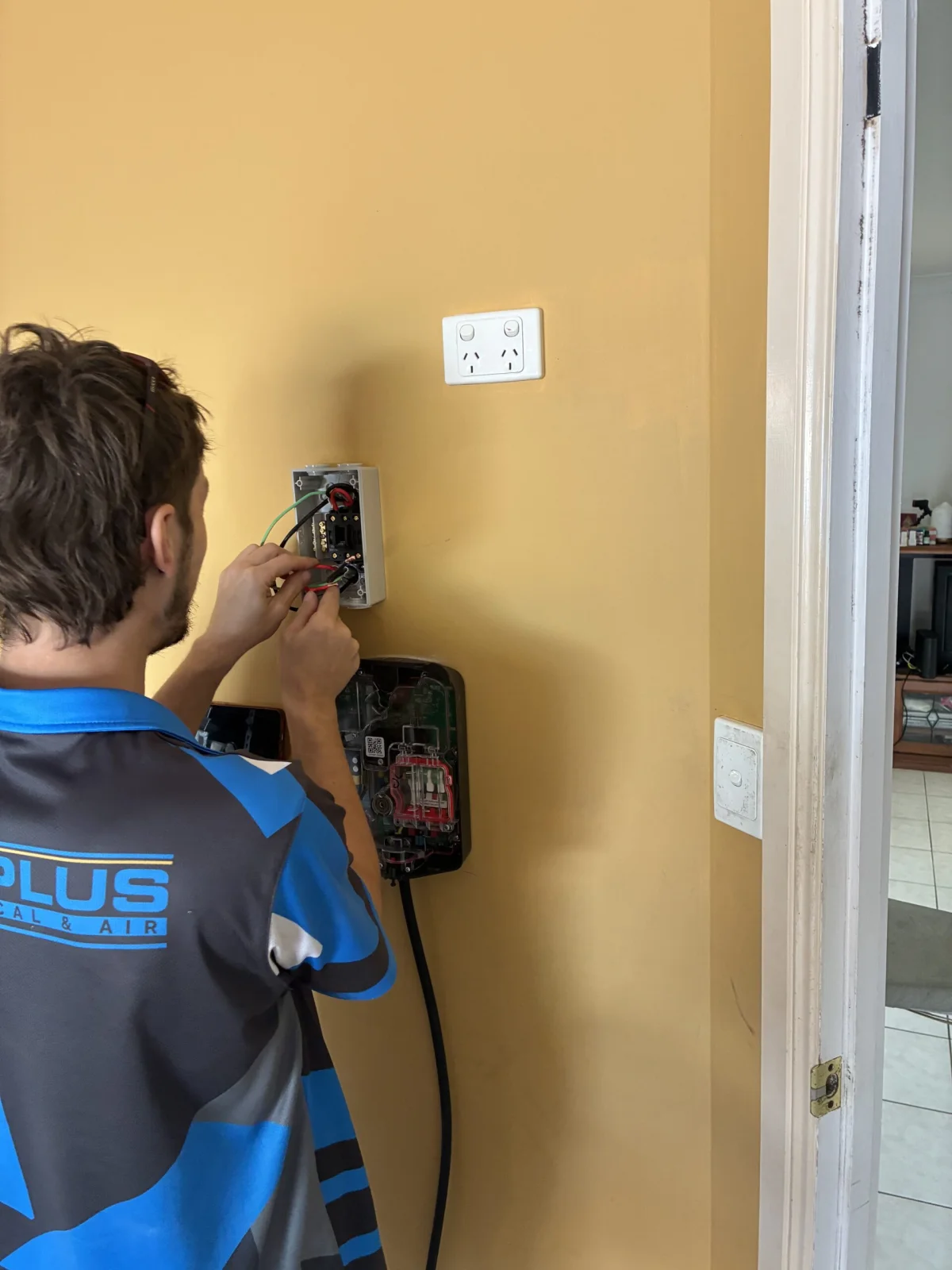
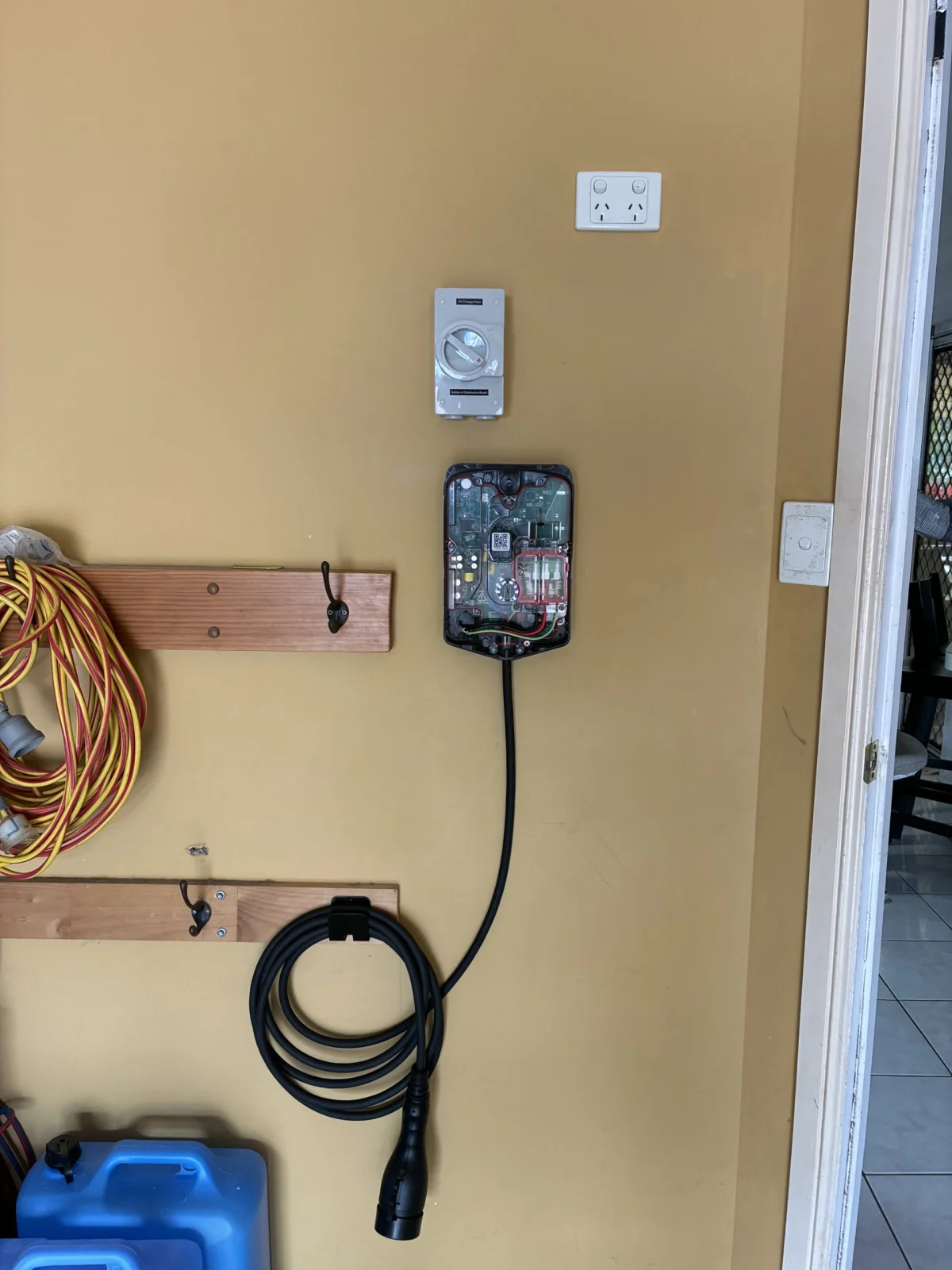
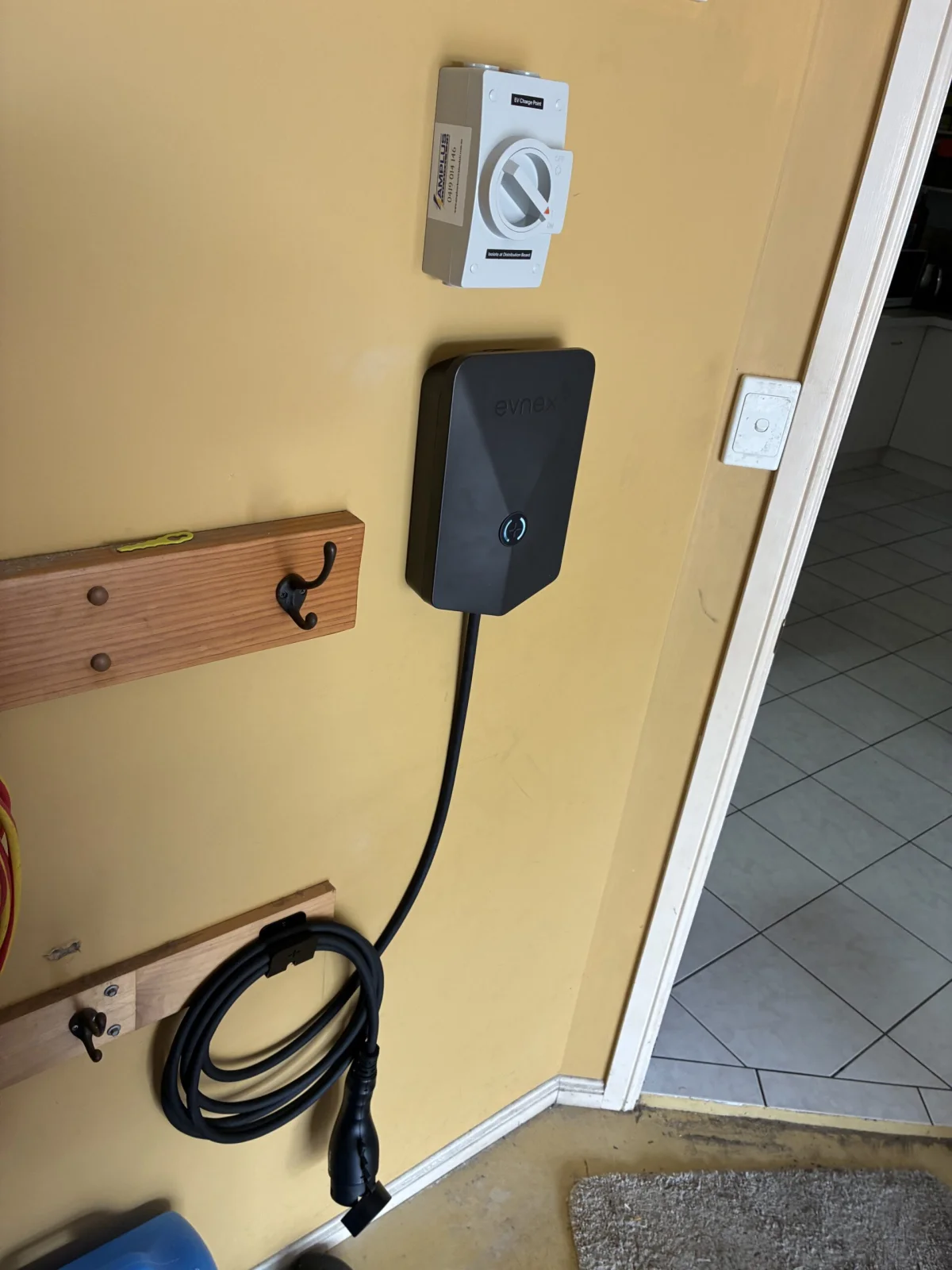
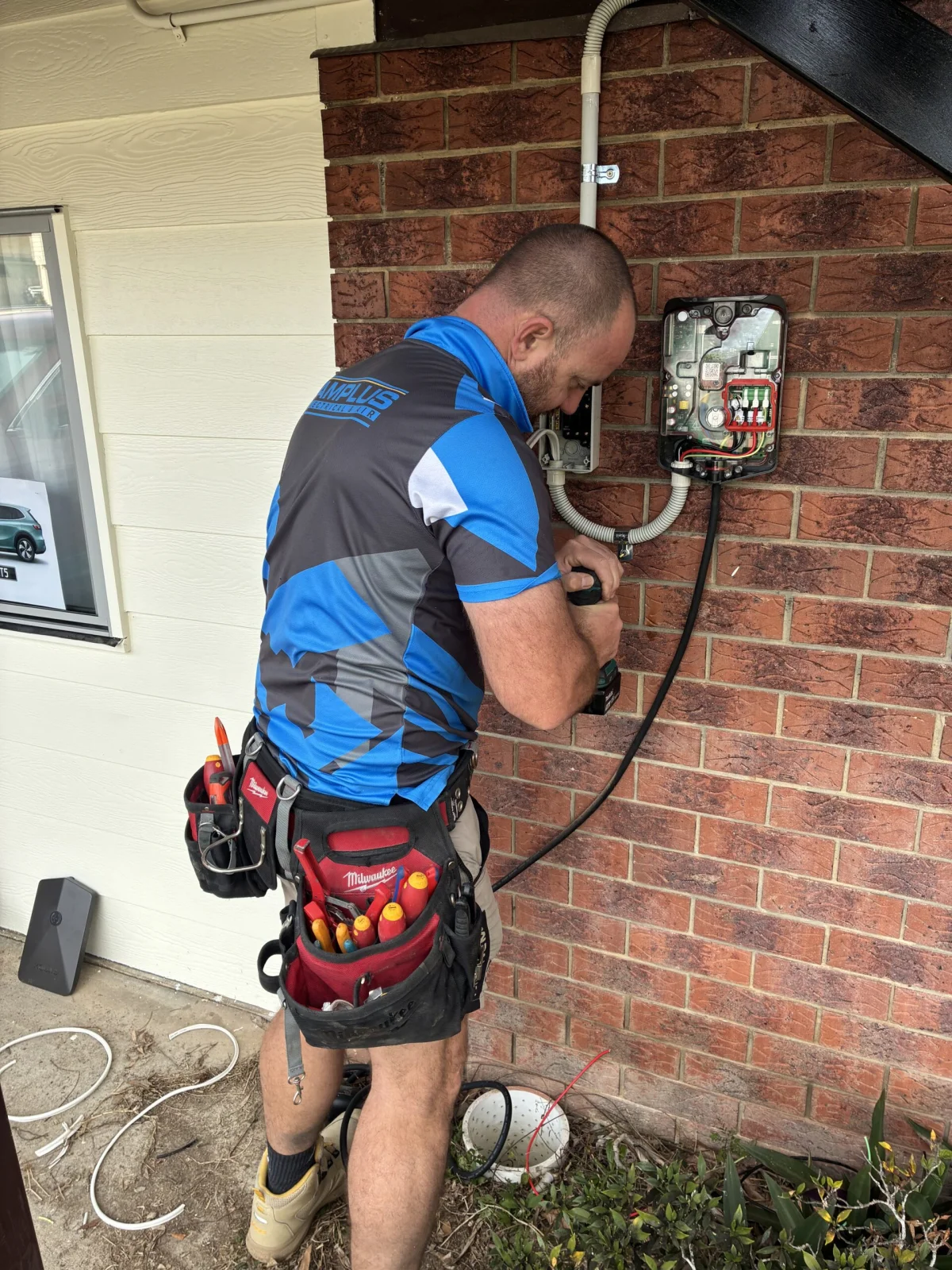
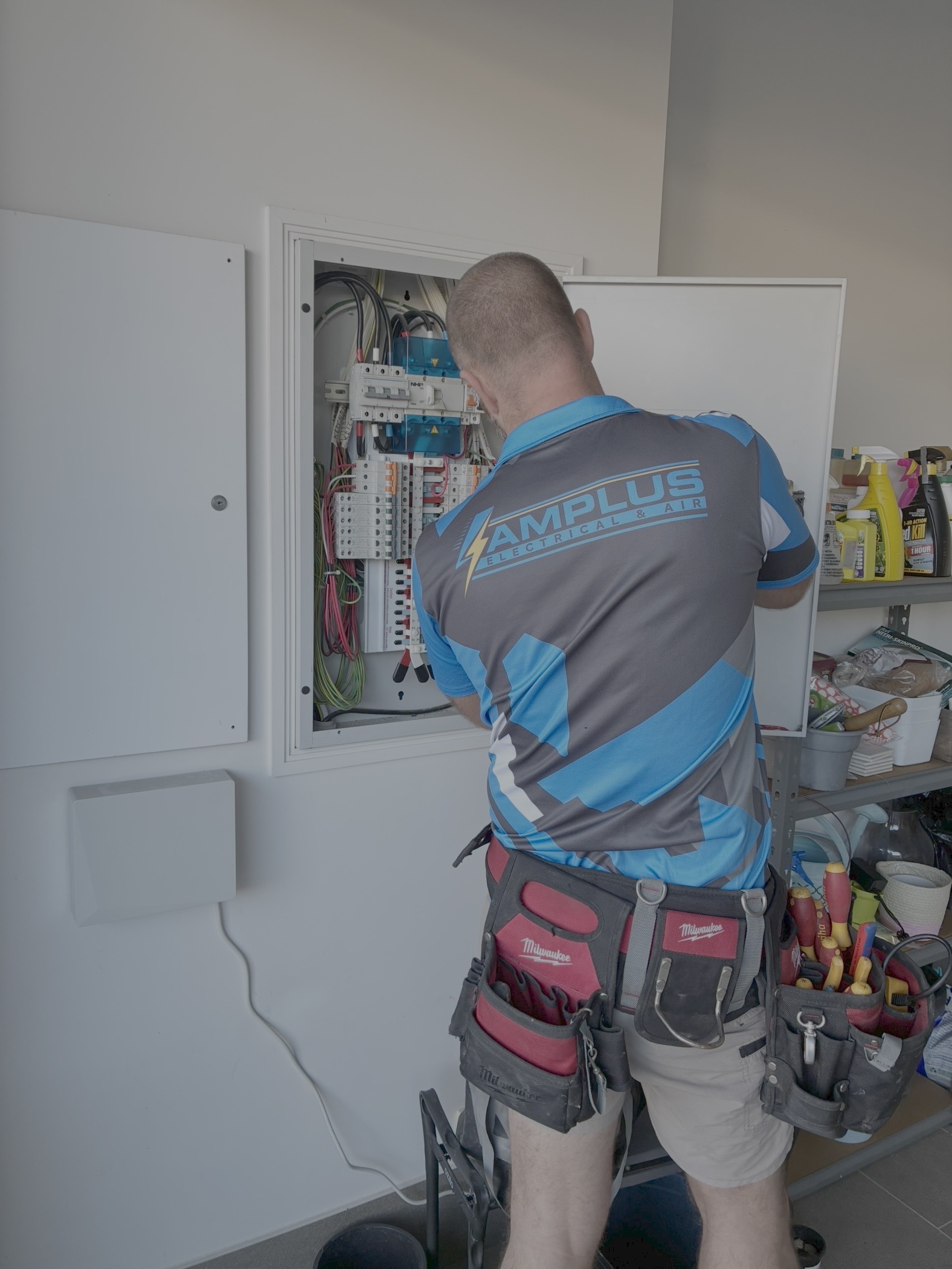
Here’s what an actual EVnex installation looks like. These are real jobs we’ve done for Brisbane and Redlands homeowners. Every setup is different depending on whether your switchboard is in the garage, your meter box is external, or you want the charger on a brick wall versus inside.
Does Your Switchboard Need an Upgrade for an EV Charger?
This is the most common question we get. The answer depends on your switchboard’s age and capacity.
Most Brisbane homes built before 2000 have older switchboards with ceramic fuses or early-model circuit breakers. These often lack the spare capacity for a dedicated 32A EV charger circuit. In that case, a switchboard upgrade is needed — typically $800–$1,800 depending on the complexity.
If your home already has a modern switchboard (post-2000 with adequate spare ways and a 63A or higher main switch), the EV charger install is straightforward — just a new circuit and the charger mount.
For a full breakdown of what’s involved, see our dedicated switchboard upgrade for EV charger installation guide.
Real Brisbane Home Setups — What Works Best
Every home is different. Here are the three most common setups we see across the Redlands and Brisbane.
Garage Mount — Internal Wall (Most Common)
If your switchboard is in the garage, this is the simplest install. The charger goes on the internal garage wall, the cable run is short, and the CT clamps go in the switchboard. Most of our Capalaba, Cleveland, and Wellington Point jobs are this type.
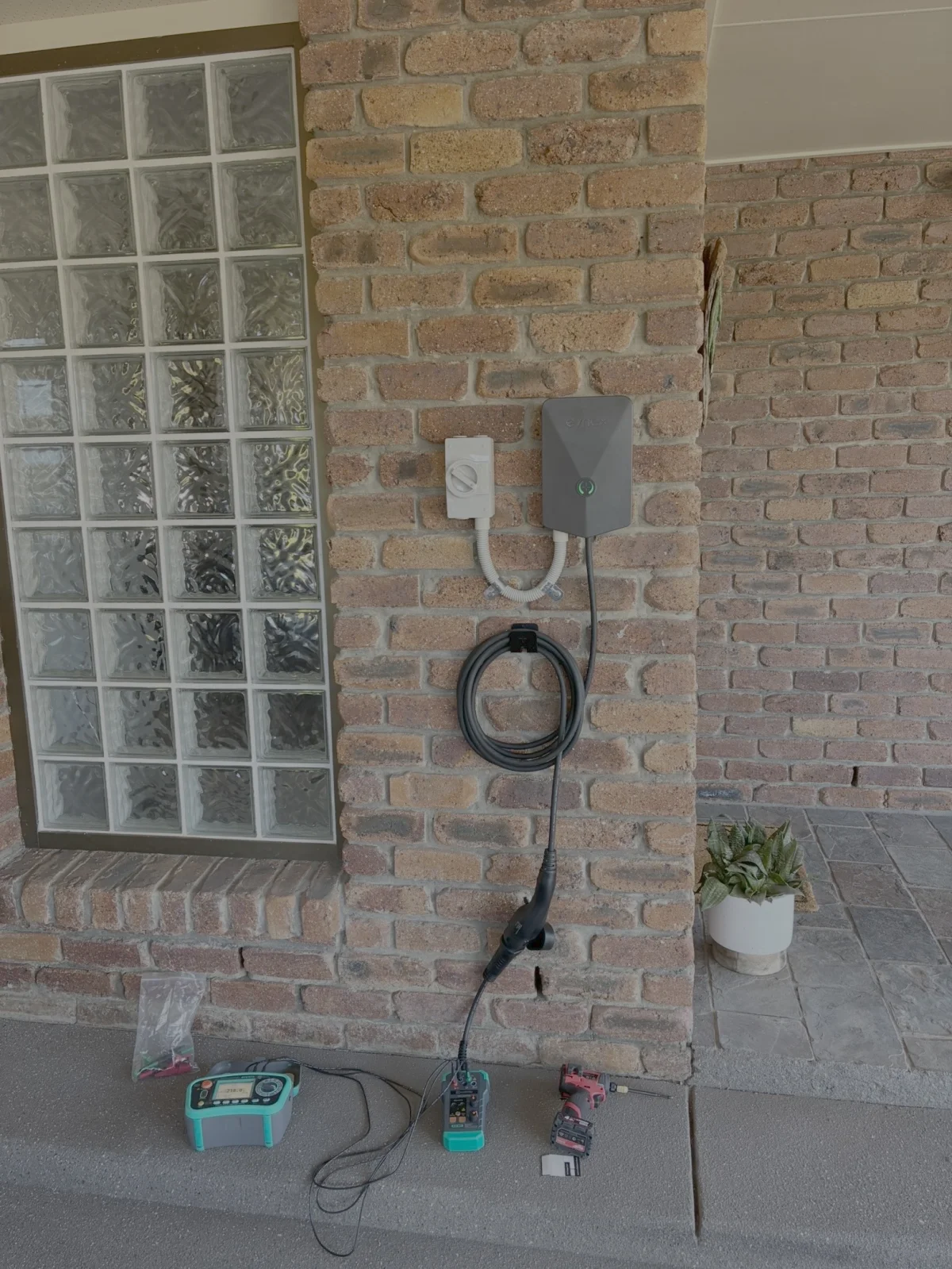
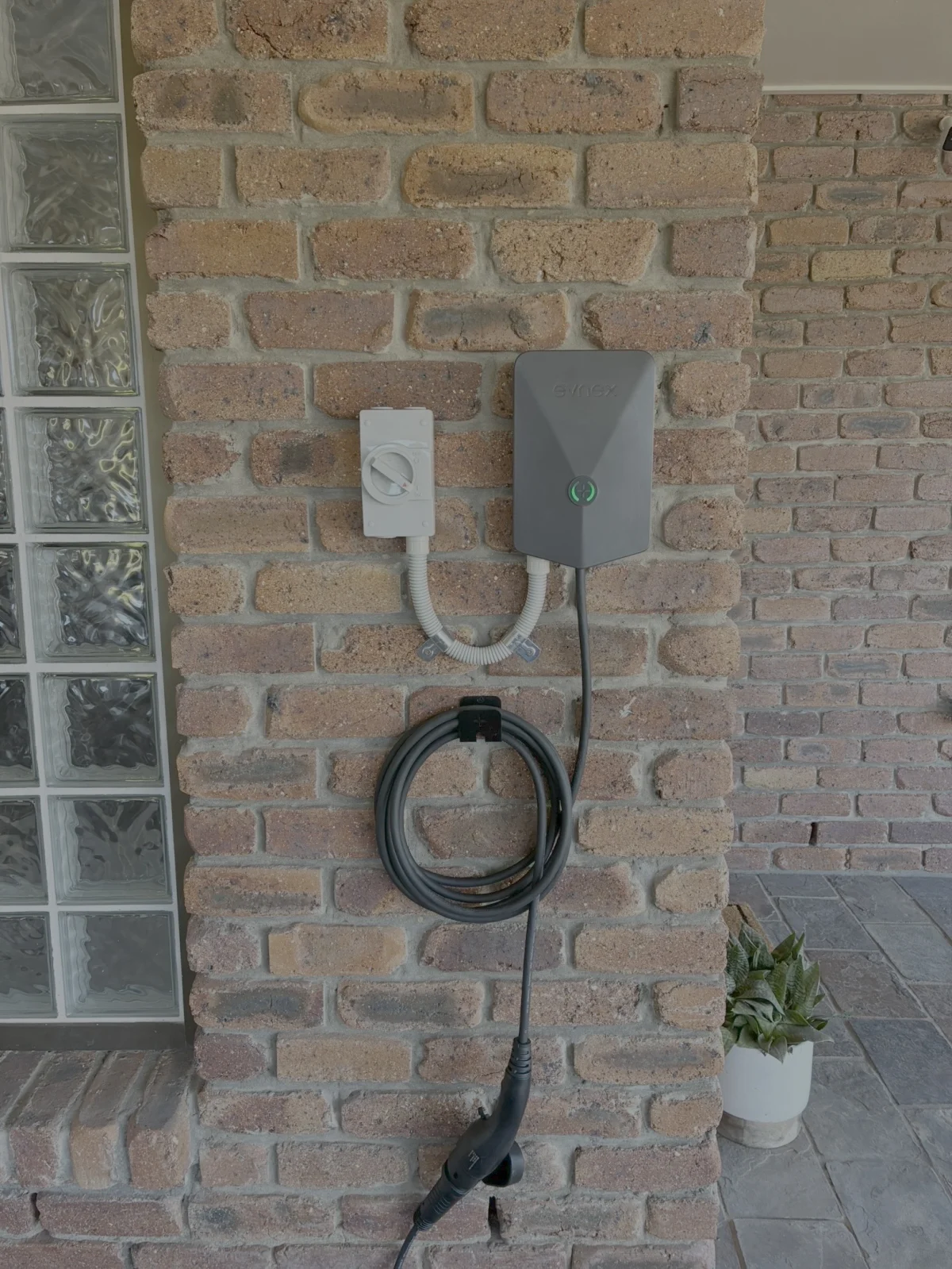
External Brick Wall Mount
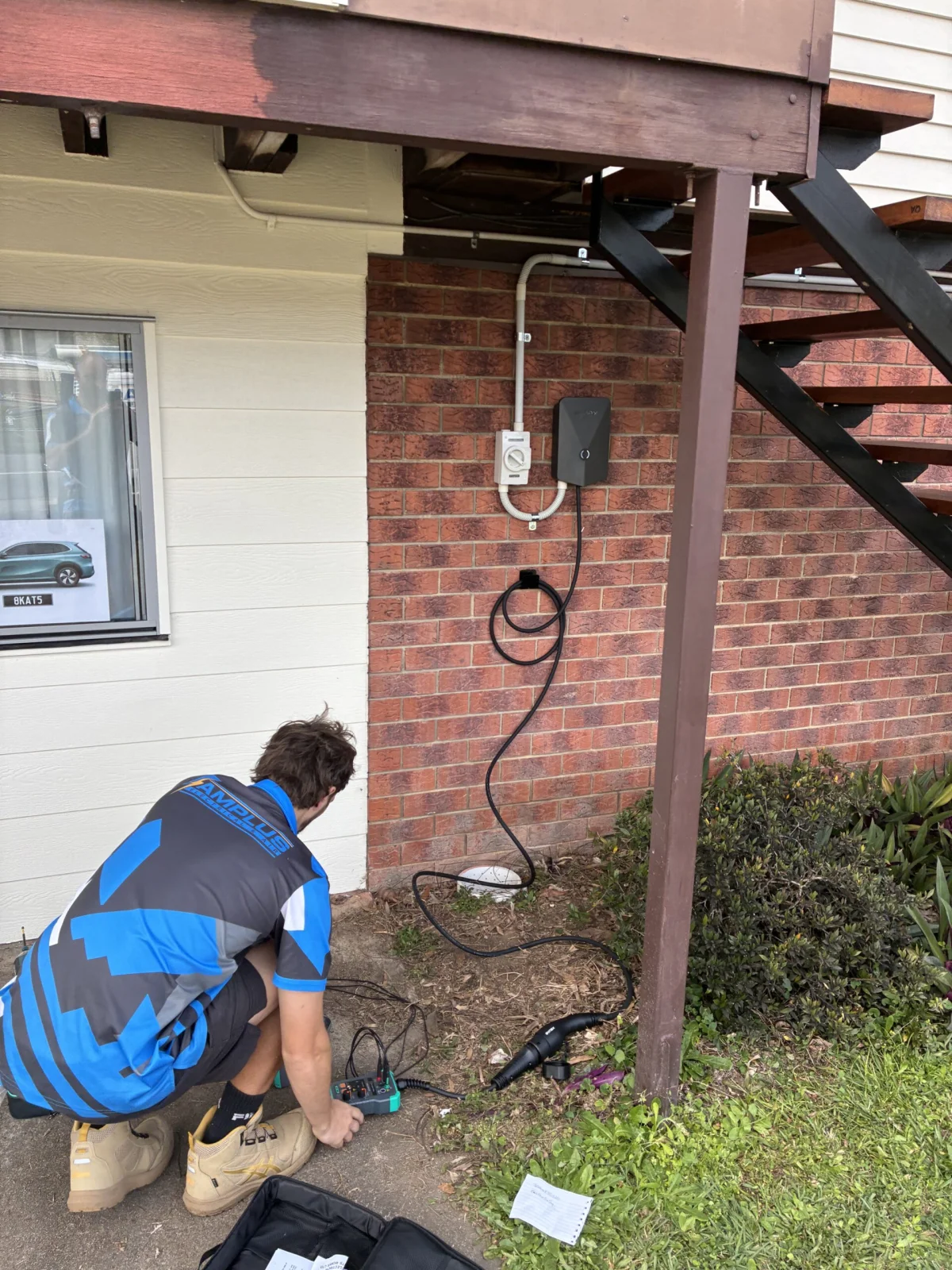
For homes where the switchboard is external or the garage doesn’t have internal wall access, we mount the charger on an external brick wall. The EVnex is weather-rated for outdoor installation. We see this a lot in older Queenslander homes and properties with detached garages.
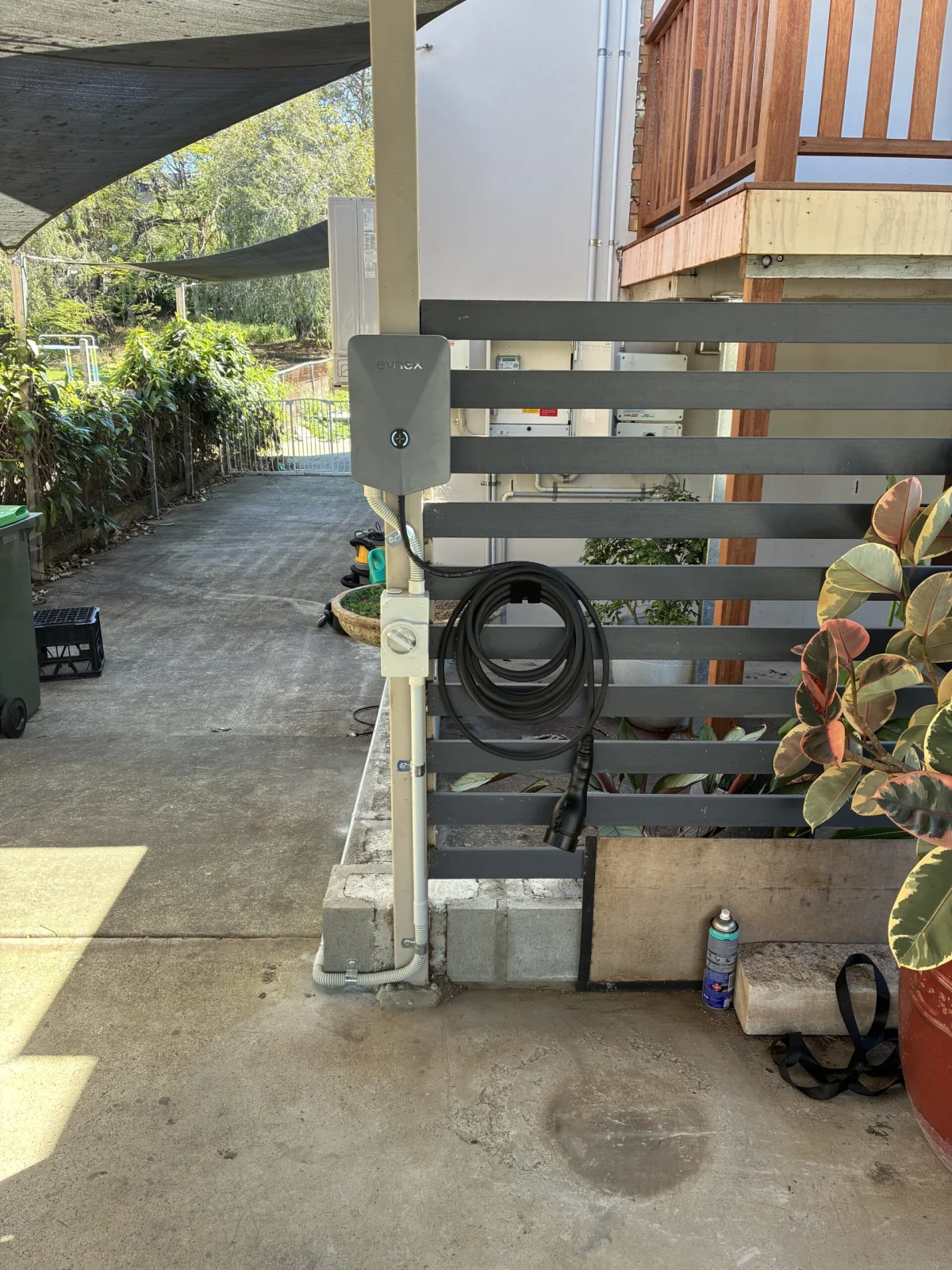
Open Garage / Carport Setup
For homes with a carport or open garage, we mount the charger under cover on a protected wall. The EVnex is weather-resistant enough for covered outdoor installation, and the integrated cable management keeps things tidy.
EVnex vs Other Solar-Ready EV Chargers
We get asked how EVnex compares to the other popular options. Here’s the honest breakdown.
| Feature | EVnex | Wallbox Pulsar Plus | Fronius Wattpilot | Zappi (myenergi) |
|---|---|---|---|---|
| Built-in solar divert | ✅ Yes | ⚠️ Requires separate meter | ✅ Yes (Fronius inverter) | ✅ Yes |
| Local Australian support | ✅ Yes (NZ/AU) | ⚠️ Limited | ✅ Yes | ⚠️ Limited |
| OCPP compatible | ✅ Yes | ✅ Yes | ❌ No | ⚠️ Via hub |
| OTA firmware updates | ✅ Yes | ✅ Yes | ⚠️ Manual | ✅ Yes |
| No extra hardware for solar | ✅ Built-in CT | ❌ Needs meter | ⚠️ Needs Fronius inverter | ⚠️ Needs hub |
| Weather rating | IP54 (outdoor ok) | IP54 | IP54 | IP65 |
| Price (approx installed) | $1,800–$2,500 | $1,600–$2,200 | $1,900–$2,800 | $1,700–$2,400 |
The short version: If you have an existing Fronius inverter, the Wattpilot integrates seamlessly. For everyone else — especially homeowners who want solar charging without buying into a specific ecosystem — EVnex may be a practical option, subject to the model and property setup.
EV-Specific Electricity Tariffs in Brisbane — Should You Switch?
Most Brisbane homes are on a standard residential tariff (Tariff 11) with a flat rate of roughly 28–32 c/kWh. But several Queensland electricity retailers now offer EV-specific tariffs that make grid charging cheaper overnight — and some even offer free charging periods during solar-producing hours.
How EV Tariffs Work with Solar Charging
If you have solar panels, the best strategy is usually solar-priority charging during daylight hours (when your panels are generating surplus), topped up with off-peak grid charging overnight if needed. EVnex handles this automatically — you set your solar divert preference in the app, and it uses as much solar as possible before drawing from the grid.
Retailers Offering EV Plans in QLD (2026)
Origin, AGL, EnergyAustralia, and OVO Energy all offer EV-specific plans with time-of-use rates. Typical off-peak EV rates range from 8–15 c/kWh — roughly half the standard rate. Combined with solar charging, this means your effective charging cost approaches zero for most of the year.
For a full comparison of EV running costs, see our EV home charging guide and EV charger installation cost guide.
What If I Don’t Have Solar? Is an EV Charger Still Worth It?
Yes. Even without solar panels, installing a dedicated EV charger at home is significantly cheaper and more convenient than relying on public charging. Here’s why.
Off-Peak Charging Rates
With an EV-specific tariff, charging overnight at 8–15 c/kWh costs roughly $400–$800 per year for an average commuter — compared to $2,000+ per year using public fast chargers. The EVnex charger lets you schedule charging for off-peak hours automatically, so you plug in when you get home and it charges when rates are lowest.
Future-Proofing for Solar
Many of our customers install the EVnex charger first, then add solar panels later. The charger works perfectly as a standard 7 kW unit without solar, and the solar divert feature is ready to go when you add panels — no hardware changes needed, just enable it in the app.
If you’re still deciding whether to go ahead, our complete EV charger installation Brisbane guide covers the full process from initial quote through to plugging in your car for the first time.
For homeowners in the Redlands area specifically, our Redlands EV charger installation guide covers suburb-specific considerations for Capalaba, Cleveland, Birkdale, Wellington Point, Ormiston, Thornlands, Victoria Point, Redland Bay, Sheldon, and Alexandra Hills.
Government Incentives and Solar EV Charging in QLD
As of 2026, there are no direct QLD state rebates for EV charger installations. However, there are several financial angles worth knowing about.
ATO FBT Exemption for EV Home Charging
If you have a novated lease or salary-sacrificed EV through work, your employer can claim an FBT exemption for the car. Home charging costs are also claimable if you keep a logbook. This is the biggest financial incentive for most Brisbane EV owners right now — and it applies regardless of which charger you use.
Solar Feed-In Tariff Opportunity Cost
This isn’t a rebate, but it’s the math that matters: exporting solar at 5–8 c/kWh and then buying it back at 28 c/kWh is a losing game. Every kWh you divert to your EV is worth 20–25 cents more than exporting it. Over a year, that’s $1,000+ for a typical commuter — effectively a “rebate” you give yourself by charging smarter.
For more on EV costs and savings, see our EV charger installation cost Brisbane guide and our complete EV charger installation guide covering the full process from quote to plug-in.
Ready to Charge Your EV from Solar? Here’s the Next Step
If you’re in Brisbane or the Redlands and want to start charging your EV from solar, here’s what to do:
- Check if your switchboard can handle it — we’ll assess this in a free onsite quote.
- Decide on the charger location — garage, external wall, or carport. We’ll advise on the best option during the quote.
- Get it installed by a licensed electrician — we handle everything from the switchboard connection to CT clamp setup to app configuration.
We service all of Brisbane, including the Redlands — Capalaba, Cleveland, Birkdale, Wellington Point, Ormiston, Thornlands, Victoria Point, Redland Bay, Sheldon, and everywhere in between. Book a free quote online or call 0419 014 146.
If you’re still deciding on which installer to use, our EV charger installers Brisbane guide covers what to look for in a qualified installer and how the process works.
Frequently Asked Questions
Do I need a battery to charge my EV from solar?
No. With an EVnex charger, you don’t need a home battery. The charger diverts your real-time solar surplus directly to the car. Your EV battery IS the battery. If you already have a home battery, the charger works alongside it — the system prioritises the battery first, then sends surplus to the car.
How much does an EVnex charger cost installed in Brisbane?
For a standard install where your switchboard has spare capacity, expect $1,800–$2,500 including the charger and installation. If a switchboard upgrade is needed, add $800–$1,800. See our EV charger installation cost guide for the full breakdown.
Can I use the EVnex charger without solar?
Yes. The EVnex can operate as an AC home charger without solar. The actual charging rate depends on the model, property supply, circuit design and the vehicle’s onboard AC charger. The solar divert feature is optional — you can use scheduled charging at off-peak rates instead. Many customers install the EVnex now and add solar later.
Is the EVnex weatherproof for outdoor installation?
Yes. The EVnex has an IP54 rating, meaning it’s protected against dust and water spray from any direction. It’s fine for outdoor mounting on brick walls, under eaves, or in carports. We don’t recommend direct rain exposure long-term, but covered outdoor positions are perfectly fine.
What’s the charging speed of the EVnex?
The standard EVnex is a 7 kW (32A, single-phase) AC charger. That adds roughly 35–40 km of range per hour for a typical EV. It is a common home-charging speed and is suitable for many overnight charging routines, subject to the vehicle and property setup. Three-phase versions are available for homes with three-phase power.
Does the EVnex work with all EV brands?
Yes. The EVnex uses a standard Type 2 (Mennekes) socket and cable, compatible with every EV sold in Australia — Tesla, BYD, MG, Hyundai, Kia, BMW, Mercedes, Volvo, Polestar, Nissan, and all others. Tesla owners will need to use the included J1772 adapter that comes with the car.
How long does installation take?
A straightforward install takes 2–4 hours. If a switchboard upgrade is needed, allow 4–6 hours. We handle everything — from the switchboard connection and CT clamp installation to charger configuration and app setup.
Do you service the Redlands and Bayside areas?
Absolutely. We’re based in Capalaba and cover all of the Redlands — Cleveland, Birkdale, Wellington Point, Ormiston, Thornlands, Victoria Point, Redland Bay, Sheldon, Alexandra Hills, and every suburb in between. See our Redlands EV charger installation guide for suburb-specific information.
What’s the warranty on the EVnex charger?
The EVnex manufacturer currently advertises a 4-year residential warranty. Australian consumer law also applies. Confirm the applicable warranty for the exact model and purchase channel, and ask about the installer’s separate workmanship terms.
Can I install an EV charger myself?
No. EV charger installation must be carried out by a licensed electrical contractor in Queensland. This is a safety requirement under the Electrical Safety Act 2002 — our licence number is #1500996. DIY work can create serious electrical-safety, compliance, warranty and insurance problems. Fixed-wiring EV charger work must be carried out by a licensed electrician in Queensland.
Need a Licensed Electrician in Brisbane Bayside?
Aaron is a licensed electrician (Lic. 1500996) and ARC-certified A/C technician serving Capalaba, Cleveland, Wynnum, Manly, Birkdale, Thornlands, Victoria Point and surrounding suburbs. Honest advice, upfront pricing, and quality work guaranteed.
4 Responses