
How to Prepare Your Split System for Brisbane Summer (2026 Checklist)
Get your split system ready for Brisbane summer with this 15-minute DIY checklist plus professional service guide. Save 20-30% on power bills and prevent breakdowns.
Getting your split system ready for Brisbane summer should happen in September or October — before the rush and before it’s 35°C outside. A 15-minute DIY check plus a professional service will save you money on power bills, prevent breakdowns on the hottest day of the year, and extend your air conditioner’s lifespan by 5–10 years. Here’s exactly what to do, when to do it, and what it costs. For suburb-specific installation info, see our Redlands split system installation guide.
If you’re reading this in August or September, you’re timing it perfectly. Most Brisbane homeowners wait until November or December when it’s already hot, then wonder why the AC is making weird noises or not cooling properly. By then, every licensed technician is booked solid for weeks. Get ahead of it now.
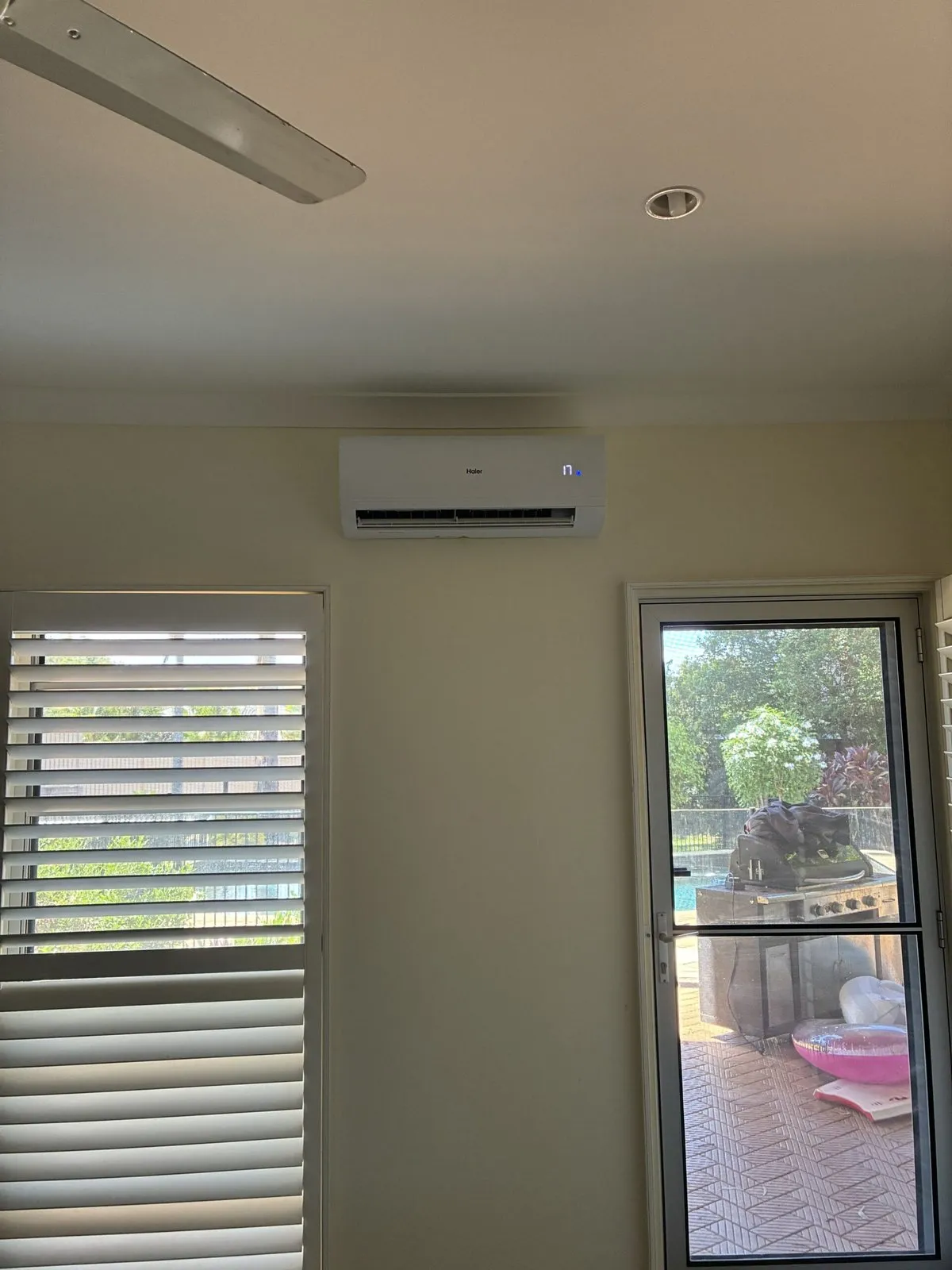
Why Brisbane Summers Destroy Air Conditioners (And How to Fight Back)
Brisbane’s climate is brutal on air conditioning. Here’s what your split system faces every summer:
- Extreme heat — temperatures regularly hit 35–40°C in December and January. Your AC runs for 8–12 hours straight, sometimes more.
- High humidity — Brisbane’s humidity sits at 60–80% in summer. Your AC works twice as hard: cooling the air AND removing moisture. That’s massive strain on the compressor and coils.
- Storm season — lightning strikes, power surges, and hail can damage outdoor units. A single storm can fry your circuit board if you don’t have proper surge protection.
- Dust and pollen — spring brings dust, pollen, and debris that clogs filters and coils. If you don’t clean before summer, you’re starting the season with a restricted system.
The result? Higher power bills, reduced cooling capacity, and a shorter lifespan. A split system that should last 15–20 years might die in 8–10 years if you skip maintenance. That’s a $2,500–$4,000 replacement you could have avoided.
The good news
A 15-minute DIY check plus a professional service (about $180–$280) will keep your system running at peak efficiency, cut your power bills by 10–20%, and catch small problems before they become expensive repairs. Most homeowners in Capalaba, Cleveland, and the Redlands book their summer service in September or October. See our split system service cost guide for exact pricing on professional servicing. If you’re in Capalaba, check our Capalaba split system installation costs. Do the same, and you’ll avoid the November rush.
If you’re considering a new system or just had one installed, read our split system installation cost guide to understand the investment. For ongoing costs, check our split system running costs guide.
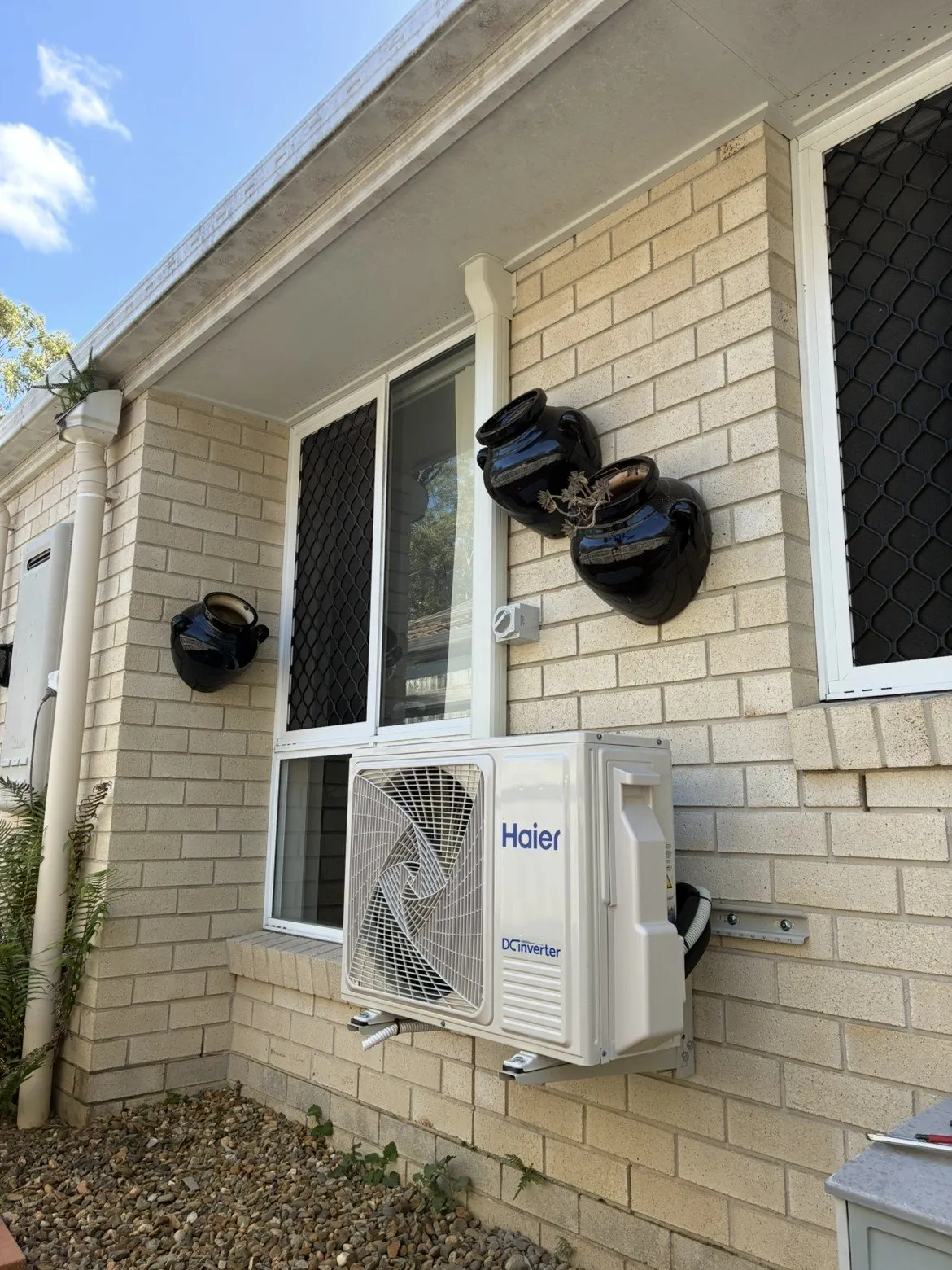
The Complete Split System Summer Prep Checklist (DIY — 15 Minutes)
You can handle these tasks yourself. No tools required except a vacuum cleaner and a damp cloth. Do this in September or early October, before the heat hits.
1. Clean or replace the indoor filters (5 minutes)
This is the single most important thing you can do. Dirty filters restrict airflow, force the system to work harder, and increase your power bill by 10–15%. In Brisbane’s dusty climate, filters get clogged fast.
How to do it:
- Turn off the air conditioner at the isolation switch (the small switch near the indoor unit).
- Open the front panel of the indoor unit — it usually clips open or lifts up.
- Remove the mesh filters (there are usually 2). They slide out.
- Take them outside and hose them down, or vacuum them thoroughly. If they’re heavily soiled, wash them with mild soap and water. Let them dry completely.
- Slide them back in and close the panel.
How often: Clean filters every 2–4 weeks during summer if you use the AC daily. If you have pets or live near a dusty road, check them every 2 weeks. Replace filters every 1–2 years (they’re about $30–$50 each from the manufacturer).
2. Clear debris from the outdoor unit (3 minutes)
The outdoor unit (condenser) needs to breathe. If it’s surrounded by leaves, dirt, or overgrown plants, it can’t release heat properly. The system works harder, uses more power, and wears out faster.
How to do it:
- Turn off the power at the isolation switch or switchboard.
- Remove any leaves, twigs, or debris from around the unit. Clear at least 30cm on all sides and 1 meter above.
- If the coils are dirty (you can see them through the metal grille), gently hose them down from the inside out. Don’t use a pressure washer — you’ll bend the fins.
- Check that the unit is level and stable. If it’s on brackets, make sure they’re secure.
Watch out for: Spider webs, bird nests, and mould. If you see significant buildup, it’s time for a professional service.
3. Check the drain pipe (2 minutes)
Your air conditioner produces condensation when cooling. The drain pipe carries this water outside. If it’s blocked, water will leak inside your house — usually onto your ceiling or wall.
How to do it:
- Locate the drain pipe (usually a white or grey PVC pipe coming from the indoor unit and going outside).
- Check that it’s not kinked, crushed, or blocked.
- Pour a small amount of water into the indoor unit’s drain tray (you’ll need to open the front panel). Confirm it flows outside without leaking.
- If the pipe is blocked, you can try flushing it with a mixture of warm water and white vinegar. If that doesn’t work, call a technician.
Common issue in Brisbane homes: Algae and mould grow in the drain pipe due to humidity. If you notice a musty smell when the AC runs, the drain is probably blocked.
4. Test the remote control and thermostat (2 minutes)
Make sure everything’s working before you need it. There’s nothing worse than discovering the remote is dead on the first 35°C day.
How to do it:
- Replace the remote batteries (usually AAA). Even if they seem fine, fresh batteries prevent issues.
- Test all functions: cooling mode, fan speed, swing, timer, temperature up/down.
- Confirm the indoor unit responds correctly to each command.
- Check that the display is working and showing the correct temperature.
5. Run a test cycle (3 minutes)
Don’t wait until the first hot day to turn on your AC. Test it now, while it’s still cool outside, so you can catch problems early.
How to do it:
- Turn the system on and set it to cooling mode, 20°C.
- Wait 5–10 minutes. The air coming out should feel noticeably cold.
- Check for unusual noises: rattling, buzzing, grinding, or hissing. A healthy system is quiet.
- Check for unusual smells: musty, burning, or chemical odours. A musty smell usually means mould in the unit or drain. A burning smell could indicate an electrical fault — turn it off immediately and call a technician.
- Confirm the outdoor unit is running (you should hear the fan and feel warm air coming out).
If anything seems off: Don’t ignore it. A small problem now is cheap to fix. A breakdown in December is expensive and inconvenient.
What a Professional Service Includes (And Why It’s Worth It)
The DIY checklist above handles the basics, but a professional service goes deeper. A licensed technician will clean components you can’t reach, check refrigerant levels, inspect electrical connections, and catch problems before they become expensive repairs.
What’s included in a professional split system service
- Deep clean the indoor coil — the evaporator coil inside the unit collects dust, mould, and bacteria over time. A technician uses specialized cleaning solutions and tools to remove buildup that you can’t reach. This improves efficiency by 10–20% and eliminates musty smells.
- Clean the outdoor coil — the condenser coil outside collects dirt, pollen, and debris. A technician will clean it thoroughly, improving heat exchange and reducing power consumption.
- Check refrigerant levels — low refrigerant means reduced cooling capacity and higher power bills. A technician will check the pressure and top it up if needed. If the system needs refrigerant frequently, there’s a leak that needs fixing.
- Inspect electrical connections — loose or corroded connections are a fire hazard. A technician will tighten terminals, check for damage, and confirm the system is safe.
- Check the compressor — the compressor is the heart of the system. A technician will listen for unusual noises, check the start capacitor, and confirm it’s running efficiently.
- Clear the drain pipe — a technician will flush the drain with a specialized solution to remove algae and mould buildup.
- Test the thermostat — confirm the temperature sensor is accurate and the system is responding correctly.
- Check the isolation switch and circuit breaker — confirm they’re working properly and safely.
How much does a professional service cost?
In Brisbane, a professional split system service costs $180–$280 for a single-head system. Multi-head systems cost $280–$450 depending on the number of indoor units.
At Amplus Electrical & Air, we charge a flat rate with no call-out fee across Capalaba, Cleveland, and the Redlands. The service takes about 45–60 minutes. You’ll get a detailed report with findings and recommendations.
Is it worth it? Absolutely. A $220 service can save you $300–$500 on power bills over the summer, prevent a $500–$1,500 repair, and extend your system’s lifespan by 5–10 years. It’s the best ROI in home maintenance.
When should you book?
September or October — before the summer rush. By November, every licensed technician in Brisbane is booked solid. You’ll wait 2–3 weeks for a service appointment, and by then it’s already hot.
If you have a maintenance plan with your installer, they’ll usually contact you in September to book. If not, call now and get it locked in.
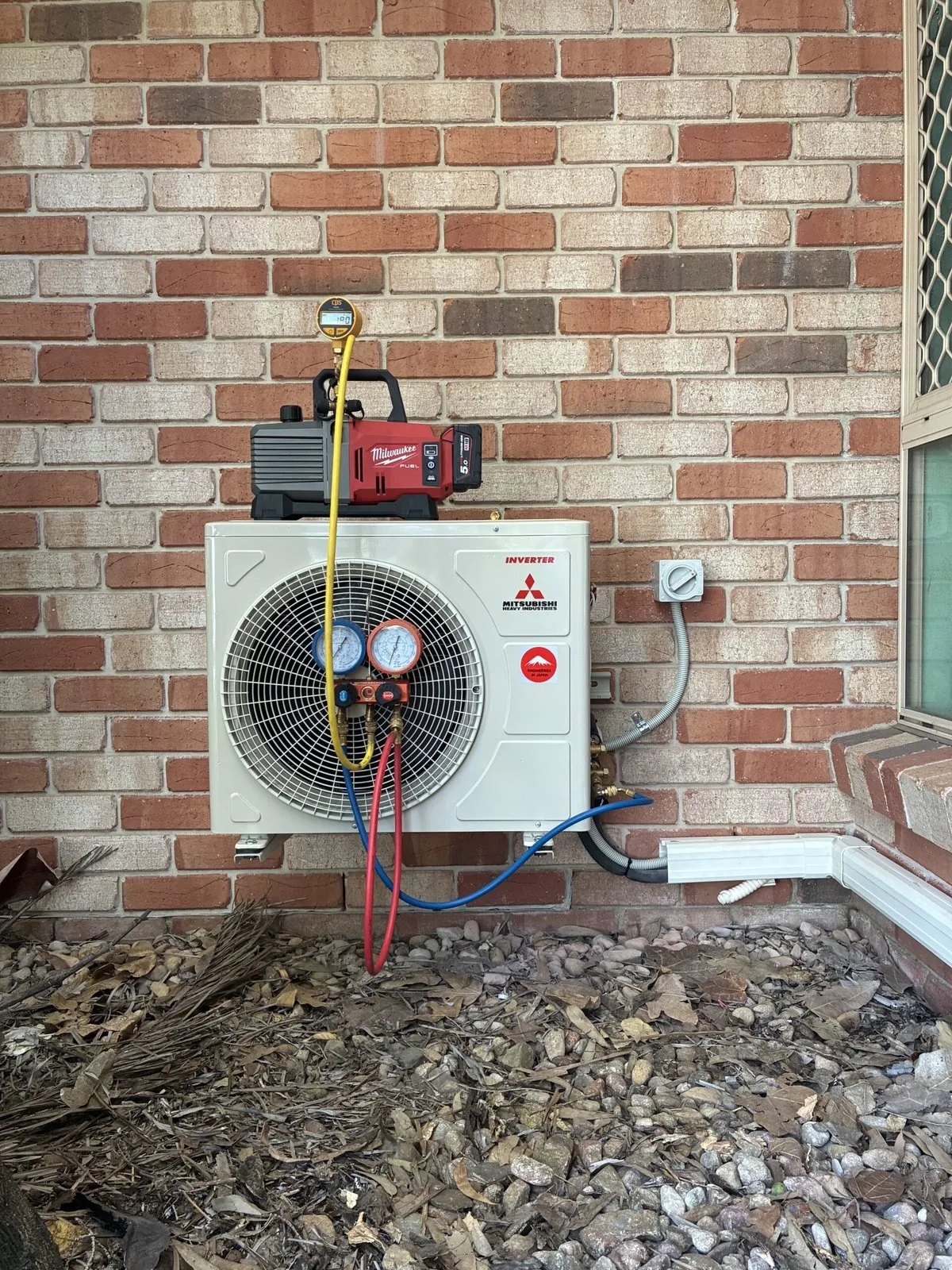
Signs Your Split System Needs Attention Before Summer
Don’t wait for a breakdown. If you notice any of these signs, book a service immediately:
- Reduced cooling — the air isn’t as cold as it used to be, or the room takes longer to cool down. This could mean low refrigerant, dirty coils, or a failing compressor.
- Unusual noises — rattling, buzzing, grinding, or hissing sounds. These indicate loose components, motor bearing issues, or refrigerant leaks.
- Musty or burning smells — a musty smell usually means mould in the unit or drain. A burning smell could indicate an electrical fault. Turn the system off and call a technician immediately.
- Water leaking inside — if water is dripping from the indoor unit or pooling on the floor, the drain pipe is blocked or the unit isn’t level. This can damage your ceiling and walls.
- Higher power bills — if your electricity bill jumped 15–20% compared to last summer, your AC is working harder than it should. A service will usually fix this.
- Frequent cycling — the system turns on and off more often than usual. This could mean a thermostat issue, low refrigerant, or an oversized/undersized system.
- Ice forming on the coils — if you see ice on the indoor or outdoor unit, turn it off immediately. This means low refrigerant or restricted airflow. Running the system with ice will damage the compressor.
If you’re in Capalaba, Cleveland, Wellington Point, or anywhere in the Redlands and notice these signs, call us on 0419 014 146. We’ll diagnose the problem and give you an honest quote.
If your system is showing any of these signs, don’t wait. Read our guide on troubleshooting AC not cooling issues for detailed troubleshooting.
Brisbane-Specific Summer Prep Tips (Humidity, Storms, and Power Surges)
Brisbane’s climate creates unique challenges for air conditioning. Here’s what you need to know:
Humidity control
Brisbane’s summer humidity sits at 60–80%. Your air conditioner removes moisture from the air as it cools, but high humidity puts extra strain on the system. To help:
- Set the temperature to 24–25°C, not 20°C. This reduces the temperature difference between inside and outside, which reduces condensation and strain on the system.
- Use the “dry mode” if your system has it. This prioritizes dehumidification over cooling, which is more comfortable in humid weather.
- Make sure the drain pipe is clear — high humidity means more condensation, which means more water to drain.
Storm season protection
Brisbane’s storm season runs from November to March. Lightning strikes and power surges can damage your air conditioner’s circuit board — a $400–$800 repair. To protect your system:
- Install a surge protector on the air conditioner’s circuit. This costs $150–$250 installed and can save you thousands.
- During a storm, turn off the air conditioner at the isolation switch. Lightning can strike even if the storm isn’t directly overhead.
- If your outdoor unit is in an exposed location, consider a weather cover. Don’t cover it when it’s running — only when it’s off for extended periods.
Power outages and brownouts
According to Energex, Brisbane’s aging electricity grid struggles in summer. Power outages and brownouts (voltage drops) can damage your air conditioner. To protect it:
- If the power goes out, turn off the air conditioner at the isolation switch. When power returns, wait 5–10 minutes before turning it back on. This prevents a power surge from damaging the compressor.
- If you notice lights flickering or dimming when the AC runs, you have a voltage issue. Call an electrician to check your wiring and switchboard.
- Consider a whole-house surge protector if you live in an area with frequent power issues. This costs $300–$500 installed.
Energy Efficiency Tips: Cut Your Summer Power Bill by 20–30%
Your air conditioner is probably the biggest power hog in your home. Here’s how to reduce your summer electricity bill:
- Set the temperature to 24–25°C — every degree lower increases power consumption by 10%. Setting to 24°C instead of 20°C saves 30–40% on cooling costs.
- Use the timer — set the AC to turn on 30 minutes before you get home, not all day. Or set it to turn off 30 minutes before you wake up — the room will stay cool.
- Clean filters every 2–4 weeks — dirty filters increase power consumption by 10–15%. This is the easiest way to save money.
- Close curtains and blinds during the day — blocking sunlight reduces heat gain by 30–40%. Your AC doesn’t have to work as hard.
- Use ceiling fans with your split system — a ceiling fan makes the room feel 2–3°C cooler, so you can set the AC higher. This saves 15–20% on power.
- Seal gaps around doors and windows — cool air escaping means your AC works harder. Weather stripping costs $20–$50 and saves hundreds over the summer.
- Don’t oversize or undersize — an oversized system cycles on and off frequently, wasting power. An undersized system runs constantly, also wasting power. If you’re buying a new system, read our split system sizing guide.
If you’re in the market for a new system, check our guide to best split system brands for Brisbane for the most efficient options.
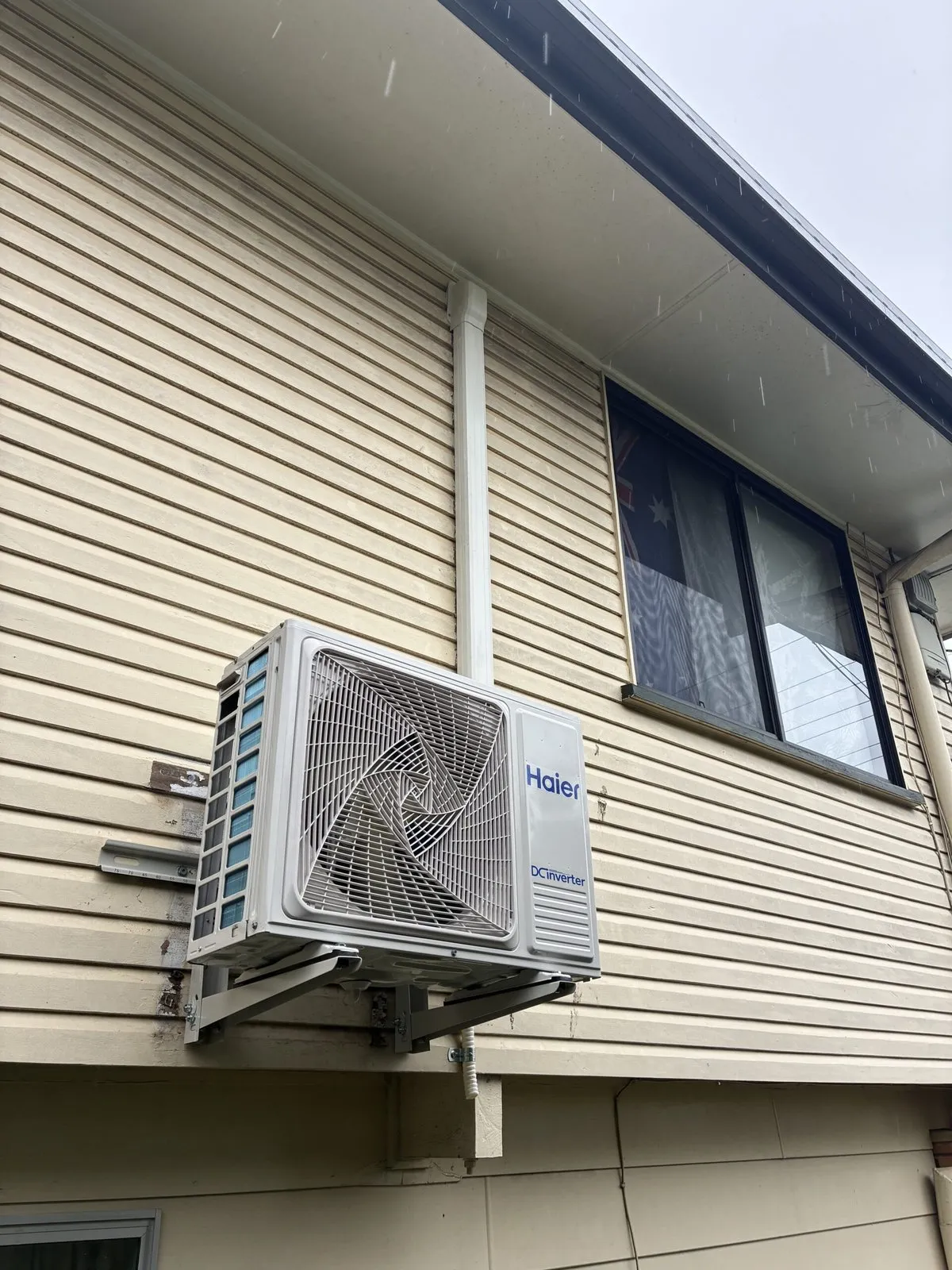
DIY vs Professional Maintenance: What You Can (And Can’t) Do Yourself
Here’s the breakdown:
| Task | DIY or Professional? | Frequency |
|---|---|---|
| Clean indoor filters | DIY | Every 2–4 weeks in summer |
| Clear debris from outdoor unit | DIY | Monthly in summer |
| Check drain pipe | DIY (flush with vinegar) | Every 2–3 months |
| Deep clean indoor coil | Professional | Annually |
| Check refrigerant levels | Professional (requires ARCtick licence) | Annually |
| Inspect electrical connections | Professional (requires licensed electrician) | Annually |
| Check compressor | Professional | Annually |
The rule: DIY for cleaning and basic checks. Professional for anything involving refrigerant, electrical, or internal components. Queensland law requires a licensed technician with an ARCtick licence to handle refrigerant. DIY refrigerant work is illegal and dangerous.
How Often Should You Service Your Split System in Brisbane?
Here’s the recommended schedule for Brisbane’s climate:
- Primary systems (living room, master bedroom) — professional service every 12 months, DIY filter cleaning every 2–4 weeks during summer.
- Secondary systems (guest rooms, study) — professional service every 18–24 months, DIY filter cleaning every 2–4 weeks during summer.
- Homes with pets — service every 12 months regardless of usage. Pet hair clogs filters and coils faster.
- Homes near the beach — service every 12 months. Salt air corrodes coils and electrical connections.
- Homes near dusty roads or construction — service every 12 months. Dust buildup reduces efficiency.
Why Brisbane specifically? Our climate is harder on air conditioners than Sydney or Melbourne. The combination of extreme heat, high humidity, and salt air (in coastal suburbs like Cleveland, Victoria Point, and Redland Bay) means more frequent maintenance is essential.
Common Summer AC Mistakes Brisbane Homeowners Make
Avoid these costly errors:
- Waiting until it’s hot to service the AC — by November, every technician is booked. Book in September.
- Setting the temperature too low — 20°C doesn’t cool the room faster than 24°C. It just wastes power and strains the system.
- Skipping filter cleaning — dirty filters increase power consumption by 10–15% and reduce cooling capacity.
- Ignoring unusual noises or smells — a small problem now is cheap to fix. A breakdown in December is expensive.
- Covering the outdoor unit in winter — this traps moisture and causes corrosion. Only cover it if it’s in an exposed location and not running.
- Using the AC without checking the drain — a blocked drain will leak water inside your house, damaging ceilings and walls.
- Trying to fix refrigerant issues yourself — this is illegal and dangerous. Call a licensed technician.
Frequently Asked Questions
When should I service my air conditioner in Brisbane?
September or October — before the summer rush. This ensures your system is ready for the heat and you avoid the 2–3 week wait times in November and December.
How much does it cost to service a split system in Brisbane?
A professional service costs $180–$280 for a single-head system. Multi-head systems cost $280–$450. At Amplus Electrical & Air, we charge a flat rate with no call-out fee across Capalaba, Cleveland, and the Redlands.
Can I service my air conditioner myself?
You can clean filters, clear debris from the outdoor unit, and check the drain pipe. Anything involving refrigerant, electrical connections, or internal components requires a licensed technician. QLD Electrical Safety Office and Queensland law requires an ARCtick licence to handle refrigerant.
How often should I clean my air conditioner filters?
Every 2–4 weeks during summer if you use the AC daily. If you have pets or live near a dusty road, check them every 2 weeks. Replace filters every 1–2 years.
Why is my air conditioner not cooling properly?
The most common causes are dirty filters, low refrigerant, dirty coils, or a failing compressor. Start by cleaning the filters. If that doesn’t fix it, call a licensed technician to diagnose the problem.
How do I reduce my air conditioner power bill?
Set the temperature to 24–25°C, clean filters every 2–4 weeks, close curtains during the day, use ceiling fans, and seal gaps around doors and windows. A professional service also improves efficiency by 10–20%.
Is it worth servicing my air conditioner every year?
Absolutely. A $220 service can save you $300–$500 on power bills over the summer, prevent a $500–$1,500 repair, and extend your system’s lifespan by 5–10 years. It’s the best ROI in home maintenance.
What happens if I don’t service my air conditioner?
Your system will use 10–20% more power, cool less effectively, and wear out faster. A split system that should last 15–20 years might die in 8–10 years if you skip maintenance. You’ll also void the manufacturer’s warranty.
Ready to Get Your Split System Summer-Ready?
If you’re in Capalaba, Cleveland, Wellington Point, Ormiston, Birkdale, Thornlands, Victoria Point, Redland Bay, or anywhere in the Redlands, we can help. Our professional split system service includes a deep clean, refrigerant check, electrical inspection, and detailed report. We charge a flat rate with no call-out fee.
Call Aaron on 0419 014 146 or book online. We’ll have your system running at peak efficiency before the summer heat hits.
For more on split system summer prep, see our if your aircon is leaking water guide.
Amplus Electrical & Air
Electrical Contractor Licence #1500996
ARCtick Licence #L183747
Servicing Capalaba, Cleveland, and the Redlands since 2015
Need a Licensed Electrician in Brisbane Bayside?
Aaron is a licensed electrician (Lic. 1500996) and ARC-certified A/C technician serving Capalaba, Cleveland, Wynnum, Manly, Birkdale, Thornlands, Victoria Point and surrounding suburbs. Honest advice, upfront pricing, and quality work guaranteed.
One Response