Split System Installation Capalaba: Local Guide & Costs (2026)
The short version: Capalaba has unique split system installation challenges — 1970s–1990s brick veneer homes with minimal insulation, high humidity from proximity to Moreton Bay, and older electrical systems that often need upgrades. Average cost: $1,300–$2,400 for a…
The short version: Capalaba has unique split system installation challenges — 1970s–1990s brick veneer homes with minimal insulation, high humidity from proximity to Moreton Bay, and older electrical systems that often need upgrades. Average cost: $1,300–$2,400 for a standard back-to-back install. Best brands for Capalaba: Daikin Cora, Mitsubishi Electric Avant, Haier Toro (all handle humidity well).
If you’re researching split systems in Capalaba, you’ve probably noticed most guides are generic “Brisbane-wide” content that doesn’t address your specific suburb. This guide is different. We break down installation considerations for Capalaba specifically — with local pricing, common housing types, and suburb-specific challenges.
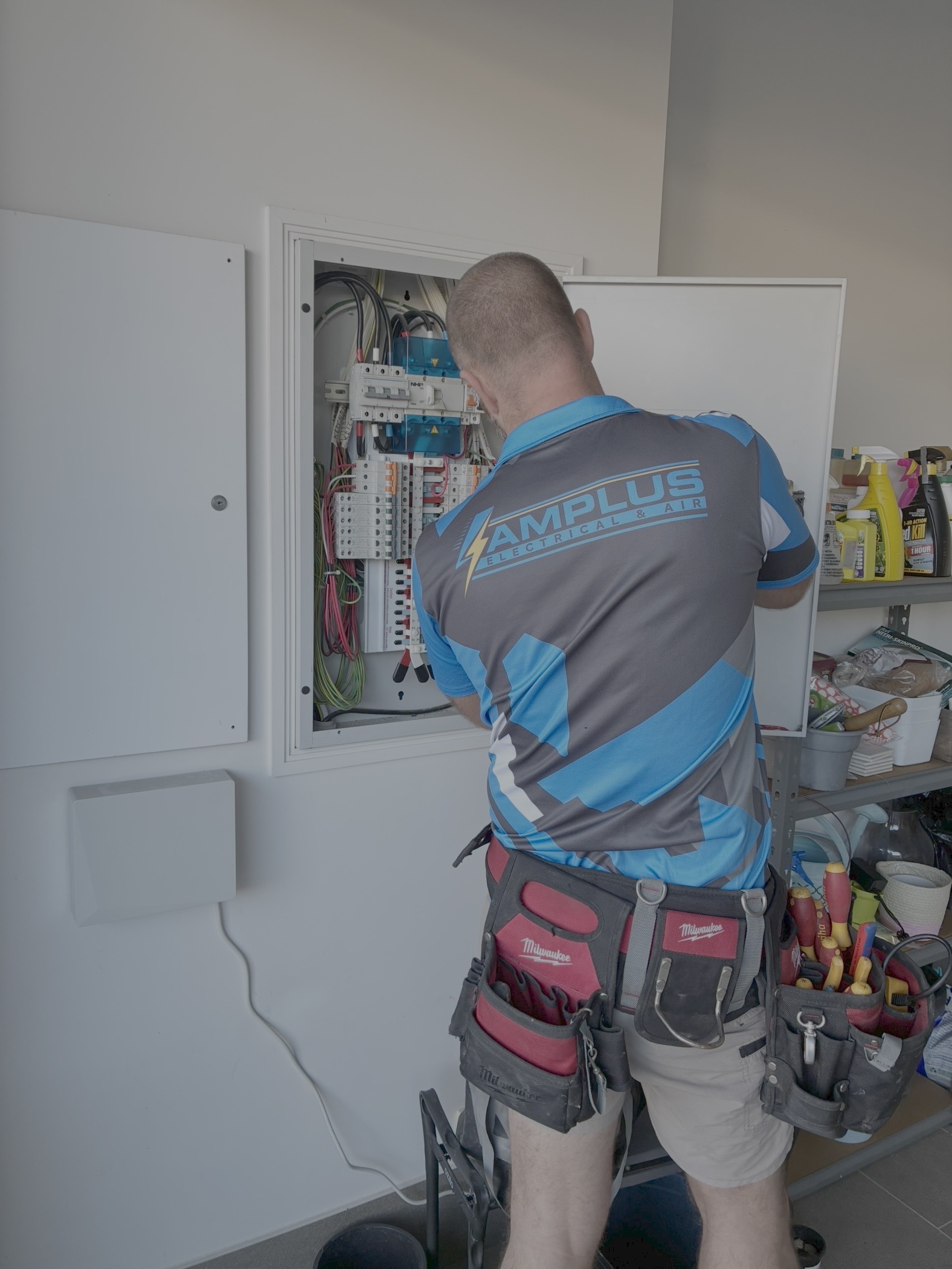
This guide is written by Aaron Ross, a licensed electrician and air conditioning installer based in Capalaba. I’ve installed split systems in Capalaba homes for the past 8 years, so this isn’t theoretical — it’s based on real jobs in real homes right here in the suburb.
Why Capalaba Homes Are Different
Capalaba isn’t just “another Brisbane suburb.” It’s a distinct area with specific challenges that affect split system installation, performance, and longevity:
1970s–1990s Housing Stock
Most Capalaba homes were built between 1970 and 1995. These homes typically have:
- Brick veneer construction — single brick outer wall with timber frame inside, minimal insulation
- Single-glazed windows — poor insulation, lots of heat gain in summer
- Minimal ceiling insulation — R1.0 or nothing (modern standard is R4.0+)
- Unsealed gaps — around windows, doors, power points, letting hot air in
What this means for you: You’ll need a larger capacity split system than a modern home of the same size. A 25m² bedroom in a 1980s Capalaba home might need a 3.5kW system, while the same room in a new Carindale home could get away with 2.5kW. I’ll cover sizing in detail below.
High Humidity from Moreton Bay
Capalaba is only 5–10km from Moreton Bay, which means higher humidity than western Brisbane suburbs. Summer humidity regularly hits 70–80%, and many homes don’t have adequate ventilation. This creates two problems:
- Air conditioners work harder — removing humidity uses as much energy as cooling the air
- Mould growth — split systems can harbour mould in the indoor unit if not maintained
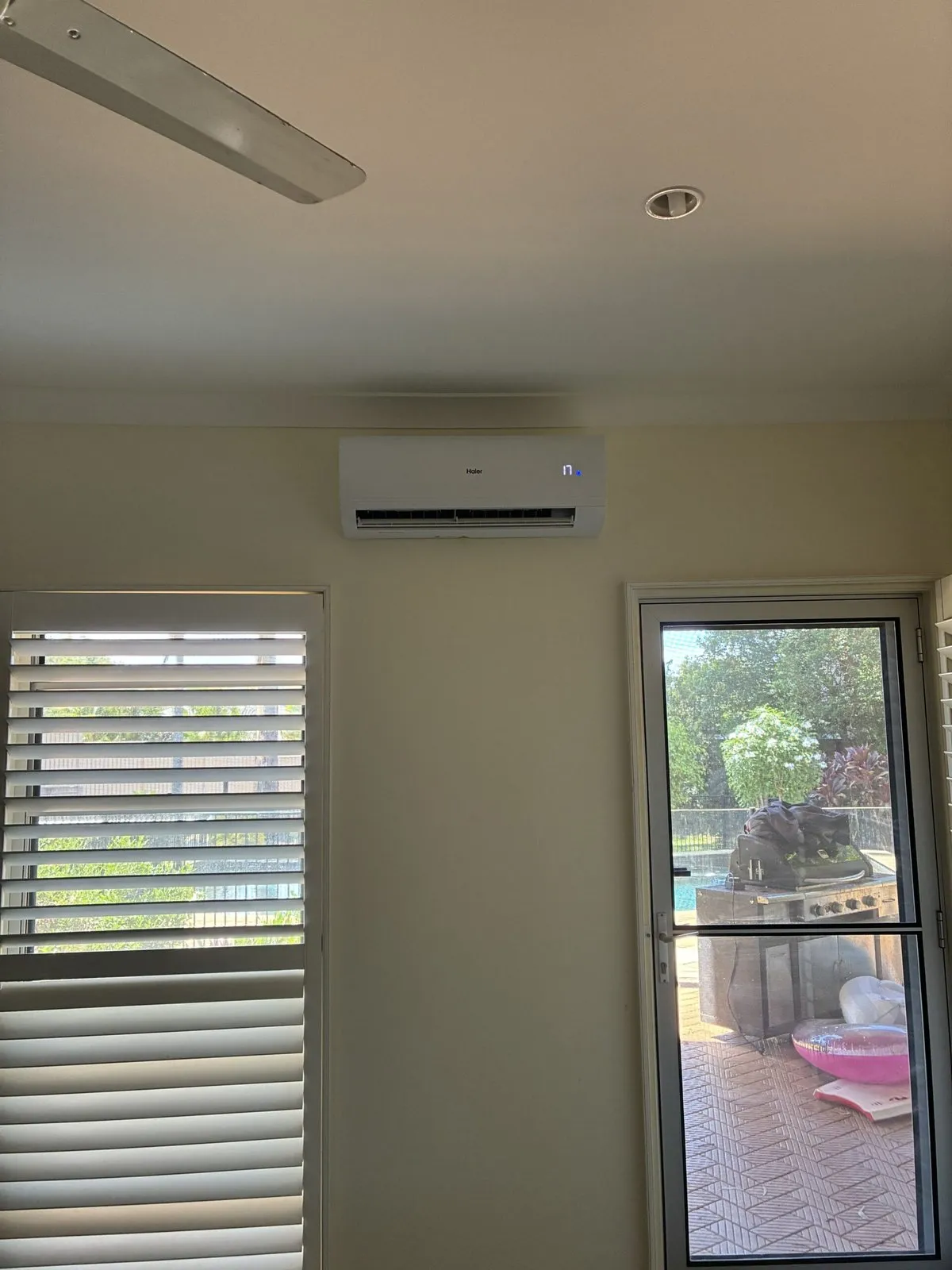
What this means for you: You need a split system with strong dehumidification mode (look for “Dry” mode in the specs). You also need to clean your filters every 2–4 weeks during summer — not the “every 3 months” advice you see in generic guides. I’ll cover maintenance in detail later in this guide.
Older Electrical Systems
Many Capalaba homes still have the original electrical systems from the 1970s–1980s. These systems often have:
- Old switchboards — fuse boxes instead of circuit breakers, no safety switches
- Insufficient circuits — not enough power points, shared circuits
- No dedicated AC circuit — split systems need their own circuit in most cases
What this means for you: You’ll likely need a new electrical circuit for your split system, which adds $250–$450 to the installation cost. If your switchboard is old (fuse box or no safety switches), you may also need a switchboard upgrade before installing the AC.
Proximity to the Bay (Corrosion Risk)
Homes in Capalaba, especially those east of Fincher Road or closer to Cleveland Bay, face salt air corrosion. This isn’t just a cosmetic issue. Salt air attacks:
- Outdoor unit coils — aluminium fins corrode, reducing efficiency by 15–30%
- Electrical connections — terminals corrode, causing faults and safety risks
- Mounting brackets — standard steel brackets rust within 2–3 years
What this means for you: If you live within 2km of the bay (eastern Capalaba, towards Cleveland), you need a split system with corrosion-resistant coating (Daikin and Mitsubishi Electric offer this as standard on most models). You also need stainless steel mounting brackets — not the standard galvanised steel that comes with most installs. This adds $150–$250 to your installation cost but extends your outdoor unit’s life from 8 years to 15+ years.
Split System Installation Costs in Capalaba (2026)
Installation costs in Capalaba are similar to the rest of the Redlands, but there are specific factors that can push costs up or down:
| System Size | Standard Install | Common Cost Factors |
|---|---|---|
| 2.5kW (bedroom, small lounge) | $1,300–$1,800 | Standard back-to-back, most common |
| 3.5kW (master bedroom, medium lounge) | $1,500–$2,100 | Slightly larger unit, same install process |
| 5kW (large lounge, open-plan) | $1,600–$2,400 | Larger outdoor unit, may need stronger brackets |
| 7kW–8kW (very large open-plan) | $2,000–$3,200 | Heavy outdoor unit, may need ground pad |
What’s included in a “standard install”?
- Back-to-back installation (indoor unit on interior wall, outdoor unit directly outside)
- Up to 3 metres of refrigerant piping
- Standard mounting brackets (galvanised steel for non-coastal, stainless for coastal)
- Electrical connection to existing power point (no new circuit)
- Commissioning, testing, and handover
What costs extra in Capalaba?
- New electrical circuit — $250–$450 (common in older Capalaba homes)
- Switchboard upgrade — $800–$2,500 (if you have an old fuse box)
- Stainless steel brackets — $150–$250 (for homes within 2km of the bay)
- Additional piping — $80–$120 per metre beyond 3m
- Core hole through brick — $150–$300 (if drilling through external brick wall)
- Scaffolding or elevated work — $300–$800 (two-storey homes)
- Removal and disposal of old unit — $150–$250
Capalaba-Specific Installation Challenges
Brick Veneer Walls
Most Capalaba homes are brick veneer — single brick outer wall with timber frame inside. This creates a few challenges:
- Drilling through brick — requires a hammer drill and masonry bits, adds 15–30 minutes to the install
- Finding wall studs — timber frame is behind the brick, so we need a stud finder to locate mounting points
- Insulation gaps — brick veneer homes often have gaps in the insulation, which we need to seal around the piping penetrations
How I handle this: I use a high-quality hammer drill with diamond-tipped masonry bits to drill through the brick cleanly. I locate the timber studs with a stud finder and use appropriate fixings. I seal all penetrations with expanding foam to prevent air leaks.
Old Electrical Systems
If your home was built before 1990, you likely have an older electrical system. Here’s what I typically find:
- Fuse boxes — many Capalaba homes still have ceramic fuses instead of circuit breakers
- No safety switches — older homes don’t have RCD protection
- Shared circuits — power points and lights on the same circuit
- No dedicated AC circuit — split systems need their own circuit
What I do: I install a new dedicated circuit from your switchboard to the split system location. If your switchboard is old (fuse box or no safety switches), I’ll recommend a switchboard upgrade before installing the AC. This ensures your new split system is safe and compliant.
Humidity and Mould
Capalaba’s proximity to Moreton Bay means higher humidity than western suburbs. This can cause mould growth in your split system if not maintained properly.
How I prevent this: I recommend split systems with strong dehumidification modes (Daikin and Mitsubishi Electric excel here). I also advise cleaning filters every 2–4 weeks during summer and getting a professional service every 12 months. I’ll cover maintenance in detail below.
Coastal Corrosion (Eastern Capalaba)
Homes east of Fincher Road, or within 2km of Cleveland Bay, face salt air corrosion. This can reduce your outdoor unit’s lifespan from 15 years to 5–8 years if not protected.
How I protect your system: I use stainless steel mounting brackets instead of galvanised steel (adds $150–$250 but extends bracket life from 3 years to 15+ years). I also recommend split systems with corrosion-resistant coatings (Daikin Cora and Mitsubishi Electric Avant have this as standard).
What Size Split System Do You Need? Capalaba-Specific Sizing
Split system sizing is critical — too small and it won’t cool your home, too large and you’ll waste money on the unit and power bills. Here’s a Capalaba-specific sizing guide:
| Room Size | 1970s–1990s Home | Modern Home (2000+) | Eastern Capalaba (within 2km of bay) |
|---|---|---|---|
| 10–15m² | 2.5kW | 2.0kW | 2.5kW |
| 15–25m² | 3.5kW | 2.5kW | 3.5kW |
| 25–40m² | 5kW | 3.5kW | 5kW |
| 40–60m² | 7kW | 5kW | 7kW |
| 60m²+ | 8kW+ or ducted | 7kW+ or ducted | 8kW+ or ducted |
Why do older homes and eastern Capalaba need larger systems?
- Older homes — poor insulation, single-glazed windows, more heat gain
- Eastern Capalaba — higher humidity means the system works harder to remove moisture
Capalaba-specific factors that increase sizing:
- North-facing rooms — get more sun, add 0.5kW
- High ceilings (2.7m+) — more air volume, add 0.5kW
- Large windows — more heat gain, add 0.5kW per 5m² of glass
- Poor insulation — add 0.5–1.0kW
For a detailed sizing calculator, see our split system sizing guide.
Best Split System Brands for Capalaba (2026)
After 8 years of installing split systems in Capalaba homes, here are the brands I recommend:
1. Daikin Cora — Best Overall for Capalaba
Why it’s great for Capalaba:
- Blue Fin condenser coating — standard on all models, excellent corrosion resistance for eastern Capalaba
- Strong dehumidification — handles Capalaba humidity well
- Reliable — low failure rate, good warranty (5 years compressor, 2 years parts)
- Quiet operation — 19dB(A) on low, great for bedrooms
Best for: All Capalaba homes, especially eastern Capalaba (within 2km of the bay)
Price range: $1,300–$2,800 installed (depending on capacity)
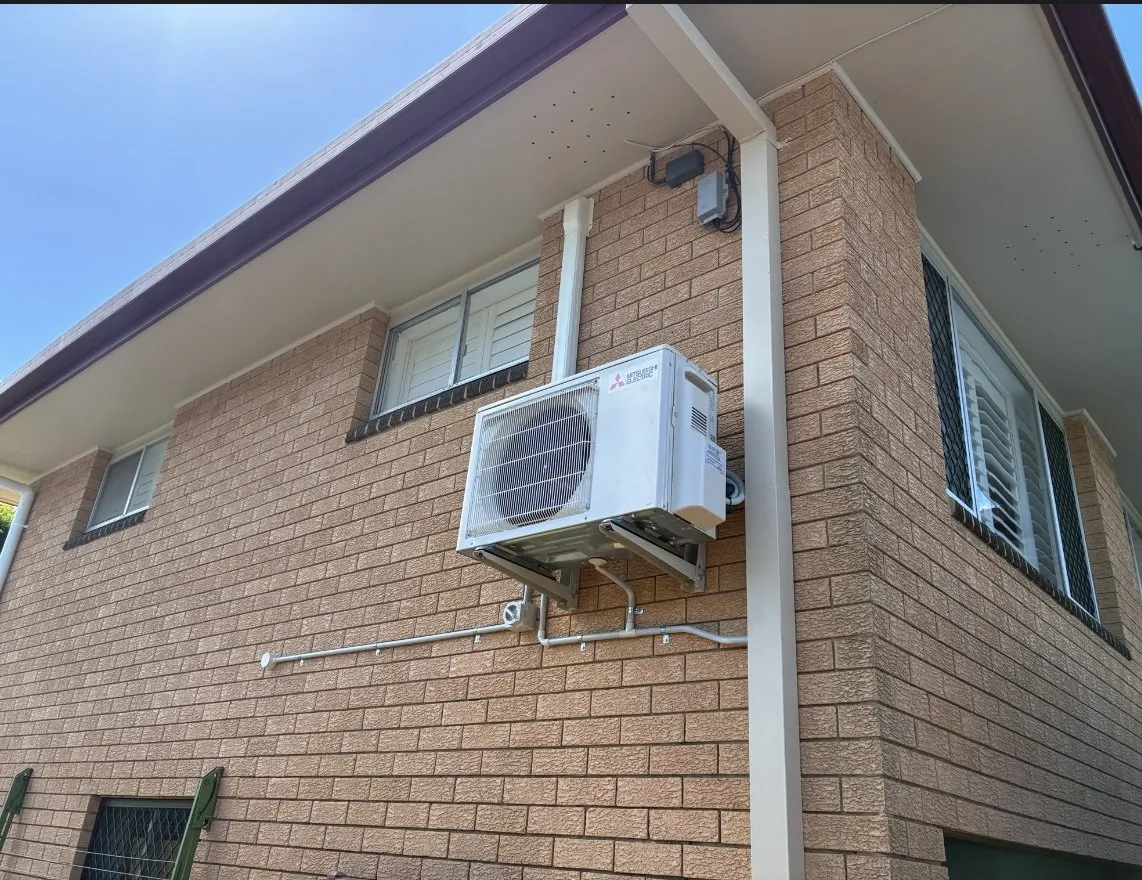
2. Mitsubishi Electric Avant — Best for Bedrooms
Why it’s great for Capalaba:
- Ultra-quiet — 19dB(A) on low, whisper-quiet for bedrooms
- Anti-corrosion treatment — good for eastern Capalaba
- Efficient — high EER and COP ratings, lower power bills
- Reliable — Japanese engineering, low failure rate
Best for: Bedrooms in all Capalaba homes, especially if you’re a light sleeper
Price range: $1,400–$3,000 installed
3. Haier Toro — Best Budget Option
Why it’s great for Capalaba:
- Affordable — 20–30% cheaper than Daikin or Mitsubishi
- Self-cleaning — reduces mould growth (good for humid Capalaba)
- Good warranty — 5 years compressor, 3 years parts
- Handles humidity well — strong dehumidification mode
Best for: Budget-conscious homeowners, rental properties, western Capalaba (away from the bay)
Price range: $1,100–$2,200 installed
For a detailed brand comparison, see our best split system brands guide.
Split System Maintenance in Capalaba: What You Need to Know
Capalaba’s humidity means your split system needs more maintenance than a system in western Brisbane. Here’s what you need to do:
Every 2–4 Weeks (Summer)
- Clean filters — remove, vacuum, wash with warm soapy water, dry, reinstall
- Check for mould — look for black spots on filters or in the indoor unit
Every 3 Months (Year-Round)
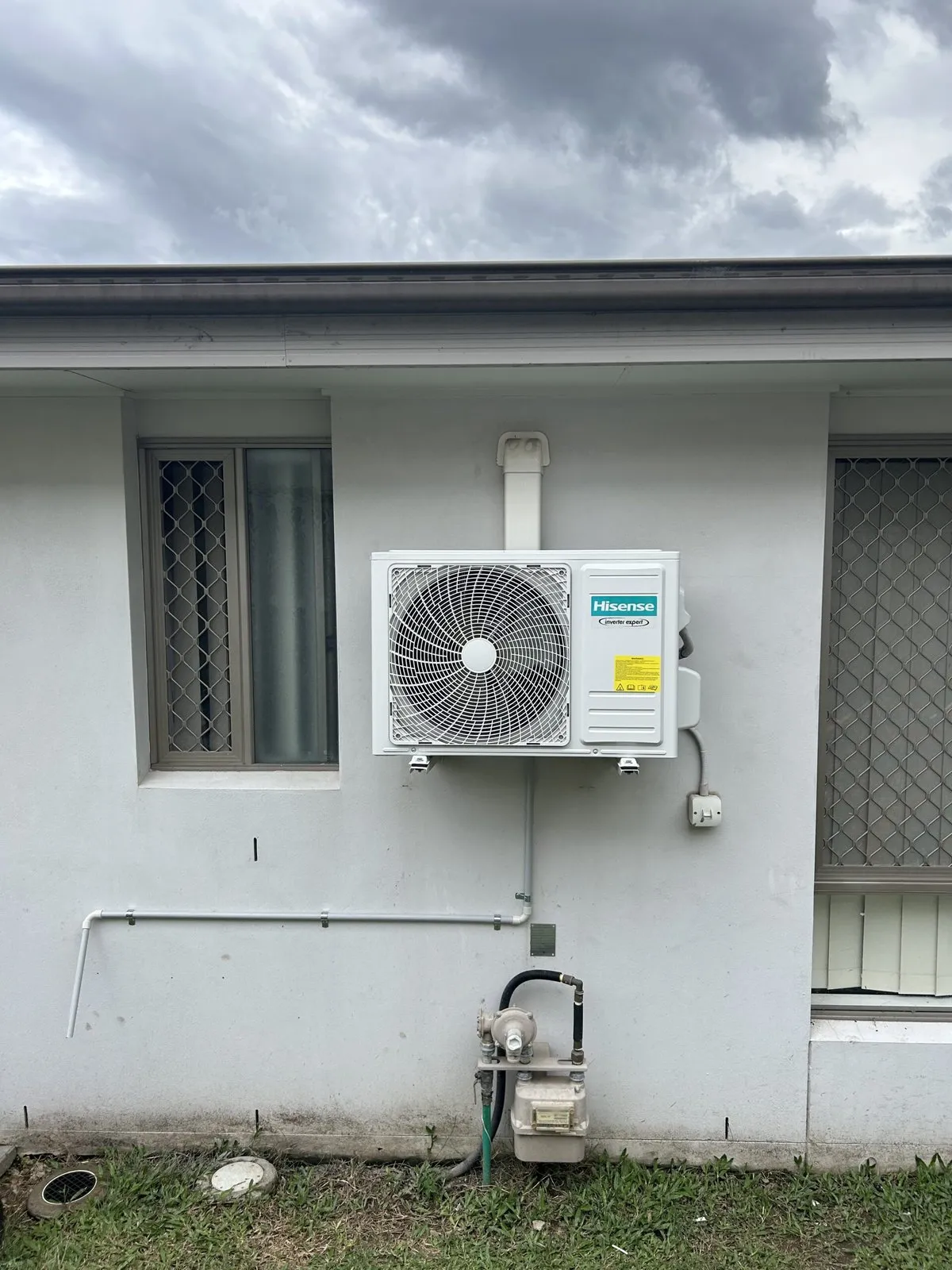
- Rinse outdoor unit — hose down the outdoor unit to remove dust, salt, and debris (especially important in eastern Capalaba)
- Check drain pipe — make sure it’s not blocked (pour a bucket of water down it)
Every 12 Months
- Professional service — $180–$280 for a single-head system, includes deep clean, refrigerant check, electrical safety check
Why is maintenance more important in Capalaba?
- Humidity — promotes mould growth in the indoor unit
- Coastal salt — corrodes outdoor unit coils and electrical connections (eastern Capalaba)
- Dust — Capalaba’s proximity to Mt Cotton Road and the bushland means more dust, which clogs filters faster
For a complete maintenance guide, see our summer prep checklist.
Split System Installation Process: What to Expect
Here’s what happens on installation day, from start to finish:
- Arrival and site inspection — I’ll walk through your Capalaba home with you, confirm the installation location, and check for any issues (electrical, access, etc.)
- Protect your home — lay down drop sheets, protect carpets and floors
- Install indoor unit — mount the backplate, drill the core hole through the brick wall, hang the indoor unit
- Install outdoor unit — mount brackets, place the outdoor unit, connect refrigerant piping
- Electrical connection — connect to existing power point or install a new circuit if needed
- Commissioning — vacuum the refrigerant lines, release the refrigerant, test all functions
- Handover — walk you through the remote control, explain basic operation, answer questions
How long does it take? A standard back-to-back install takes 3–5 hours in Capalaba (longer than average due to brick veneer walls and potential electrical upgrades). More complex installs (long pipe runs, new circuits, two-storey homes) can take 5–8 hours.
For a detailed walkthrough, see our installation day guide.
Real Capalaba Split System Installations
Case Study 1: 1980s Brick Veneer in Capalaba West
Home: 1985 brick veneer, 3-bedroom, original electrical system with fuse box
Challenge: Homeowner wanted a 5kW system in the lounge, but the existing electrical system couldn’t handle it. The fuse box needed upgrading before we could install the AC.
Solution: We did a switchboard upgrade first ($1,800), then installed the Daikin Cora 5kW with a dedicated circuit ($2,200). Total cost: $4,000.
Result: Homeowner now has cool, comfortable lounge room and a safe, modern electrical system. The switchboard upgrade also increased the home’s value and made it insurable.
Case Study 2: 1990s Home in Eastern Capalaba (Near the Bay)
Home: 1992 brick veneer, 4-bedroom, within 1km of Cleveland Bay
Challenge: Homeowner had a 5-year-old split system that was already showing signs of corrosion on the outdoor unit. The standard galvanised brackets were rusting, and the coils were corroding.
Solution: We replaced the old unit with a Daikin Cora 5kW (which has Blue Fin corrosion-resistant coating) and installed stainless steel brackets. We also rinsed the outdoor unit every 3 months as part of a maintenance plan.
Result: New system is 3 years old and still looks brand new. The stainless steel brackets and corrosion-resistant coating are protecting the investment. Homeowner estimates the new setup will last 15+ years instead of the 5–8 years the old system would have lasted.
Case Study 3: Rental Property in Capalaba Central
Home: 1980s brick veneer, 3-bedroom, rental property
Challenge: Landlord wanted to install a split system to attract tenants, but needed to keep costs down. The home had an older electrical system but no fuse box (already had circuit breakers).
Solution: We installed a Haier Toro 3.5kW in the main lounge ($1,800) and a Haier Toro 2.5kW in the master bedroom ($1,500). Total cost: $3,300. We didn’t need to upgrade the electrical system because the home already had circuit breakers.
Result: Landlord was able to increase rent by $30/week, paying for the installation in 2 years. Tenants are happy with the cooling, and the self-cleaning feature on the Haier units reduces maintenance costs.
Why Choose a Local Capalaba Installer?
There are a dozen split system installers in Brisbane, but here’s why choosing a local Capalaba installer matters:
1. We Know the Local Conditions
I’ve installed split systems in Capalaba for 8 years. I know which homes need new electrical circuits, which areas face corrosion issues, and which brands handle Capalaba’s humidity best. A Brisbane CBD installer might not know these details.
2. Faster Response Times
If something goes wrong after installation (and it rarely does, but it happens), a local installer can be at your Capalaba home within 24 hours. A Brisbane-wide company might take 3–5 days to get to Capalaba.
3. Better Pricing
Local installers have lower overheads than Brisbane-wide companies. You’re not paying for their city office rent or their TV advertising. At Amplus Electrical & Air, you’re paying for the install, not the marketing budget.
4. Accountability
I live in Capalaba. My reputation in the suburb matters. If I do a bad job, everyone in my suburb knows about it. That’s not the case for a Brisbane-wide company that does 50 installs a day across the city.
Frequently Asked Questions
How much does split system installation cost in Capalaba?
A standard back-to-back installation costs $1,300–$1,800 for a 2.5kW system and $1,600–$2,400 for a 5kW system. Older Capalaba homes often need a new electrical circuit ($250–$450 extra), and homes within 2km of the bay need stainless steel brackets ($150–$250 extra).
What’s the best split system brand for Capalaba?
Daikin Cora is the best choice for all Capalaba homes because it has Blue Fin condenser coating as standard, which resists corrosion and handles humidity well. Mitsubishi Electric Avant is also excellent, especially for bedrooms due to its ultra-quiet operation. Haier Toro is the best budget option.
Do I need a larger split system in older Capalaba homes?
Yes. Older Capalaba homes (1970s–1990s) typically have poor insulation and single-glazed windows, so you need a 0.5kW–1.0kW larger system than a modern home of the same size. For example, a 20m² bedroom in a 1980s Capalaba home needs a 3.5kW system, while the same room in a new Carindale home only needs 2.5kW.
How often should I service my split system in Capalaba?
Clean filters every 2–4 weeks during summer (more often than the generic “every 3 months” advice). Rinse the outdoor unit every 3 months (essential for eastern Capalaba homes near the bay). Get a professional service every 12 months.
Can I install a split system myself?
No. Queensland law requires (Electrical Safety Office Queensland) a licensed air conditioning installer to handle refrigerant and electrical connections. DIY installation voids the manufacturer’s warranty and can be dangerous. Always use a licensed professional.
How long does split system installation take in Capalaba?
A standard back-to-back installation takes 3–5 hours in Capalaba (longer than average due to brick veneer walls). More complex installs (long pipe runs, new electrical circuits, two-storey homes) can take 5–8 hours.
Do I need a switchboard upgrade before installing a split system?
If your Capalaba home has an old fuse box or no safety switches, you likely need a switchboard upgrade before installing a split system. This ensures your new AC is safe and compliant. Cost: $800–$2,500.
What’s the best temperature to set my split system in Capalaba summer?
Set it to 24–25°C for cooling. This is comfortable, energy-efficient, and reduces strain on the system. Every degree lower costs an extra 10% on power bills.
Need a Split System Installed in Capalaba?
If you’re in Capalaba and need a split system installed, I can help. I’m a licensed electrician and air conditioning installer based in Capalaba, and I’ve installed split systems in hundreds of Capalaba homes.
What you get:
- Free quote — I’ll come to your Capalaba home, assess your needs, and give you a fixed price
- Local expertise — I know Capalaba, its housing types, and its challenges
- Quality brands — I only install Daikin, Mitsubishi Electric, and Haier
- 5-year installation warranty — I stand behind my work
- No call-out fee — free quotes across Capalaba
Phone: 0419 014 146
Service area: All Capalaba — west, central, and eastern Capalaba
Licence: Electrical Contractor Licence #1500996 | ARCtick Licence (ARCtick certified) #L183747
Need a Licensed Electrician in Brisbane Bayside?
Aaron is a licensed electrician (Lic. 1500996) and ARC-certified A/C technician serving Capalaba, Cleveland, Wynnum, Manly, Birkdale, Thornlands, Victoria Point and surrounding suburbs. Honest advice, upfront pricing, and quality work guaranteed.