Smoke Alarm Compliance Certificate QLD: What Sellers Need to Know (2026 Guide)
Selling property in QLD? You need a smoke alarm compliance certificate before settlement. Licensed electrician, same-day inspections, $150-$250. Call 0419 014 146.
📋 Quick Answer: Smoke Alarm Compliance Certificate QLD
- Cost: $150–$250 (certificate only) | $1,200–$1,800 (full upgrade + certificate)
- Time: 30–60 minutes inspection, certificate issued same-day
- Who can issue: Licensed electrician only (not real estate agents or building inspectors)
- Legal requirement: Yes — Building Fire Safety Regulation 2008 requires it before property sale
- Penalty for non-compliance: Buyer can deduct up to 0.15% of sale price (e.g., $900 on a $600k home)
- Service areas: Brisbane, Redlands (Capalaba, Cleveland, Victoria Point, Thornlands, Redland Bay)
Selling a house in Queensland means dealing with paperwork: building inspections, pest reports, pool safety certificates, and now smoke alarm compliance. If you don’t have your smoke alarm compliance certificate sorted before settlement, you risk delays, buyer deductions, or last-minute scrambles.
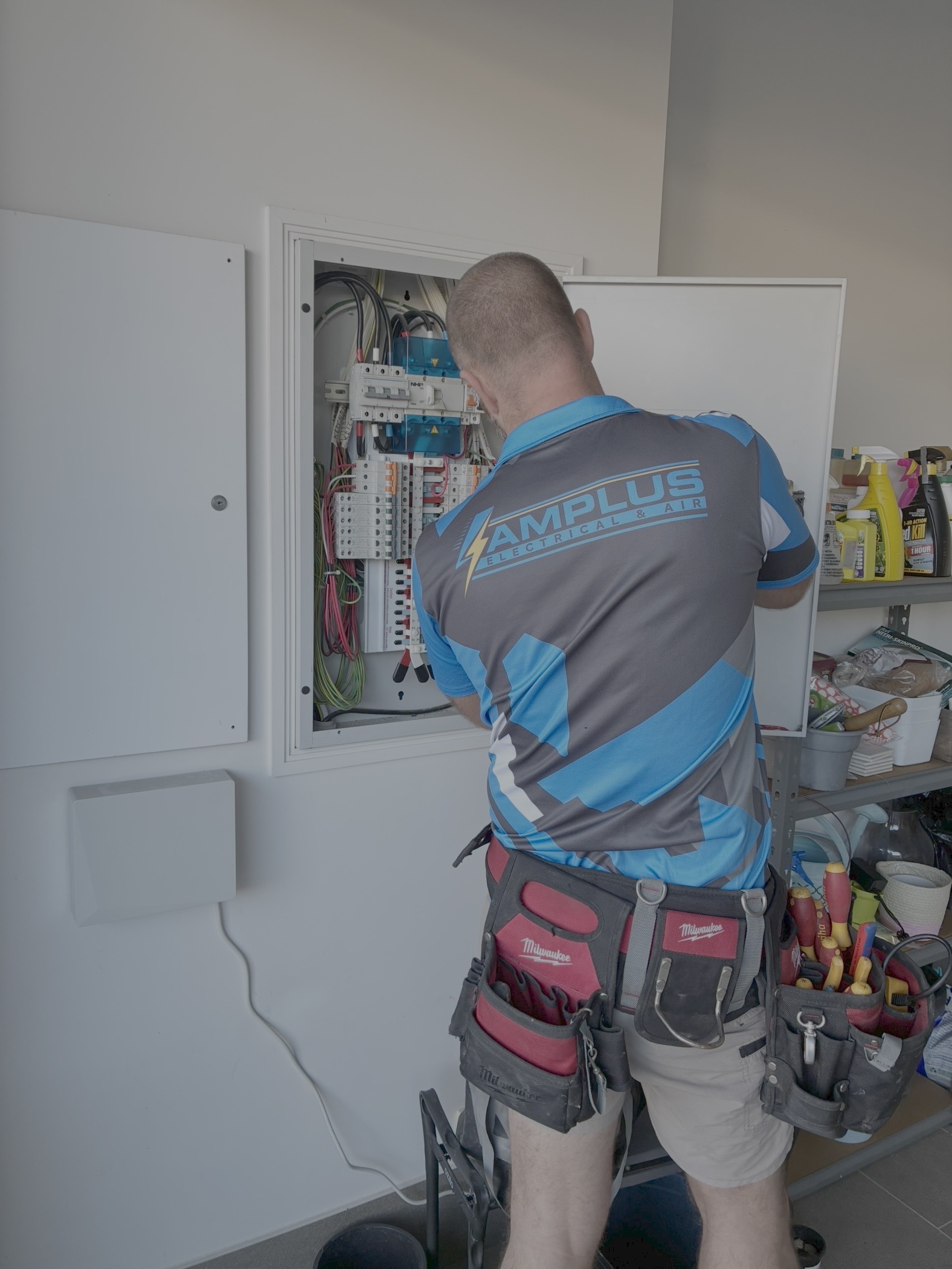
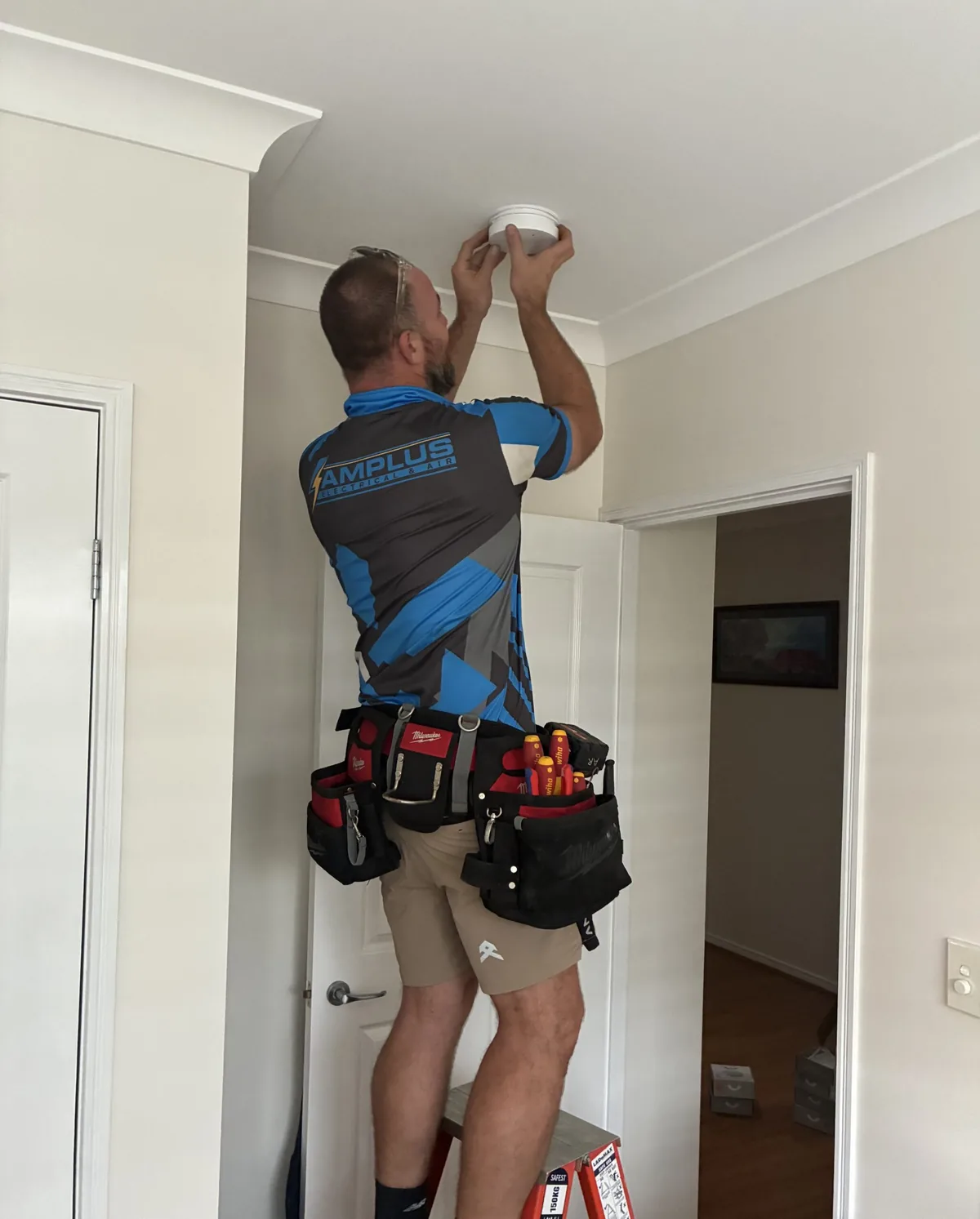
I’m Aaron Ross, licensed electrician (QLD Licence #1500996) based in Capalaba. I issue 15–20 compliance certificates every week across Brisbane and the Redlands — from Capalaba to Cleveland, Victoria Point to Redland Bay, Thornlands to Mount Cotton. This guide tells you exactly what you need: what the certificate is, why you need it, how much it costs, and how to get one fast.
What Is a Smoke Alarm Compliance Certificate in QLD?
A smoke alarm compliance certificate is a document issued by a licensed electrician confirming all smoke alarms in your property meet Queensland legislation. It’s not a government certificate — it’s a professional declaration from a qualified tradesperson who’s inspected your property and verified compliance.
What the certificate includes:
- Property address and inspection date
- Number and type of smoke alarms (must be photoelectric)
- Age of each alarm (must be less than 10 years old)
- Location of each alarm (every bedroom, hallways connecting bedrooms, every level)
- Test results confirming all alarms work
- Interconnection test (all alarms sound together)
- Electrician’s name, licence number, and contact details
- Declaration of compliance with Building Fire Safety Regulation 2008
You hand this certificate to your real estate agent or solicitor as part of settlement paperwork. It proves to the buyer your property meets QLD smoke alarm laws at the time of sale.
If you’re selling in the Redlands area, you may also find our Redlands smoke alarm compliance guide useful for suburb-specific requirements.
QLD Smoke Alarm Legislation: What the Law Requires
Queensland’s smoke alarm requirements come from three main sources:
1. Building Fire Safety Regulation 2008
This is the primary law. It says all dwellings must have compliant smoke alarms before they can be sold or leased. The regulation specifies:
- Type: Photoelectric only (no ionisation alarms)
- Placement: Every bedroom, hallways connecting bedrooms, every level
- Age: Less than 10 years old
- Interconnection: All alarms must sound together
The full legislation is available on the QLD legislation website.
2. Australian Standard AS 3786:2014
All smoke alarms must comply with Australian Standard AS 3786:2014. This covers performance requirements for photoelectric alarms. When I inspect a property, I check every alarm meets this standard.
3. Building Code of Australia (BCA)
The BCA sets minimum requirements for new buildings. QLD legislation goes beyond the BCA by requiring interconnected alarms in all bedrooms — something the original BCA didn’t require.
Why Sellers Need a Smoke Alarm Compliance Certificate (The Risks)
Under the Building Fire Safety Regulation 2008, sellers must ensure smoke alarms are compliant before transferring ownership. The QLD legislation is clear: all alarms must be photoelectric, interconnected, less than 10 years old, and correctly located.
The Queensland Fire and Emergency Services enforces these requirements. If you don’t have a compliance certificate, here’s what can happen:
Risk #1: Settlement Delay
Your solicitor will ask for proof of compliance before settlement. Without it, the buyer’s solicitor can delay settlement. In a competitive market, that delay could cost you the sale.
Risk #2: Buyer Deduction (Up to 0.15% of Sale Price)
If your property isn’t compliant at settlement, the buyer can deduct up to 0.15% of the purchase price. On a $600,000 home, that’s $900 out of your pocket — money you could’ve avoided by getting compliant beforehand.
Risk #3: Non-Compliance Penalties
QLD law allows fines up to $667 for individuals (or $3,335 for corporations) who fail to comply. While enforcement is rare for residential sales, the liability exists.
Risk #4: Buyer Red Flag
Buyers are increasingly aware of smoke alarm compliance. No certificate signals poor property maintenance. This can lead to further inspections, negotiations, or lost sales.
Bottom line: A compliance certificate isn’t just paperwork — it’s proof you’ve done your due diligence as a seller.
Who Can Issue a Smoke Alarm Compliance Certificate?
Only a licensed electrician can issue a compliance certificate in Queensland. This is non-negotiable — a real estate agent, building inspector, or homeowner cannot self-certify compliance.
The electrician must:
- Hold a current QLD electrical contractor licence (like my licence #1500996)
- Have inspected the property in person
- Have tested all smoke alarms for functionality
- Have verified the alarms meet QLD legislation requirements (photoelectric, interconnected, less than 10 years old, correctly located)
Some companies offer “smoke alarm certificates” issued by unlicensed technicians — these are not legally valid. Always confirm the person issuing the certificate is a licensed electrician. If you need help finding qualified installers, check my guide on smoke alarm installers in Brisbane.
If you’re selling in the Redlands area, you may also find our Redlands smoke alarm compliance guide useful for suburb-specific requirements.
What Does a Smoke Alarm Compliance Inspection Include?
When I conduct a smoke alarm compliance inspection, here’s what I do:
1. Count and locate all smoke alarms
I check every bedroom, hallway connecting bedrooms, and every level of the property. QLD law requires interconnected smoke alarms in all these locations.
2. Verify alarm type and age
I confirm each alarm is photoelectric (not ionisation) and less than 10 years old. If any alarms are older than 10 years or the wrong type, they must be replaced before I can issue a certificate.
3. Test functionality
I test each alarm to confirm it’s working correctly. This includes checking the battery (for battery-powered alarms) and the interconnection (all alarms should sound together when one is triggered). If you’re experiencing issues with chirping or malfunctioning alarms before your inspection, see my guide on smoke alarm beeping fixes.
4. Check compliance with 2027 rules
QLD’s smoke alarm laws are tightening in 2027 — all homes must have photoelectric, interconnected alarms by January 1, 2027. I check whether your property is already compliant or needs upgrades.
5. Take photographs
I photograph each smoke alarm as evidence of compliance. These photos are included in the certificate.
6. Issue the certificate
If everything is compliant, I issue the certificate on the spot. If upgrades are needed, I provide a quote to bring the property into compliance, then issue the certificate once the work is done.
The entire inspection takes 30–60 minutes for a typical 4-bedroom home. Larger properties or properties with non-compliant alarms take longer.
How Much Does a Smoke Alarm Compliance Certificate Cost in Brisbane?
The cost depends on whether your property is already compliant or needs upgrades.
| Service | Cost | What’s Included |
|---|---|---|
| Certificate only (property already compliant) | $150–$250 | Inspection, testing, photographs, certificate |
| Full compliance upgrade (4-bed home, 6–8 alarms) | $1,200–$1,800 | New photoelectric alarms, interconnection, certificate |
| Replacement alarms (per alarm) | $120 each | Supply and install photoelectric alarm |
| Interconnection work (per alarm) | $80–$150 each | Wire or wireless interconnection |
For a detailed breakdown of smoke alarm installation costs, see my smoke alarm cost guide.
The bottom line: A standalone certificate is $150–$250. A full compliance upgrade is $1,200–$1,800. Either way, it’s cheaper than the 0.15% deduction a buyer can claim if you’re non-compliant at settlement.
How to Get a Smoke Alarm Compliance Certificate Fast
If you’re selling and need a certificate urgently, here’s how to get one fast:
1. Call a licensed electrician who offers same-day service
I offer same-day smoke alarm compliance inspections across Brisbane and the Redlands. Call me on 0419 014 146, and I’ll usually be able to inspect your property within 24–48 hours.
2. Have your property details ready
When you call, have the following ready:
- Property address
- Number of bedrooms
- Number of levels
- Approximate age of the property
- Whether you know the smoke alarms are compliant (if you’re unsure, I’ll check)
3. Book the inspection
I’ll book a time that works for you — usually within 24–48 hours. The inspection takes 30–60 minutes.
4. Receive the certificate
If your property is compliant, I’ll issue the certificate on the spot. If upgrades are needed, I’ll provide a quote and complete the work same-day if possible, then issue the certificate.
5. Hand the certificate to your agent or solicitor
The certificate is a PDF document you can email to your agent or solicitor. They’ll include it in the settlement paperwork.
The entire process — from first call to certificate in hand — can be completed in 24–72 hours if you book with a same-day service provider.
For a broader overview of QLD’s upcoming smoke alarm changes, read our QLD smoke alarm changes 2027 guide.
Smoke Alarm Compliance Certificate vs Building Inspection Certificate
Don’t confuse a smoke alarm certificate with a building inspection certificate. They’re different documents:
| Certificate Type | What It Covers | Who Issues It | Required for Sales? |
|---|---|---|---|
| Smoke alarm compliance | Smoke alarms meet QLD legislation | Licensed electrician | Yes (legally required) |
| Building inspection | Structural, plumbing, electrical | Building inspector | Often requested by buyers |
| Pool safety | Pool fencing meets QLD standards | Pool safety inspector | Yes (if property has pool) |
| Electrical safety | Electrical work is compliant | Licensed electrician | After certain electrical work |
This certificate is the only one specifically required by the Building Fire Safety Regulation 2008 for property transfers.
Common Reasons Properties Fail Compliance Inspections
After conducting hundreds of smoke alarm compliance inspections across Brisbane and the Redlands, I see the same issues come up again and again. Here are the most common reasons properties fail:
1. Ionisation alarms instead of photoelectric
Many older homes still have ionisation smoke alarms installed. These were legal when the property was built, but under current QLD legislation, all alarms must be photoelectric. Ionisation alarms are more prone to false alarms from cooking and don’t detect smouldering fires as quickly as photoelectric models. If your property has ionisation alarms, they must be replaced before I can issue a compliance certificate.
2. Alarms older than 10 years
Smoke alarms have a finite lifespan — typically 10 years from the date of manufacture. The manufacture date is printed on the back of the alarm. If any of your alarms are older than 10 years, they must be replaced regardless of whether they still appear to be working. This is a common issue in properties that haven’t had electrical work done in the last decade.
3. Missing alarms in bedrooms
QLD law requires a smoke alarm in every bedroom. Many older properties only have alarms in hallways. If you’ve converted a study into a bedroom, or if the original installer didn’t put alarms in every sleeping area, your property will fail the inspection. This is one of the most common compliance failures I see in Redlands homes built in the 1990s and 2000s.
4. Alarms not interconnected
All smoke alarms in a QLD property must be interconnected — when one alarm detects smoke, they all sound. Many properties have standalone alarms that were installed before the interconnection requirement came into effect. Interconnection can be achieved through hardwiring or wireless interconnection modules, depending on the type of alarms installed.
5. Alarms painted over or damaged
I’ve seen alarms that have been painted over during home renovations, or damaged by tenants removing the cover. Paint can block the smoke sensors, and physical damage can affect functionality. Any damaged or painted-over alarms must be replaced before a compliance certificate can be issued.
6. Incorrect placement
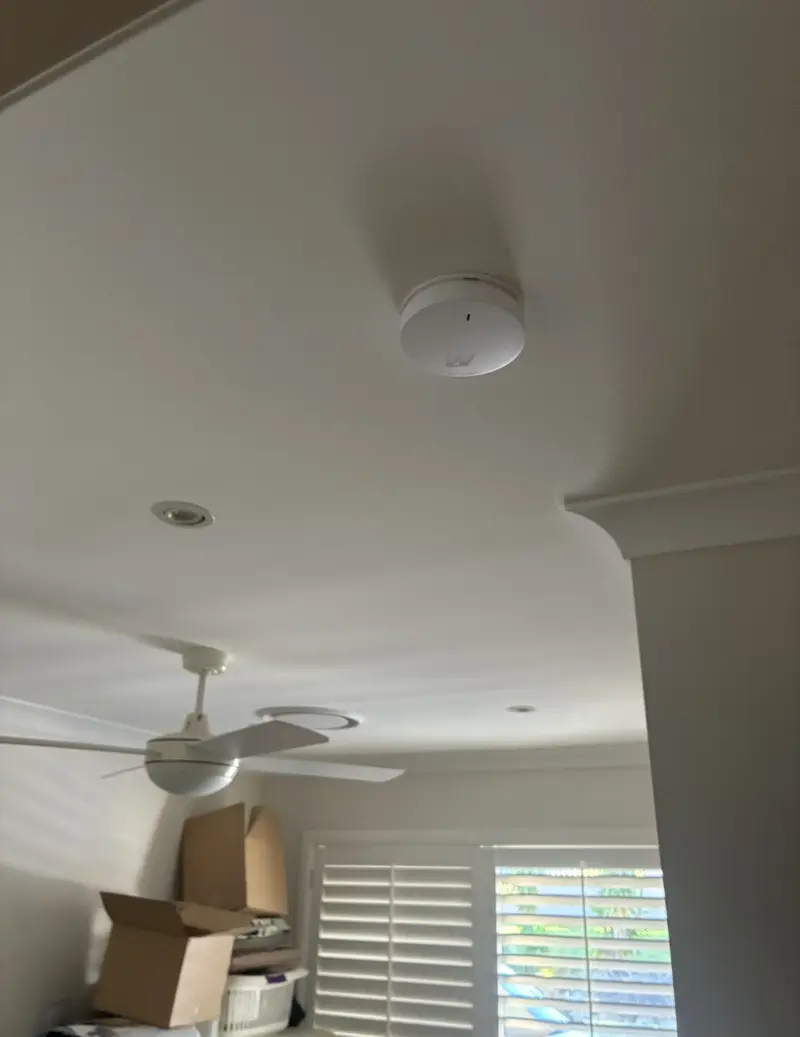
Smoke alarms must be mounted on the ceiling, not on walls. They must be positioned in the centre of the room or hallway, at least 300mm from any corner. Alarms installed on walls, in corners, or near air conditioning vents may not comply. I check the placement of every alarm during the inspection.
What Happens If Your Property Fails the Compliance Inspection?
If your property fails the smoke alarm compliance inspection, don’t panic. It just means some or all of your alarms need to be upgraded to meet QLD legislation.
Here’s what happens next:
1. I’ll provide a detailed report
I’ll give you a written report listing which alarms are non-compliant and why (wrong type, too old, missing, not interconnected).
2. I’ll provide a quote to fix the issues
I’ll quote the cost to replace or upgrade the non-compliant alarms. This includes supply, installation, and the compliance certificate once the work is done.
3. You can choose to proceed or not
If you proceed, I’ll complete the upgrades (usually same-day) and issue the certificate. If you don’t proceed, you won’t get a certificate — and you’ll need to disclose this to the buyer, which may affect the sale price or settlement.
4. The buyer can deduct 0.15% if you settle non-compliant
If you settle without a compliance certificate, the buyer is entitled to deduct up to 0.15% of the purchase price. On a $600,000 home, that’s $900. It’s almost always cheaper to fix the issues beforehand.
Frequently Asked Questions
How long is a smoke alarm compliance certificate valid for?
The certificate is valid at the time of issue with no expiry date. However, for property sales, the certificate should be issued within 6–12 months of settlement to be considered current. If you make changes to the property (like renovating or adding bedrooms), you may need a new inspection.
Can I get a smoke alarm compliance certificate if I’m not selling?
Yes. You can get a compliance certificate at any time — you don’t have to be selling. Some landlords get certificates annually as part of their rental compliance obligations. Some homeowners get certificates for peace of mind.
Do I need a smoke alarm compliance certificate for a rental property?
Yes. Under the Residential Tenancies and Rooming Accommodation Act 2008, landlords must ensure smoke alarms are compliant at the start of every tenancy. A compliance certificate is proof of this.
Can I issue my own smoke alarm compliance certificate?
No. Only a licensed electrician can issue a compliance certificate. Homeowners, real estate agents, and building inspectors cannot self-certify compliance.
What if my smoke alarms are working but not interconnected?
If your alarms are working but not interconnected, they’re non-compliant. QLD law requires all smoke alarms to be interconnected — when one alarm sounds, they all sound. I can upgrade your alarms to interconnected during the compliance inspection.
How much does it cost to upgrade smoke alarms to compliant?
For a typical 4-bedroom home, a full compliance upgrade (new photoelectric, interconnected alarms) costs $1,200–$1,800, including the compliance certificate. The exact cost depends on the number of alarms and the complexity of the interconnection work.
Can I get a smoke alarm compliance certificate same-day?
Yes. I offer same-day smoke alarm compliance inspections across Brisbane and the Redlands. If your property is already compliant, I’ll issue the certificate on the spot. If upgrades are needed, I can usually complete the work same-day and issue the certificate before I leave.
What if I don’t have a smoke alarm compliance certificate when selling?
If you don’t have a certificate, your settlement may be delayed, or the buyer can deduct up to 0.15% of the purchase price. It’s always cheaper and faster to get compliant beforehand.
Do smoke alarm compliance certificates expire?
No, they don’t have an expiry date. However, for property sales, buyers and solicitors typically expect the certificate to be issued within the last 6–12 months. If you’ve made changes to your property (added bedrooms, renovated), you may need a new inspection.
How much does a smoke alarm compliance certificate cost in Brisbane?
In Brisbane, the certificate costs $150–$250 if your property is already compliant. If you need upgrades (new alarms, interconnection), the total cost is typically $1,200–$1,800 for a 4-bedroom home, including the certificate.
Who can issue a smoke alarm compliance certificate in QLD?
Only a licensed electrician can issue a compliance certificate in Queensland. Real estate agents, building inspectors, and homeowners cannot issue these certificates. The electrician must hold a current QLD electrical contractor licence.
What areas do you service for smoke alarm compliance certificates?
I issue compliance certificates across Brisbane and the Redlands, including Capalaba, Cleveland, Victoria Point, Thornlands, Redland Bay, Mount Cotton, Sheldon, and surrounding suburbs. Same-day service available.
Need a compliance certificate for your property sale? Call me on 0419 014 146 or book online. I offer same-day inspections across Brisbane and the Redlands. QLD Electrical Contractor Licence 1500996.
For more information on smoke alarm requirements, visit the Queensland Fire and Emergency Services website or check the QLD legislation website.
Need a Licensed Electrician in Brisbane Bayside?
Aaron is a licensed electrician (Lic. 1500996) and ARC-certified A/C technician serving Capalaba, Cleveland, Wynnum, Manly, Birkdale, Thornlands, Victoria Point and surrounding suburbs. Honest advice, upfront pricing, and quality work guaranteed.