Smoke Alarm Beeping? What Every Chirp Means & How to Fix It (2026 Brisbane Guide)
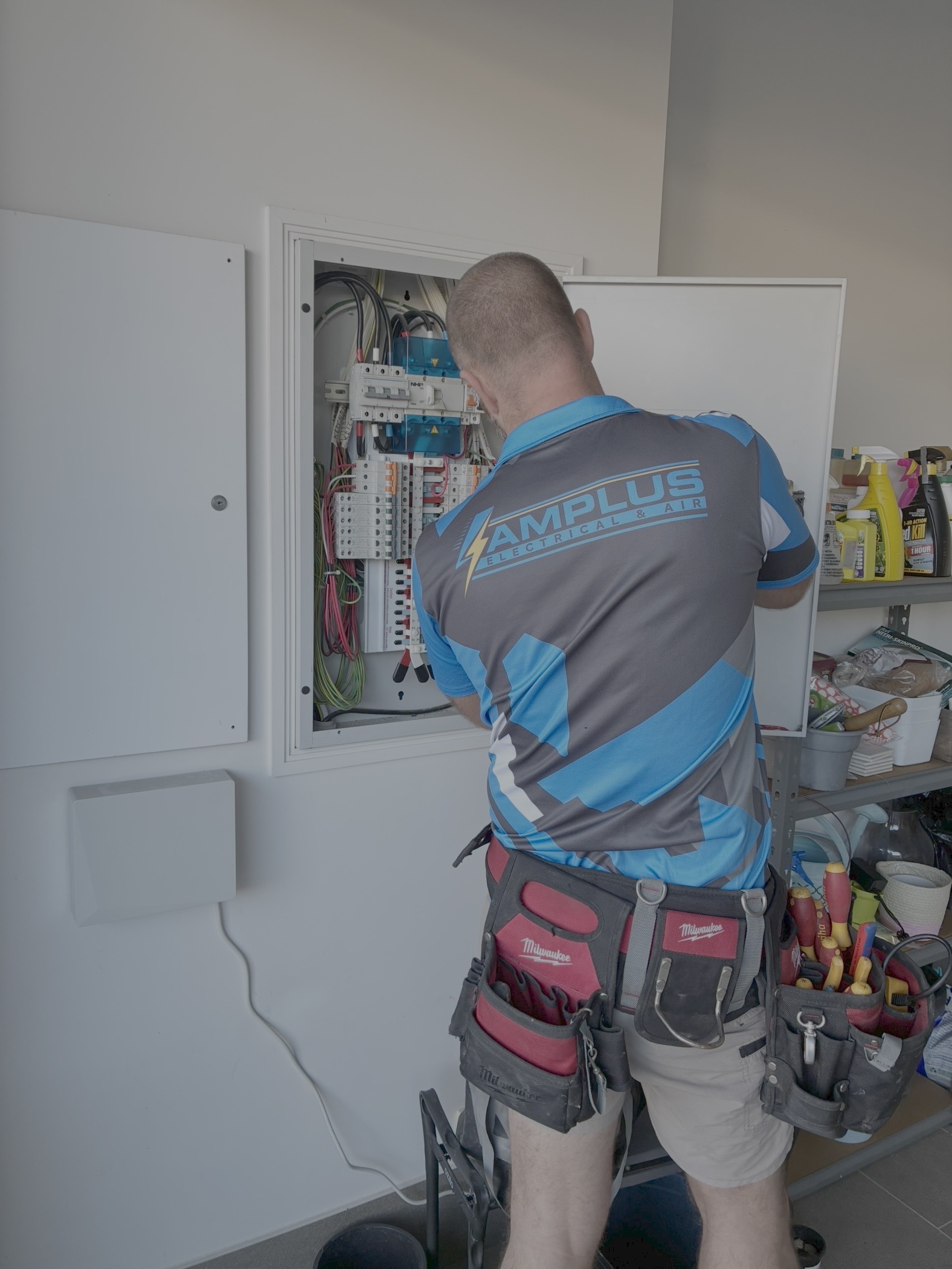
I’m Aaron, licensed QLD electrician #1500996. I fix beeping smoke alarms across Brisbane and the Redlands — same-day service from $120 per alarm. A single chirp every 30 seconds means low battery or end-of-life. Three loud beeps means fire — get out now. If your alarm keeps beeping after a battery change, the unit is likely past its 10-year service life and needs replacing. Here’s exactly what each beep pattern means and how to fix it.
- Single chirp every 30-60 seconds = low battery, replace the battery or the whole alarm
- Three beeps, then pause = alarm malfunction, needs replacement
- Continuous beeping = smoke detected, check for fire or steam
- Hardwired alarms need the battery replaced every 12 months
- Sealed 10-year alarms = replace the whole unit when they beep
- If your alarm is 10+ years old, replace it entirely — batteries won’t fix old alarms
There’s nothing more frustrating than a smoke alarm beeping at 2am. You’ve probably already tried pulling the battery out, standing on a chair waving a tea towel, or Googling “why is my smoke alarm beeping” at midnight. You’re in the right place.
As a licensed Brisbane electrician who’s fixed thousands of beeping smoke alarms across Capalaba, Cleveland, Wellington Point and the rest of the Redlands, I can tell you that every beeping pattern means something specific. Once you know what the chirp is telling you, fixing it is straightforward — and if it’s beyond a simple battery swap, a licensed sparky can sort it same-day.
This guide covers every beeping pattern you’ll encounter, the nine most common causes, step-by-step fixes, and what Queensland’s 2027 smoke alarm laws mean if your alarms are beeping because they’re expired. If you’re selling your property, you’ll also need a smoke alarm compliance certificate QLD. If you need the full compliance picture first, our Queensland smoke alarm changes 2027 guide breaks down every rule.
Need your beeping alarm sorted today? Fill in the quick form below and Aaron will call you back within the hour.
Get a Fast Smoke Alarm Quote
Aaron reviews every request personally. Usually replies within a few hours.
What Each Smoke Alarm Beeping Pattern Means
Smoke alarm manufacturers use standardised beep patterns to tell you exactly what’s wrong. The problem is most people don’t know how to read them — so they either rip the battery out (dangerous) or ignore it (also dangerous). Here’s the translation guide for every smoke alarm beeping pattern you’ll encounter in Brisbane homes:
🔴 BEEP BEEP BEEP — pause — BEEP BEEP BEEP (continuous three-beep pattern)
This is a fire alarm. Your detector has sensed smoke or a rapid temperature rise. Get everyone out of the house, close doors behind you, and call 000 from outside. Don’t investigate first. Don’t assume it’s a false alarm.
🟡 Single chirp every 30–60 seconds (smoke alarm beeping every 30 seconds)
Low battery or end-of-life warning. Not an emergency — but fix it today. On most alarms, this chirp will continue for at least seven days before the battery dies completely. See the sections below for how to tell the difference between low battery and end-of-life.
🔵 Three beeps, pause, three beeps — softer tone (on combination smoke/CO alarms)
Carbon monoxide detected. CO is invisible and odourless — treat this as real, get outside, and call 000. Don’t re-enter until cleared by emergency services.
⚪ Five beeps every minute, or a continuous slow chirp after battery replacement
End of life — the sensor has reached the end of its reliable service life (typically 8–10 years from the manufacture date). A new battery won’t fix this. The entire unit needs replacing.
🔵 Erratic beeping — no recognisable pattern (smoke alarm randomly beeping)
Sensor malfunction or internal fault. Press the test button — if the alarm doesn’t respond with a normal test cycle, replace the unit immediately. A malfunctioning alarm can’t protect you.
Why Is My Smoke Alarm Beeping? The 9 Most Common Causes
After troubleshooting hundreds of beeping alarms across Brisbane homes, these are the causes I see over and over — ranked from most common to least:
1. Low Battery (Most Common Reason a Smoke Alarm Keeps Beeping)
If your smoke alarm is beeping every 30 seconds, the battery is almost certainly low. This is the easiest fix — replace with a fresh battery from a sealed package (not one that’s been sitting in a drawer for two years). Most battery-operated alarms use a 9V, AA, or the newer 10-year sealed lithium batteries that aren’t user-replaceable.
2. End of Life — The Alarm Is Expired
Every smoke alarm has a service life of 8–10 years from the manufacture date printed on the back or inside the battery compartment. When the internal sensor reaches end of life, the alarm chirps in a pattern that sounds similar to low battery — but no battery change will stop it. If your alarm was manufactured before 2016, it’s already expired and needs replacing today. Under Queensland’s 2027 laws, every Brisbane home must have compliant interconnected photoelectric alarms — so if yours are expired, now’s the time to upgrade.
3. Dust and Debris in the Sensing Chamber
Over time, dust, cobwebs, and dead insects accumulate inside the alarm’s sensing chamber. This is especially common in Brisbane homes near busy roads, in older Queensland homes with more airborne particulate, or in rooms without regular cleaning. The debris scatters the light beam inside the photoelectric sensor — tricking it into thinking there’s smoke. A thorough clean with compressed air or a vacuum hose attachment often fixes it.
4. Steam and Humidity (Common in Brisbane’s Subtropical Climate)
High humidity, steam from showers, and cooking vapour can all set off a smoke alarm — particularly if the alarm is installed within 3 metres of a bathroom or kitchen. Water vapour particles are dense enough to scatter the light beam inside a photoelectric sensor the same way smoke does. Brisbane’s subtropical humidity makes this worse in summer. If your smoke alarm keeps beeping after a hot shower or while you’re boiling pasta, placement is likely the issue.
5. Cooking Fumes and Residue
Burnt toast, high-heat stir-frying, and grilling can produce enough particulate matter to trigger a smoke alarm — especially ionization-type alarms (which are more sensitive to small cooking particles). Grease residue that builds up on the alarm over months of cooking can also cause persistent false alarms. This is one reason Queensland now mandates photoelectric alarms — they’re far less prone to cooking false alarms than the old ionization type.
6. Power Fluctuations (Hardwired Alarms)
Hardwired smoke alarms run off your home’s 240V mains power with a battery backup. If your Brisbane home experiences power surges, brownouts, or brief outages — common during Queensland storm season — the alarm can interpret the power interruption as a fault and start chirping. If your switchboard is older or has loose connections, the voltage drops can be more frequent. A licensed electrician can check your wiring and surge protection. If you need a switchboard upgrade, it’s a bigger job., the voltage drops can be more frequent. A licensed electrician can check your wiring and surge protection.
7. Temperature Extremes (Why Smoke Alarms Beep at Night)
Rapid temperature changes — like a cold morning suddenly warming up, or an air conditioner blasting cold air directly at a ceiling-mounted alarm — can cause condensation inside the sensing chamber. This is common in Queensland homes where roof cavities can reach 50°C+ in summer, then cool rapidly when the aircon kicks in. The temperature swing creates moisture particles that trigger the sensor. This is also why your smoke alarm might beep at night — when the house cools down, batteries operate less efficiently and the alarm may interpret this as a low-battery condition.
8. Insects Inside the Alarm
Small insects — particularly cockroaches and spiders — love crawling into smoke alarms through the ventilation slots. Once inside, they can block the light beam or short-circuit the sensor. This is more common in older Brisbane homes, in roof cavities, and in subtropical areas like the Redlands where insect activity is high year-round. If you suspect insects, the alarm needs to be removed, cleaned thoroughly, and the seal around the mounting checked.
9. Faulty or Damaged Unit
Sometimes the alarm itself is simply faulty — a manufacturing defect, water damage from a roof leak, or physical damage from painting over the vents. If you’ve ruled out every other cause and the alarm still beeps, replace it. Don’t try to repair a faulty smoke alarm — they’re safety-critical devices and DIY repairs void the certification.
How to Stop a Smoke Alarm From Beeping — Step by Step
Follow these steps in order. Most beeping alarms are fixed within 10 minutes.
Step 1: Identify the beeping pattern. Is it a single chirp every 30 seconds (low battery/end-of-life) or three loud repeating beeps (fire — get out)?
Step 2: If it’s a fire alarm — evacuate. Check for smoke, heat, or fire. If there’s any sign of a real fire, get out and call 000. If it’s clearly a false alarm from cooking or steam, press the hush button or ventilate the area.
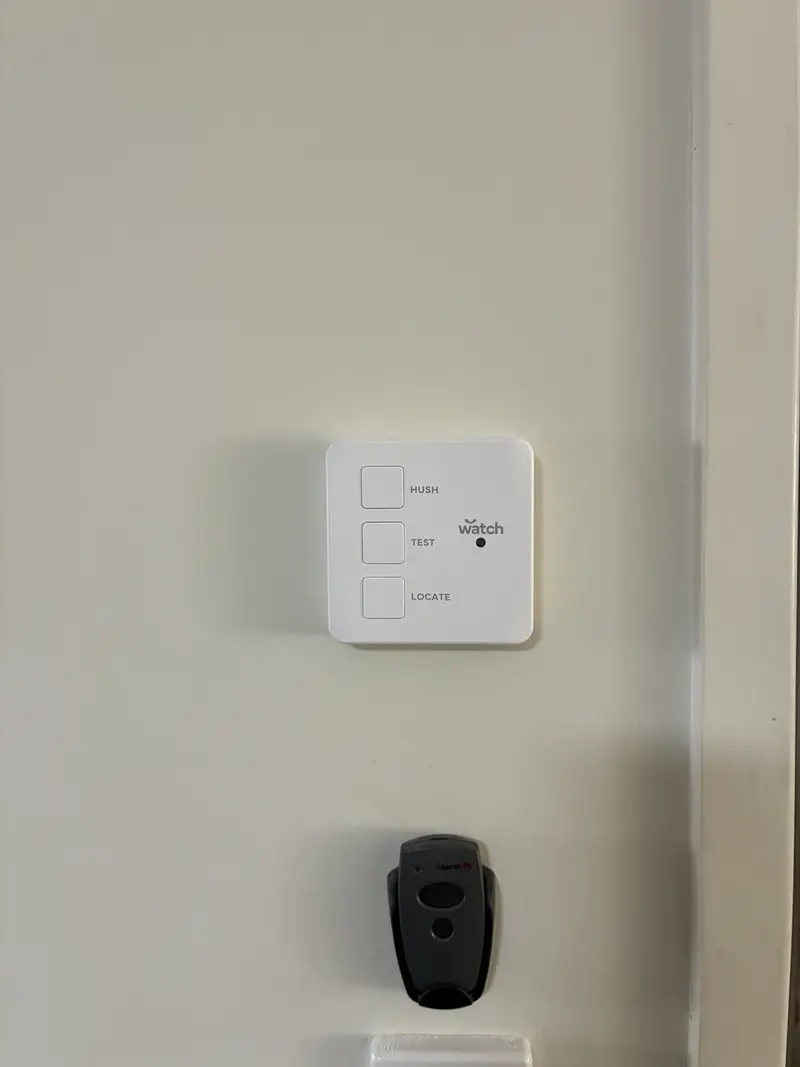
Step 3: For a low-battery chirp — replace the battery. Use a brand-new battery from a sealed package. After installing, press and hold the test button for 5–10 seconds to clear the fault memory. This step is critical — most people skip it and wonder why the alarm keeps chirping.
Step 4: Check the manufacture date. Look on the back of the unit or inside the battery compartment. If it’s more than 10 years old, the unit is expired and needs replacing — no battery will fix it.
Step 5: Clean the alarm. Remove it from the mounting plate, vacuum the exterior vents, and blow compressed air through the sensing chamber. Re-mount and test.
Step 6: For hardwired units — check power. Turn off the circuit breaker, remove the alarm, check the wiring connections (active, neutral, earth), then restore power. If the chirping continues, the issue may be in the wiring or the backup battery.
Step 7: Reset the alarm. After any battery change or cleaning, press and hold the test button for 10–20 seconds. This performs a full reset and clears any stored fault codes.
Step 8: If it still beeps — call a licensed Brisbane electrician. Persistent beeping after all these steps means the unit is faulty, expired, or there’s a wiring issue. Don’t disable the alarm and ignore it — get it professionally assessed.
Smoke Alarm Beeping After Battery Change — Why It Won’t Stop
This is the number one question I get from Brisbane homeowners: “I put a new battery in and my smoke alarm keeps beeping!” Here’s why — and how to fix it:
You didn’t press the test/reset button. When the battery goes low, the alarm sets an internal fault flag. Swapping the battery doesn’t clear the flag — the alarm keeps chirping until you tell it the problem is resolved. Press and hold the test button for 5–10 seconds after installing the new battery. On some models, hold until you hear a chirp or short alarm burst, then release.
The unit is at end of life. If the alarm is 8–10+ years old, the chirping isn’t about the battery at all — it’s the end-of-life signal. A new battery won’t stop it. Check the manufacture date on the back. If it’s expired, replace the entire unit.
The battery isn’t making proper contact. Corroded or bent battery terminals can prevent a solid connection. Remove the battery, check the terminals for corrosion (a white/green powdery deposit), clean with a dry cloth or a pencil eraser, and reinsert firmly.
Wrong battery type or orientation. Double-check you’re using the correct battery type (9V, AA, or the specific lithium type your alarm requires) and that it’s inserted the right way. The + and – markings must match.
Residual charge in a hardwired unit. Hardwired alarms with battery backup can hold a residual charge even after you disconnect the battery. To fully drain it: turn off the circuit breaker, remove the alarm from its mounting plate, disconnect the battery, then press and hold the test button for 15–20 seconds. Reconnect everything and restore power.
Why Does My Smoke Alarm Beep at Night? (Middle of the Night Beeping Explained)
If your smoke alarm keeps beeping in the middle of the night but seems fine during the day, you’re not going mad — there’s a scientific reason for it. Here’s why smoke alarms often chirp at 3am:
Temperature drops reduce battery performance. As your Brisbane home cools down overnight, the chemical reaction inside your smoke alarm’s battery slows down. A battery that’s already borderline low might dip below the threshold in cooler temperatures, triggering the low-battery chirp. When the house warms up again in the morning, the battery performs better and the chirping stops — which is why many people think the alarm “fixed itself”.
Humidity changes at night. Brisbane’s humidity can spike overnight, especially in summer. Higher humidity means more moisture particles in the air, which can scatter the light beam inside a photoelectric sensor and trigger false chirping. This is why your smoke alarm might beep randomly at night but not during the day.
How to stop smoke alarm beeping at night: Replace the battery with a fresh one (even if it seems fine during the day), check the manufacture date to rule out end-of-life, and consider moving the alarm further from bathrooms or external walls where temperature swings are greatest. If the chirping persists, the alarm likely needs replacing.
Interconnected Smoke Alarms — When One Beeps, They All Do
Under Queensland’s 2027 smoke alarm laws, all Brisbane homes must have interconnected photoelectric smoke alarms. That means when one alarm detects smoke, every alarm in the house sounds simultaneously — so you hear it no matter where you are. It’s a life-saving upgrade, but it also means troubleshooting is a bit different.
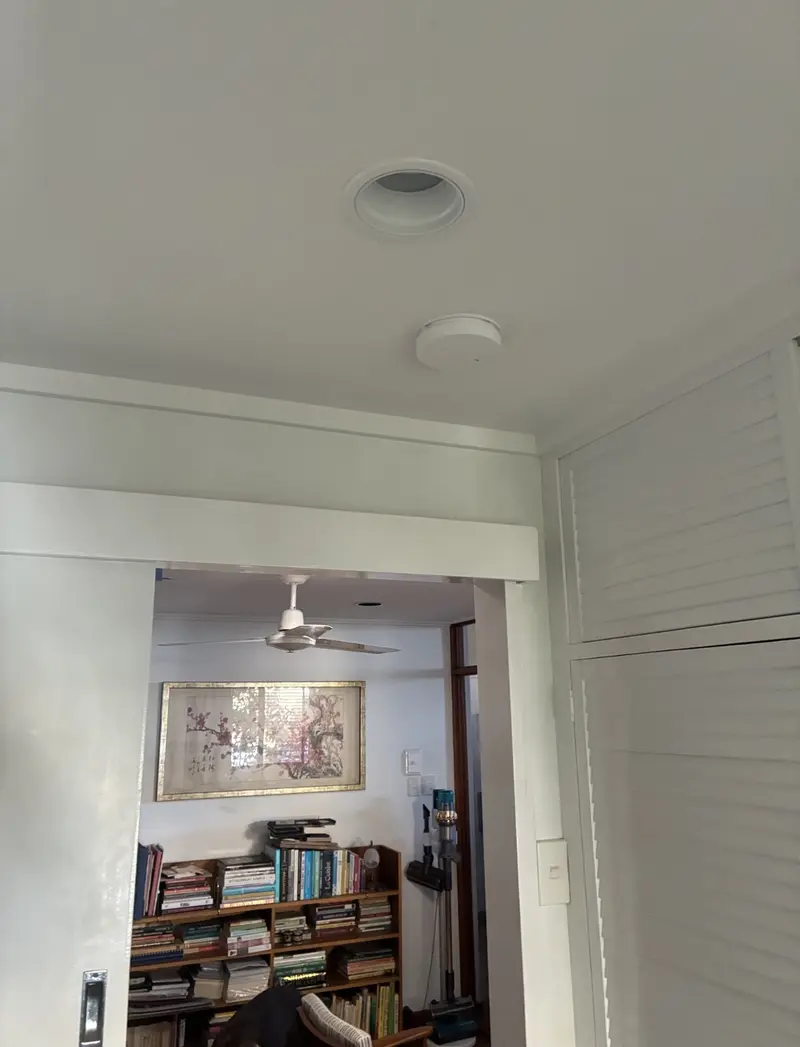
If one alarm is chirping (low battery/end-of-life): In an interconnected system, the chirping alarm will often cause all the other alarms to chirp in sympathy — or at least flash their LEDs. The trick is to identify which alarm is the source. Look for the one with a flashing red or amber LED — that’s the one with the fault. Fix that one and the others should stop.
If one alarm triggers a full fire alarm: All interconnected alarms will sound. After the event, press the hush button on the triggering alarm to silence the system, then ventilate the area. The other alarms will reset automatically once the triggering alarm is silenced.
If the whole system is chirping and you can’t find the source: This is where a licensed Brisbane electrician saves you hours of frustration. We use diagnostic tools to trace which unit in the interconnect chain is faulting — often it’s one alarm hidden behind furniture or in a roof cavity that you can’t easily reach.
Important: Never disconnect one alarm from an interconnected system to stop the beeping. This breaks the chain and means the remaining alarms won’t interconnect properly — defeating the whole safety purpose. If an alarm in your interconnected system is causing problems, get it professionally assessed and replaced with a compatible unit.
Smoke Alarm Beeping but No Smoke — False Alarms Explained
If your smoke alarm goes off regularly but there’s no fire, you’re dealing with a nuisance alarm. The most common culprits in Brisbane homes:
Steam from bathrooms: If your smoke alarm is within 3 metres of a bathroom door, steam from hot showers can drift into the hallway and trigger it. Run the exhaust fan, open a window, or consider relocating the alarm further from the bathroom.
Cooking fumes: Burnt toast, high-heat stir-frying, and grilling are the classic culprits. Use the rangehood, open windows, or press the hush button on the alarm while you cook. If it happens daily, the alarm may be too close to the kitchen.
High humidity: Brisbane’s subtropical climate means indoor humidity can spike — especially in un-airconditioned homes or during summer storms. When humidity exceeds 85%, some alarms will false-trigger. A dehumidifier or improved ventilation helps.
Dust from renovations: Sanding, cutting, or even just thorough cleaning kicks up fine particulate that smoke alarms detect as smoke. Cover alarms with a temporary dust cap (available from hardware stores) during renovation work, then remove it when you’re done.
Insects: As mentioned above, small insects inside the sensing chamber cause erratic false alarms. Regular vacuuming of the alarm exterior helps prevent them getting in.
Painting over the alarm: Never paint a smoke alarm. Paint blocks the ventilation slots and can gum up the sensor. If the alarm has been painted, replace it.
When to Call a Licensed Brisbane Electrician for a Beeping Smoke Alarm
If your smoke alarm keeps beeping and you’ve tried the fixes above, it might be time to call an emergency electrician. Here’s when you need professional help:
Most simple battery changes you can handle yourself. But call a licensed Brisbane electrician when:
- The alarm keeps beeping after a battery change and reset
- The alarm is hardwired and you’re not comfortable working near 240V wiring
- You have an interconnected system and can’t identify the faulting unit
- The alarm is expired (8–10+ years old) and needs replacing with a compliant interconnected photoelectric unit
- You need a full-home compliance upgrade to meet Queensland’s 2027 deadline
- The alarm is in a hard-to-reach location (high ceiling, stairwell, roof cavity)
- You suspect a wiring fault or switchboard issue causing power fluctuations
- You’re selling or leasing the property and need a compliance certificate
In Queensland, replacing hardwired smoke alarms or doing any 240V electrical work must be done by a licensed electrician. Battery-only swaps on detachable alarms are fine for homeowners, but anything involving wiring needs a licensed sparky — it’s the law, and it’s your safety.
At Amplus Electrical & Air (QLD Electrical Contractor Licence #1500996), Aaron and the team replace beeping, expired, and non-compliant smoke alarms across Brisbane and the Redlands every day. We supply and install ActivFire-certified 10-year photoelectric alarms, fully interconnected, from $120 per alarm fully installed. Same-day service is available — book online, fill in the form at the top of this page, or call 0419 014 146.
Queensland’s 2027 Smoke Alarm Deadline — Is Your Beeping Alarm Actually Expired?
Here’s something most Brisbane homeowners don’t realise: if your smoke alarm was manufactured before 2017, it’s already expired — and it must be replaced before 1 January 2027 under Queensland law. The deadline applies to every private home, townhouse, and unit in Queensland. Your alarms must be:
- Photoelectric (not ionization — the old type that false-alarm from cooking)
- Interconnected (when one goes off, they all go off)
- Less than 10 years old (check the manufacture date on the back)
- Installed in every bedroom, in hallways connecting bedrooms, and on every level of the home
- Hardwired or 10-year sealed lithium battery (for rental properties, hardwired is mandatory)
Official resources for Queensland smoke alarm compliance:
- Queensland Government — Smoke Alarms (qld.gov.au)
- Queensland Fire Department — Smoke Alarm Laws (fire.qld.gov.au)
- Kidde — What Is Causing My Smoke Alarm to Sound, Beep, or Chirp? (kidde.com)
- First Alert — Troubleshooting Common Smoke Alarm Issues (firstalertstore.com)
If your alarm is beeping because it’s expired, don’t just replace it with another cheap battery alarm from Bunnings — that won’t meet the 2027 standard. Get a licensed Brisbane electrician to install a full compliant interconnected system. For the full breakdown of what’s required, penalties for non-compliance, and how much it costs, read our Redlands smoke alarm compliance guide or the Queensland-wide compliance guide.
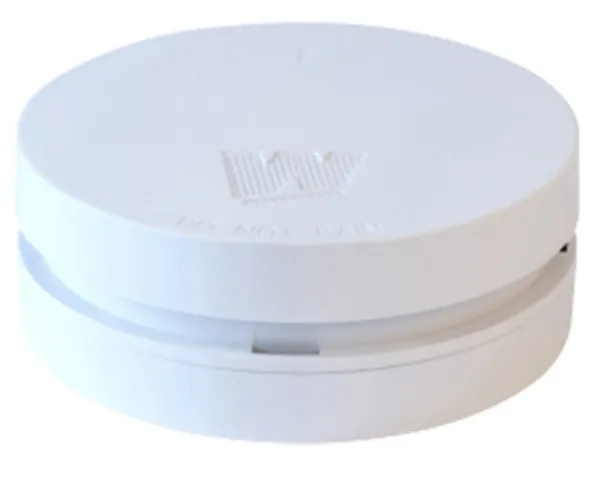
Need accessibility features? If your alarms are 10+ years old and you need accessible smoke alarms with bed shakers for a deaf household member, it’s cheaper to replace the whole system than try to retrofit accessories onto expired alarms.
Brisbane Suburbs We Service for Smoke Alarm Repairs & Replacement
Amplus Electrical & Air provides same-day smoke alarm troubleshooting, repair, and replacement across Brisbane’s southside and the Redlands:
- Capalaba
- Cleveland
- Wellington Point
- Ormiston
- Birkdale
- Thornlands
- Victoria Point
- Redland Bay
- Sheldon
- Burbank
- Manly
- Wynnum
- Manly West
- Lota
- Chandler
- Mount Cotton
- Alexandra Hills
- Belmont
- Carindale
- Wynnum West
Not in the list? We service most of Brisbane southside and bayside — call 0419 014 146 and we’ll let you know if we can get to you today.
Frequently Asked Questions
Why does my smoke alarm beep every 30 seconds?
A single chirp every 30 seconds almost always means low battery. Replace the battery with a fresh one from a sealed package, then press and hold the test button for 5–10 seconds to clear the fault memory. If the chirping continues after a new battery, the alarm is likely at end-of-life (8–10 years old) and needs replacing.
Why is my smoke alarm beeping with no smoke?
The most common causes are low battery, end-of-life, dust in the sensing chamber, steam or humidity, cooking fumes, insects inside the unit, or a power fluctuation (for hardwired alarms). Work through the troubleshooting steps above to identify and fix the cause.
How do I stop a smoke alarm from beeping after changing the battery?
Press and hold the test button for 5–10 seconds after installing the new battery. This clears the internal fault flag. If the alarm still chirps, check the manufacture date — if it’s over 10 years old, the unit is expired and needs replacing. Also check that the battery terminals are clean and making solid contact.
Why does my smoke alarm beep in the middle of the night?
Temperature drops at night reduce battery performance, causing a borderline-low battery to trigger the chirp. Humidity changes overnight can also cause false chirping in photoelectric sensors. Replace the battery and check the manufacture date — if the alarm is expired, it needs replacing regardless of when it beeps.
Can a smoke alarm beep if the battery is removed?
A hardwired smoke alarm with battery backup will continue to beep on mains power even if you remove the backup battery. The only way to fully silence a hardwired alarm is to turn off the circuit breaker. However — disabling a smoke alarm is dangerous and illegal in Queensland if it leaves the home non-compliant. Fix the underlying problem instead.
Do I need a licensed electrician to replace a smoke alarm in Queensland?
You need a licensed electrician for any hardwired smoke alarm work and any 240V electrical connections. Battery-only swaps on detachable battery-operated alarms can be done by homeowners. However, under Queensland’s 2027 laws, all alarms must be interconnected photoelectric type — so if you’re upgrading from old standalone alarms, you’ll need a licensed sparky for the interconnect wiring.
How much does it cost to fix a beeping smoke alarm in Brisbane?
If it’s just a battery change, a 9V battery costs around $5–$10. If the alarm needs replacing, Amplus Electrical supplies and installs compliant interconnected photoelectric alarms from $120 per alarm, fully installed — including testing and interconnection. A full-home compliance upgrade for a 3-bedroom Brisbane home typically costs $500–$1,000.
How often should I replace my smoke alarm?
Every 10 years from the manufacture date — or sooner if it starts false-alarming frequently, fails the test button check, or shows physical damage. Check the manufacture date on the back of the unit. If it was made before 2017, it’s already expired under Queensland’s 2027 laws and must be replaced.
Why do all my smoke alarms beep when only one is triggered?
That’s by design — Queensland requires interconnected smoke alarms. When one alarm detects smoke (or has a fault), it signals all the other alarms in the system. This ensures you hear the alert no matter where you are in the house. To stop the beeping, identify and fix the triggering alarm — the others will reset automatically.
Is it safe to disable a beeping smoke alarm by removing the battery?
No. Removing the battery from a smoke alarm leaves you unprotected. In Queensland, it may also breach the Building Fire Safety Regulation 2008 if it leaves your home without compliant alarms. Fix the underlying problem — if it’s end-of-life, replace the unit. If you can’t fix it today, call a licensed Brisbane electrician for same-day service.
Need a Licensed Electrician in Brisbane Bayside?
Aaron is a licensed electrician (Lic. 1500996) and ARC-certified A/C technician serving Capalaba, Cleveland, Wynnum, Manly, Birkdale, Thornlands, Victoria Point and surrounding suburbs. Honest advice, upfront pricing, and quality work guaranteed.