
Safety Switch Keeps Tripping? Brisbane Electrician Explains Why & How to Fix It
Safety switch keeps tripping in Brisbane? Learn the 8 common causes, how to diagnose the problem yourself, and when to call an electrician. Fixed fast across Capalaba, Cleveland & Redlands.
Your safety switch keeps tripping and you’re left in the dark — again. It’s frustrating, inconvenient, and potentially dangerous. A tripping safety switch (RCD) is your property’s way of saying “there’s a fault somewhere” — and ignoring it could lead to electric shock, fire, or expensive damage.
I’m Aaron, a licensed electrician in Brisbane. I’ve fixed hundreds of tripping safety switches across Capalaba, Cleveland, Redlands, and greater Brisbane. In this guide, I’ll show you how to diagnose the problem, what you can safely check yourself, and when you absolutely need to call an electrician.
External Resources:
- Queensland Government Housing — property safety and compliance information
What Is a Safety Switch (RCD) and Why Does It Trip?
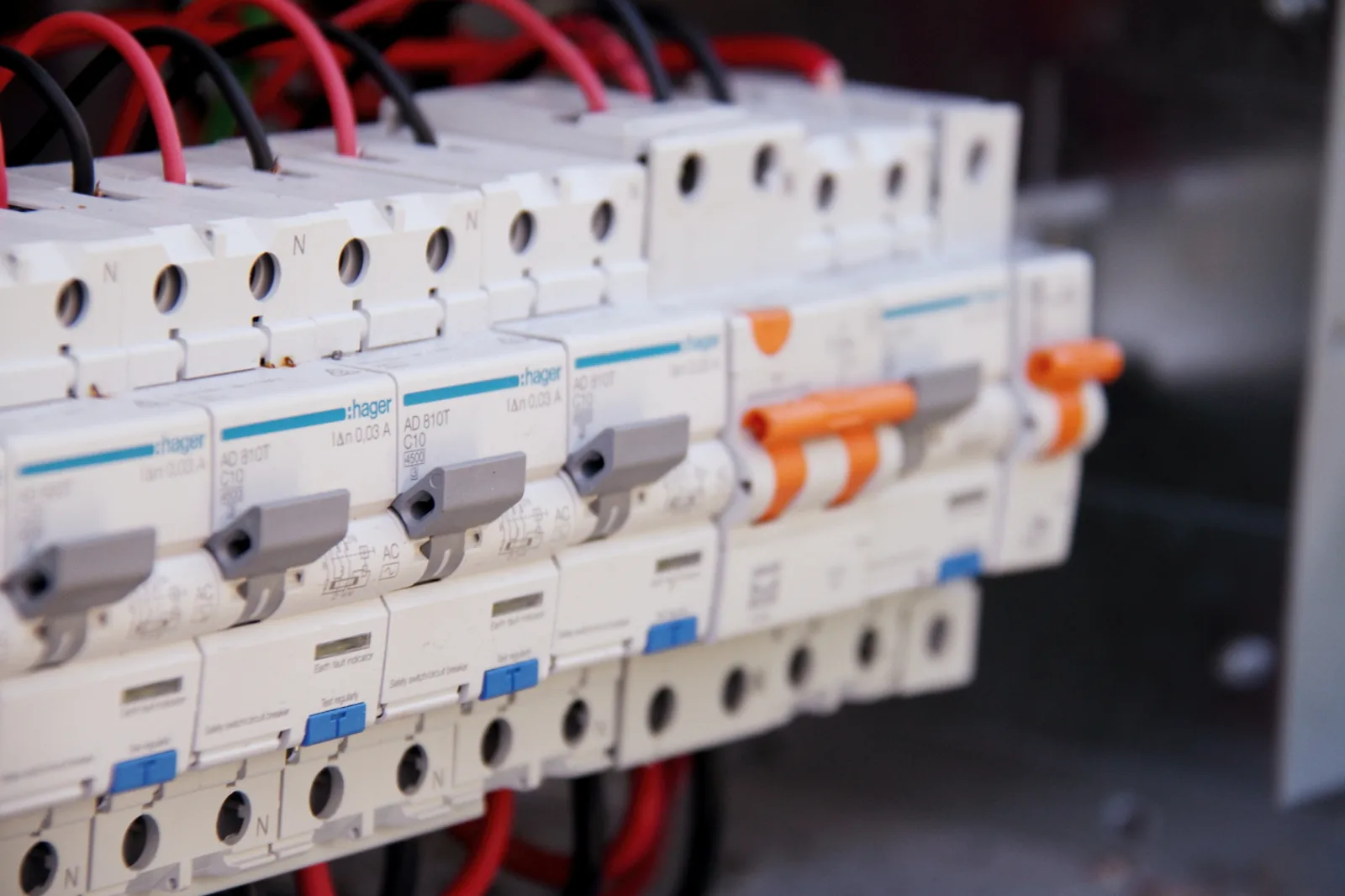
A safety switch — technically called a Residual Current Device (RCD) — is a life-saving device that monitors the flow of electricity in your circuits. If it detects even a tiny imbalance (as little as 30 milliamps), it cuts power in milliseconds to prevent electric shock.
The critical point: When your safety switch trips, it’s doing its job. Something in your electrical system is leaking current to earth, and the RCD is protecting you. The question isn’t “why is it tripping?” — it’s “what’s causing the leak?”
Common Causes of Tripping
Here are the most common reasons safety switches trip in Brisbane homes:
- Faulty appliances — damaged cords, water ingress, internal faults
- Moisture or water damage — leaks, flooding, high humidity affecting power points or wiring
- Damaged wiring — frayed cables, rodent damage, worn insulation
- Overloaded circuits — too many appliances on one circuit
- Faulty power points or switches — worn components, loose connections
- Lighting faults — damaged light fittings, moisture in outdoor lights
- Switchboard issues — old RCDs becoming overly sensitive, loose connections
- Appliance startup surge — some appliances draw high current on startup, triggering sensitive RCDs
The pattern matters: If it trips randomly, it’s likely a wiring or switchboard issue. If it trips when you use a specific appliance, that appliance is the culprit. If it trips during rain, you’ve got a moisture problem.
How to Diagnose a Tripping Safety Switch: Step-by-Step
Before calling an electrician, you can do some basic diagnostics to narrow down the problem. This saves time and money.
Step 1: Identify Which Circuit Is Affected
Modern switchboards have multiple RCDs, each protecting different circuits. When one trips, check which areas have lost power:
- Power points only — the RCD protecting power circuits has tripped
- Lights only — the RCD protecting lighting circuits has tripped
- Both power and lights — you may have a single RCD protecting everything (common in older properties)
What to do: Note which areas are affected. This helps your electrician narrow down the search.
Step 2: Unplug Everything on the Affected Circuit
If the tripped circuit protects power points, unplug all appliances on that circuit. Don’t just turn them off — physically unplug them.
Why: A faulty appliance is the most common cause. By unplugging everything, you eliminate this variable.
Step 3: Try to Reset the RCD
With everything unplugged, try resetting the RCD by pushing it firmly to the “ON” position. Some RCDs have a reset button; others just need the switch moved.
What happens next tells you a lot:
- RCD stays on — the problem was likely a faulty appliance. Plug them back in one by one until the RCD trips again. The last appliance you plugged in is the culprit.
- RCD trips immediately — the problem is in the wiring, power points, or switchboard. Call an electrician.
- RCD stays on but trips later — could be moisture, intermittent fault, or overloaded circuit.
Step 4: Check for Obvious Issues
Look for:
- Water or moisture — near power points, in the switchboard, under sinks
- Damaged cords — frayed, chewed, or cracked insulation
- Burn marks or scorching — on power points, switches, or the switchboard
- Burning smell — indicates overheating, potentially fire risk
Safety first: If you see burn marks, smell burning, or see exposed wiring, don’t touch anything. Turn off the main switch and call an emergency electrician immediately. For more on what counts as an electrical emergency, see our emergency electrician guide.
When to Call an Electrician (and When Not to)
Here’s the line between DIY checks and professional work:
What You Can Safely Do Yourself
- Unplug appliances
- Visually inspect for obvious damage (without touching wiring)
- Reset the RCD
- Identify which circuit is affected
- Check if the tripping correlates with a specific appliance or weather
What Requires a Licensed Electrician
- Testing wiring — requires specialized equipment (insulation resistance testers, multimeters)
- Replacing power points or switches — involves live wiring
- Switchboard work — high risk, requires licence
- Finding hidden faults — requires systematic testing and experience
- Upgrading RCDs — old RCDs can become overly sensitive and need replacement
The rule: If unplugging everything doesn’t solve the problem, or if the RCD trips immediately when reset, call an electrician. Don’t keep resetting it — you’re risking electric shock or fire.
How Much Does It Cost to Fix a Tripping Safety Switch?
Costs vary widely depending on the cause. Here’s a typical range for Brisbane:
| Problem | Typical Cost | Timeline |
|---|---|---|
| Faulty appliance (appliance repair/replacement) | $0-$500 | Same day |
| Damaged power point | $150-$300 | Same day |
| Moisture damage (drying + repairs) | $200-$600 | 1-2 days |
| Damaged wiring (partial rewire) | $500-$2,000 | 1-3 days |
| Faulty RCD (replacement) | $200-$400 | Same day |
| Switchboard upgrade (if RCDs are outdated) | $1,200-$2,500 | 1-2 days |
| Full house rewire (worst case) | $5,000-$15,000 | 1-2 weeks |
Call-out fee: Most electricians charge $150-$250 for the first hour, then $100-$150 per hour after. For more details, see our electrician cost guide.
Why costs vary: A faulty power point is a $200 fix. Damaged wiring hidden in walls could be $2,000+. The only way to know is to get an electrician to diagnose the problem.
Is a Tripping Safety Switch an Emergency?
It depends on the symptoms:
Call an Emergency Electrician Immediately If:
- You smell burning or see smoke
- You see burn marks on power points, switches, or the switchboard
- The RCD trips instantly every time you try to reset it
- You have exposed wiring
- The tripping is accompanied by buzzing, humming, or sparking sounds
- You’ve had recent flooding or water damage
These are signs of serious faults that could cause fire or electric shock. Don’t wait. For more on what counts as an electrical emergency, see our emergency electrician guide.
Book a Standard Appointment If:
- The RCD trips occasionally but resets fine
- It only trips when you use a specific appliance
- It trips during wet weather but not when dry
- You have power in some areas but not others
These are still problems that need fixing, but they’re not immediate emergencies. Book within a few days.
Safety Switch vs Circuit Breaker: Know the Difference
Many homeowners confuse safety switches (RCDs) with circuit breakers. They look similar in the switchboard but serve completely different purposes.
Safety Switch (RCD)
- Purpose: Protects people from electric shock
- How it works: Detects earth leakage (current flowing where it shouldn’t) and cuts power in milliseconds
- Test button: Yes — should be tested every 3 months
- Label: Usually marked “RCD” or “Safety Switch”
- Trips when: Someone touches a live wire, water enters a power point, or an appliance has an earth fault
Circuit Breaker
- Purpose: Protects wiring from overloads and short circuits
- How it works: Detects excessive current and trips to prevent overheating
- Test button: No — but should be manually exercised annually
- Label: Usually marked with amperage (e.g., “20A”, “16A”)
- Trips when: Too many appliances on one circuit, or a short circuit occurs
Why it matters: If your safety switch trips, it’s a life-safety issue. If a circuit breaker trips, it’s a wiring protection issue. Both need attention, but the safety switch is more urgent.
For more on switchboard components and upgrades, see our switchboard upgrade guide.
Preventing Safety Switch Tripping: Long-Term Solutions
If your safety switch keeps tripping, fixing the immediate problem isn’t enough. You need to address the root cause to prevent future issues.
1. Upgrade Outdated Switchboards
If your property was built before 2000, your switchboard may have outdated RCDs that are overly sensitive or failing. Modern RCDs are more reliable and less prone to nuisance tripping.
Cost: $1,200-$2,500 for a full switchboard upgrade. For more details, see our switchboard upgrade cost guide.
2. Replace Damaged Wiring
If you have old wiring with worn insulation, it’s only a matter of time before it causes problems. Replacing damaged wiring eliminates the root cause.
Cost: $500-$2,000 for partial rewire, $5,000-$15,000 for full house rewire.
3. Install Dedicated Circuits for High-Load Appliances
Air conditioners, pool pumps, and large appliances should have their own circuits. Overloading a single circuit is a common cause of tripping.
Cost: $200-$500 per dedicated circuit. For more on switchboard upgrades for air conditioners, see our switchboard upgrade guide.
4. Regular Electrical Inspections
Have your property inspected every 2-5 years (depending on age) to catch problems before they cause tripping. An electrical safety certificate confirms your property is compliant and safe.
Cost: $250-$400 for an inspection and certificate. For more details, see our electrical safety certificate cost guide.
5. Test Safety Switches Regularly
Press the “Test” button on your RCDs every 3 months. If they don’t trip, they’re faulty and need replacement. For more on testing frequency, see our safety switch testing guide.
Appliance-Specific Causes: What’s Tripping Your RCD?
Some appliances are notorious for causing safety switches to trip. Here’s what to watch for:
Air Conditioners
Air conditioners draw significant current, especially on startup. If your RCD trips when you turn on the aircon, it could be:
- Startup surge — compressors draw 3-5x their running current for a few seconds
- Faulty compressor — internal winding faults causing earth leakage
- Damaged wiring — rodent damage or worn insulation in the outdoor unit
- Moisture ingress — water getting into the outdoor unit’s electrical components
What to do: If the aircon trips the RCD, turn it off and call an air conditioning specialist or electrician. For more on aircon electrical issues, see our aircon not cooling guide.
Pool Pumps and Spa Equipment
Pool equipment is constantly exposed to moisture, making it a common cause of tripping:
- Seal failures — water getting into the pump motor
- Damaged cables — UV damage or rodent chewing
- Corroded connections — salt air or pool chemicals accelerating corrosion
What to do: Turn off the pool equipment at the switchboard and call an electrician. Pool electrical work requires specialized knowledge.
Washing Machines and Dishwashers
These appliances combine water and electricity — a recipe for RCD tripping if something goes wrong:
- Heating element faults — the most common cause of earth leakage
- Water leaks — internal leaks reaching electrical components
- Damaged door seals — water escaping onto electrical parts
What to do: Unplug the appliance and try resetting the RCD. If it stays on, the appliance is faulty. Call an appliance repairer or replace the unit.
Outdoor Power Tools and Equipment
Mowers, trimmers, and outdoor power tools are exposed to moisture and physical damage:
- Damaged cords — running over cables, UV damage
- Moisture ingress — storing tools in damp sheds
- Worn brushes — in universal motors, causing arcing and leakage
What to do: Inspect cords for damage. If the tool is old or the cord is damaged, replace it. Don’t try to repair power tool cords — the risk isn’t worth it.
The Hidden Cost of Ignoring a Tripping Safety Switch
Some homeowners get used to a tripping RCD and just keep resetting it. This is a dangerous and expensive mistake.
Safety Risks
- Electric shock — the RCD is tripping because current is leaking somewhere. That current could flow through you.
- Fire — earth faults can cause arcing, which can ignite surrounding materials.
- Equipment damage — ongoing faults can damage appliances and wiring, leading to expensive replacements.
Financial Costs
- Higher electricity bills — earth leakage means you’re paying for electricity that’s not being used productively.
- Appliance damage — ongoing faults can destroy expensive appliances.
- Insurance issues — if you have a fire caused by an electrical fault you ignored, your insurance may not cover it.
The bottom line: A tripping safety switch is a warning. Ignoring it is like ignoring the check engine light in your car — it might be fine, or it might be the start of something catastrophic. Get it checked.
Remember: Your safety switch is a life-saving device. When it trips, it’s telling you something is wrong. Don’t silence the alarm — fix the problem. The cost of a diagnosis ($150-$250) is nothing compared to the cost of an electric shock or house fire.
Safety Switch Tripping in Brisbane: Local Considerations
Brisbane’s climate and housing stock create specific challenges:
Humidity and Moisture
Brisbane’s subtropical climate means high humidity, especially in summer. This can cause:
- Condensation in outdoor power points and light fittings
- Moisture ingress in older properties
- Corrosion of electrical components
What to check: If your safety switch trips during humid weather or after rain, moisture is likely the culprit. An electrician can seal vulnerable points and replace damaged fittings.
Older Properties in Capalaba and Cleveland
Many properties in the Redlands were built in the 1970s and 1980s with:
- Outdated switchboards with ceramic fuses
- Old wiring with worn insulation
- Original RCDs that are now 30+ years old
What to expect: If you’re in an older property, budget for a switchboard upgrade ($1,200-$2,500) and possibly partial rewiring. For local considerations, see our Capalaba switchboard upgrade guide.
Coastal Properties in Victoria Point and Wellington Point
Properties near the coast are more susceptible to salt air corrosion, which can affect:
- Switchboard components
- Outdoor power points and lighting
- Air conditioner electrical connections
What to check: If you’re in a coastal property, have an electrician inspect for corrosion damage. This is especially important for properties built before 2000.
Frequently Asked Questions
Can I reset a tripping safety switch myself?
Yes, you can safely reset an RCD by pushing it to the “ON” position. However, if it trips again immediately or repeatedly, don’t keep resetting it — call an electrician. Repeated tripping indicates a fault that needs fixing.
How do I know if it’s a faulty appliance or wiring?
Unplug everything on the affected circuit and try resetting the RCD. If it stays on, plug appliances back in one by one. If the RCD trips when you plug in a specific appliance, that appliance is faulty. If it trips with everything unplugged, the problem is in the wiring or switchboard.
Is a tripping safety switch dangerous?
The tripping itself isn’t dangerous — it’s the RCD doing its job. However, the underlying fault causing the tripping could be dangerous. If left unfixed, it could lead to electric shock, fire, or expensive damage.
How much does it cost to fix a tripping safety switch?
Costs range from $150 for a simple power point replacement to $2,500+ for a switchboard upgrade or rewiring. The only way to know is to get an electrician to diagnose the problem. For more details, see our electrician cost guide.
Can I fix a tripping safety switch myself?
You can safely unplug appliances and reset the RCD. However, any work involving wiring, power points, or the switchboard requires a licensed electrician. DIY electrical work is illegal in Queensland and can result in fines up to $15,000.
Why does my safety switch trip when it rains?
Moisture is likely entering outdoor power points, light fittings, or damaged wiring. Water conducts electricity, causing the RCD to detect a fault. An electrician can seal vulnerable points and replace damaged fittings.
How often should safety switches be tested?
Press the “Test” button every 3 months. If the RCD doesn’t trip, it’s faulty and needs replacement. For more on testing frequency, see our safety switch testing guide.
Do I need to upgrade my switchboard if my safety switch keeps tripping?
Not necessarily, but if your switchboard is old (pre-2000) or has ceramic fuses, an upgrade is likely needed. Modern RCDs are more reliable and less prone to nuisance tripping. For more details, see our switchboard upgrade guide.
Can a tripping safety switch cause a fire?
The tripping itself won’t cause a fire, but the underlying fault could. If the fault is a short circuit or overloaded wiring, it could overheat and cause a fire. That’s why it’s critical to get the problem fixed promptly.
How long does it take to fix a tripping safety switch?
Simple fixes (replacing a power point or RCD) take 1-2 hours. Complex issues (finding hidden wiring faults, partial rewiring) can take 1-3 days. A full switchboard upgrade takes 1-2 days.
What’s the difference between a safety switch and a circuit breaker?
A safety switch (RCD) protects people from electric shock by detecting earth leakage. A circuit breaker protects wiring from overloads and short circuits. Both are important, but they serve different purposes. For more on switchboard components, see our switchboard upgrade cost guide.
Do I need a safety switch in my rental property?
Yes. All Queensland rental properties must have safety switches on all power and lighting circuits. If your property was built before 2000 and doesn’t have RCDs, you must install them. For more on landlord obligations, see our landlord electrical obligations guide.
Still Got a Tripping Safety Switch? Call the Experts
Don’t live with a tripping safety switch. It’s frustrating, potentially dangerous, and could lead to expensive damage if left unfixed.
I’m Aaron, a licensed electrician in Brisbane. I’ve fixed hundreds of tripping safety switches across Capalaba, Cleveland, Redlands, and greater Brisbane. I offer fast, reliable service with upfront pricing and no surprises.
For a comprehensive electrical safety inspection at $199, see our electrical safety inspection cost guide.
Call me on 0419 014 146 or book online to get your safety switch sorted today.
Electrical Contractor Licence #1500996 | ARCtick Licence #L183747
Need a Licensed Electrician in Brisbane Bayside?
Aaron is a licensed electrician (Lic. 1500996) and ARC-certified A/C technician serving Capalaba, Cleveland, Wynnum, Manly, Birkdale, Thornlands, Victoria Point and surrounding suburbs. Honest advice, upfront pricing, and quality work guaranteed.