
Electrical Buzzing or Humming? Brisbane Electrician Explains What It Means & When to Worry
Hearing electrical buzzing or humming from your switchboard, walls, or power points? Licensed electrician Aaron Ross explains what each sound means, when it's dangerous, and what to do about it. Real examples from Brisbane homes.
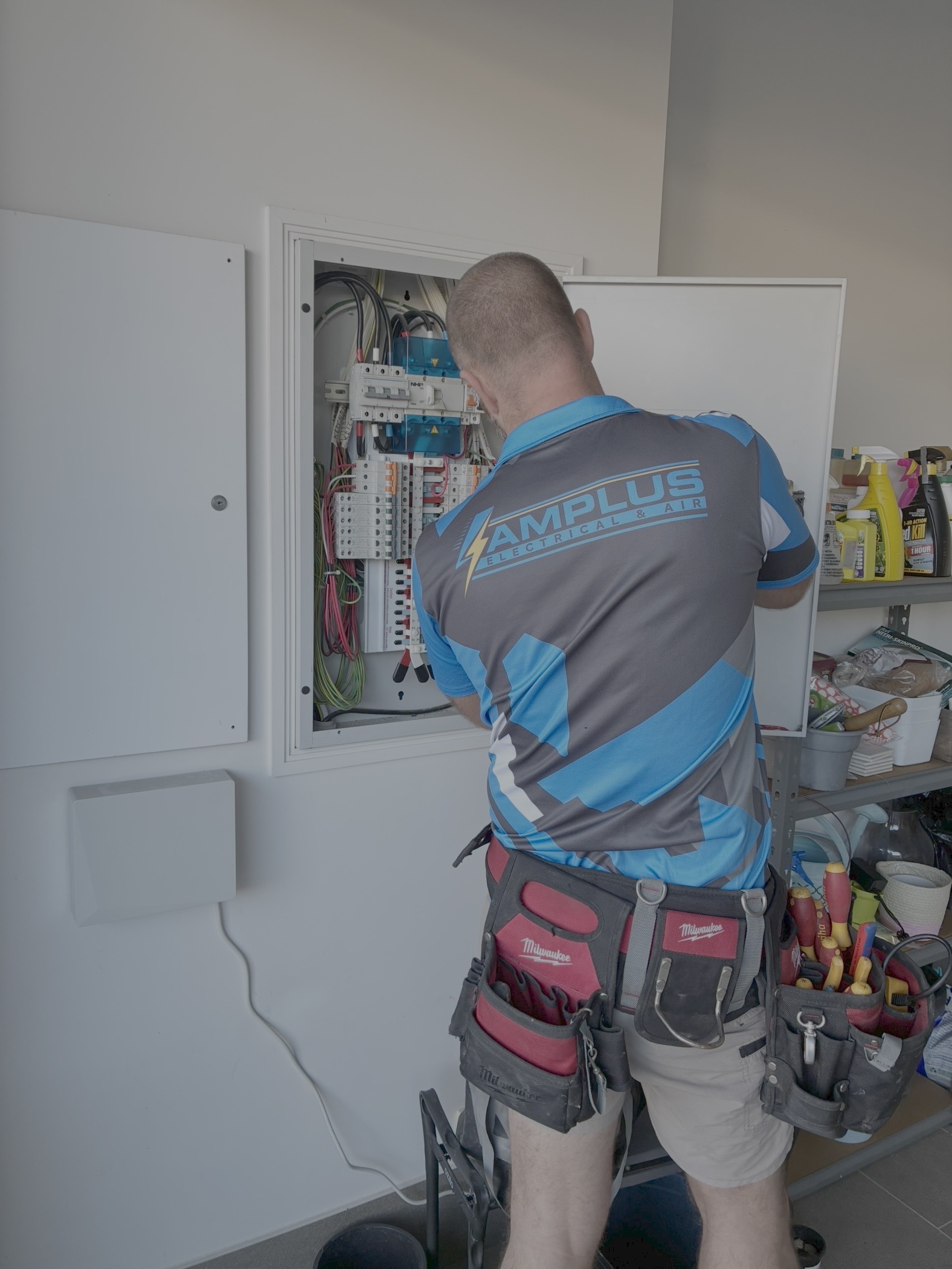
What Electrical Buzzing Sounds Actually Mean (And When You Should Worry)
That buzzing sound coming from your walls or switchboard isn’t just annoying—it’s your electrical system trying to tell you something. After 15+ years of diagnosing electrical issues across Brisbane’s Redlands, I can usually pinpoint the problem within 30 seconds just by listening. Here’s what those sounds mean, when they’re dangerous, and what to do about it.
The 4 Types of Electrical Sounds (And What Each One Tells You)
1. Constant Low Hum (Usually Safe, But Worth Checking)
A steady, low-frequency hum is often coming from your switchboard or large appliances. This is typically magnetic hum from transformers—the metal core vibrating at 50Hz (Australia’s mains frequency). It’s normal in small amounts, but if it’s loud enough to hear from across the room, something’s off.
What I check: I’ll measure the voltage at your switchboard. If it’s above 250V, the transformer’s working harder than it should. I’ve seen this in Capalaba homes where the Energex supply is running hot—especially in summer when everyone’s running aircon. The fix is usually a call to Energex to adjust the tap on their transformer, but in rare cases, your switchboard might need a voltage regulator.
When to worry: If the hum gets louder over weeks or months, or if it’s accompanied by a burning smell. That’s not normal transformer hum—that’s a component failing.
2. Intermittent Buzzing or Crackling (Potentially Dangerous)
This is the sound that keeps me up at night. If you hear crackling or buzzing that comes and goes—especially when you turn something on or off—you likely have a loose connection somewhere. This could be at a power point, light switch, or inside your switchboard.
The physics: When current flows through a loose connection, it creates tiny arcs (mini lightning bolts) across the gap. These arcs heat up the surrounding metal, which expands and contracts, making that crackling sound. Left alone, this heat can melt insulation and start a fire.
Real example: Last month in Wellington Point, a homeowner called about crackling sounds from their kitchen wall. When I opened the power point, the active terminal was so loose it had arced and melted the plastic surround. Another week and it could have been a house fire. The fix was a new power point and tightening all the connections in that circuit—$280 total.
When to worry: Immediately. Turn off the circuit at your switchboard and call an electrician. This isn’t something you can live with. See our guide on circuit breaker tripping for more on electrical fault diagnosis.
Not sure if the buzzing or humming in your electrical system is an emergency? Our electrical emergency guide explains when these sounds indicate immediate danger vs. routine maintenance needs.
3. High-Pitched Whining or Squealing (Usually an Appliance Issue)
If you hear a high-pitched sound coming from a specific appliance (air conditioner, refrigerator, pool pump), it’s usually a failing motor bearing or capacitor. The sound is mechanical, not electrical, but it’s still worth addressing because a failing motor can draw excess current and trip your breaker.
What I check: I’ll measure the current draw with a clamp meter. If it’s more than 10% above the rated current, the motor’s struggling. Sometimes it’s a cheap capacitor replacement ($150-200). Other times, the motor’s shot and the appliance needs replacing.
When to worry: If the sound is new and getting louder, or if the appliance is tripping your breaker. If it’s been making that noise for years and nothing’s changed, it’s probably fine—just annoying.
4. Clicking or Ticking Sounds (Could Be Normal, Could Be Bad)
Clicking sounds are tricky because some are totally normal and others are red flags.
Normal clicking: Your switchboard breakers clicking when you turn them on or off. That’s just the mechanical switch operating. Also normal: the click from a relay or contactor (like in your air conditioner or hot water system) when it turns on.
Bad clicking: If you hear clicking from a power point or light switch when nothing’s turning on or off, that’s a loose connection arcing—same as the crackling sound above. Also bad: rapid clicking from your switchboard (like machine gun fire). That’s a breaker failing to stay closed, usually because it’s overloaded or the mechanism is worn out.
Real example: I had a job in Birkdale where the homeowner said their switchboard was “clicking like a clock.” Turned out one of the breakers had a worn mechanism and was rapidly tripping and resetting. It was feeding the oven circuit, so every time the oven kicked in, the breaker would trip, then reset, then trip again. The fix was a new breaker—$180. But if they’d ignored it, the repeated arcing inside the breaker could have started a switchboard fire.
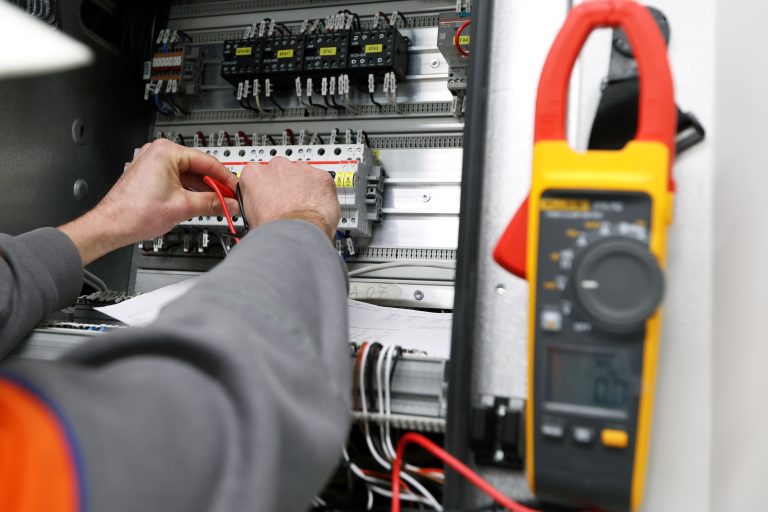
Where the Sound Is Coming From Matters
Buzzing from the Switchboard
This is the most common call I get. The switchboard is the heart of your electrical system, so any noise from it deserves attention. Here’s what I’m listening for:
- Low hum from the main switch or breakers: Usually magnetic hum. If it’s quiet, it’s probably fine. If it’s loud, I’ll check for loose busbar connections or an overloaded main switch.
- Crackling or arcing sounds: This is bad. Could be a loose main connection, a failing breaker, or a damaged busbar. I’ll shut down the board and inspect every connection.
- High-pitched whining: Often a failing RCD (safety switch). These have electronic components that can whine as they age. The fix is a new RCD—$180-280 depending on the type.
What I do on the job: I’ll use a stethoscope (yes, electricians carry them) to pinpoint exactly which component is making the noise. Then I’ll check the tightness of every connection with a torque screwdriver. Loose connections are the #1 cause of switchboard fires in Brisbane homes. If your switchboard is old, you might need a switchboard upgrade.
Buzzing from Power Points or Light Switches
If the sound is coming from a specific outlet or switch, the problem is usually local to that point. Here’s what I find:
- Buzzing when something’s plugged in: Could be the appliance itself (cheap power supply, failing transformer). Try unplugging it. If the sound stops, it’s the appliance, not your wiring.
- Buzzing even when nothing’s plugged in: This is a loose connection at the power point. The terminals holding the wires have worked loose over time, and current is arcing across the gap. This is a fire hazard.
- Buzzing from a dimmer switch: Dimmers work by rapidly switching the power on and off (that’s how they reduce voltage). Some buzzing is normal, especially with LED lights that aren’t dimmer-compatible. If it’s loud, you might need a better-quality dimmer or LED-compatible bulbs.
What I do on the job: I’ll open the power point or switch and check every connection. If the terminals are burnt or melted, I’ll replace the outlet. If the wiring is fine, I’ll tighten everything and check the circuit for overloading. Most of the time, it’s a 15-minute fix. For more on power point issues, see our guide on power point installation costs.
Buzzing from Inside Walls (The Scary One)
If you hear buzzing coming from inside a wall—and it’s not near a power point or switch—that’s concerning. It could be:
- Cables running through metal framing: In some homes, the cables are clipped to metal studs. If the clips are loose, the cables can vibrate and hum. This is annoying but not dangerous.
- A junction box hidden in the wall: If there’s a join in the wiring hidden behind plaster, and that join is loose, it’ll arc and buzz. This is a fire hazard because the heat can’t escape.
- Damage from rodents or moisture: I’ve seen cables chewed by rats or corroded by humidity (especially in older Queenslander homes). The damaged insulation can arc and buzz.
What I do on the job: I’ll use a thermal camera to scan the wall for hot spots. Arcing creates heat, so if there’s a loose connection hidden in the wall, the thermal camera will find it. Then I’ll cut an access panel and repair the fault. It’s more invasive than a simple power point fix, but it’s the only way to get to the problem.
When to Panic (And When to Relax)
Call an Emergency Electrician Immediately If:
- The buzzing is accompanied by a burning smell. That’s insulation melting. You’re minutes away from a fire.
- You see sparks or flashing. That’s active arcing. Turn off the main switch and get out of the house if you need to.
- The sound is getting louder by the hour. Whatever’s failing is failing fast.
- You hear buzzing from your meter box outside. That’s Energex’s equipment, but it’s still dangerous. Call them on 13 12 53.
Book a Normal Appointment If:
- The buzzing is quiet and hasn’t changed in months. It’s probably just magnetic hum from a transformer or dimmer.
- It only happens when a specific appliance is running. The appliance might just be noisy.
- You can’t pinpoint where it’s coming from. It might be something benign like a clock or smoke alarm with a low battery.
What It Costs to Diagnose and Fix Electrical Buzzing
Here’s what you can expect to pay in Brisbane for diagnosing and fixing buzzing sounds:
| Issue | Typical Cost | Time to Fix |
|---|---|---|
| Diagnostic call-out (first hour) | $150-220 | 1 hour |
| Tightening loose connections at power point | $180-280 | 15-30 minutes |
| Replacing burnt power point | $220-350 | 30-45 minutes |
| Replacing failing breaker | $180-280 | 20-30 minutes |
| Replacing failing RCD (safety switch) | $180-280 | 30-45 minutes |
| Repairing hidden junction box in wall | $400-800+ | 2-4 hours |
| Full switchboard inspection and tightening | $350-600 | 1-2 hours |
Why the wide price range? It depends on how long it takes to find the fault. If the buzzing is coming from an accessible power point, it’s a quick fix. If it’s hidden in a wall or requires tracing cables through the roof space, it takes longer. I always give you a fixed quote before I start work, so there are no surprises.
Why Brisbane Homes Are Prone to Electrical Buzzing
After years of working across the Redlands, I’ve noticed a few things that make our local homes more prone to electrical noise:
Humidity and Corrosion
Brisbane’s humidity is brutal on electrical connections. Moisture gets into junction boxes and power points, causing corrosion. Corroded connections have higher resistance, which means more heat and more noise. This is especially common in homes near the bay (Birkdale, Wellington Point, Thornlands) where the salt air accelerates corrosion.
Older Wiring in Queenslander Homes
A lot of homes in Capalaba, Cleveland, and Alexandra Hills were built in the 60s and 70s with wiring that’s now 50-60 years old. That wiring wasn’t designed for modern loads like air conditioners, EV chargers, and pool pumps. The insulation gets brittle, connections work loose, and the whole system starts to hum and crackle.
Overloaded Circuits from Modern Appliances
Older homes were wired for a few lights and power points. Now we’re running multiple air conditioners, pool equipment, EV chargers, and home offices. The circuits are overloaded, which means breakers are running hot and buzzing. The fix is usually a switchboard upgrade to add more circuits.
What I Check When I Arrive on a Buzzing Job
Here’s my diagnostic process when I get called out for electrical buzzing:
- Listen and locate: I’ll walk through the house with a stethoscope and pinpoint exactly where the sound is coming from. Sometimes it’s obvious, sometimes it takes 10 minutes of hunting.
- Visual inspection: I’ll check every power point, switch, and the switchboard for signs of burning, melting, or discoloration.
- Thermal scan: I’ll use a thermal camera to check for hot spots. Arcing creates heat, so this finds hidden faults.
- Voltage and current measurements: I’ll check the voltage at the switchboard and measure the current on each circuit. If something’s drawing more than it should, I’ll investigate further.
- Connection check: I’ll open the switchboard and check every connection with a torque screwdriver. Loose connections are the #1 cause of buzzing and fires.
- Insulation resistance test: If I suspect damaged wiring, I’ll use a megger to test the insulation resistance. This tells me if the insulation is breaking down.
This process takes about 30-60 minutes, depending on how complex the fault is. Once I find the problem, I’ll give you a fixed quote to fix it. No surprises.
Can You Fix Electrical Buzzing Yourself?
Short answer: No. Unless you’re a licensed electrician, you shouldn’t be opening power points, switches, or your switchboard. Here’s why:
- It’s illegal: In Queensland, all electrical work must be done by a licensed electrician. DIY electrical work voids your home insurance and can result in fines.
- It’s dangerous: If you don’t know what you’re doing, you can easily electrocute yourself or create a fire hazard.
- You might make it worse: I’ve seen DIY “fixes” that were more dangerous than the original problem. Tightening the wrong terminal or using the wrong size wire can create new faults.
What you can do safely:
- Unplug appliances to see if the sound stops (rules out the appliance)
- Turn off circuits at the switchboard to isolate the problem area
- Call a licensed electrician — check out our guide on emergency electrician costs if you need urgent help
Preventing Electrical Buzzing in Your Home
You can’t prevent all electrical noise, but you can reduce the risk with these steps:
- Get your switchboard inspected every 5 years: I’ll check every connection and replace any worn components. This is especially important if your home is over 20 years old. See our guide on signs your switchboard needs replacing.
- Don’t overload power points: Use power boards with surge protection, and don’t daisy-chain them together. If you need more outlets, get a licensed electrician to install additional power points.
- Upgrade old wiring: If your home still has the original wiring from the 60s or 70s, consider getting it replaced. Modern wiring is safer and can handle higher loads.
- Use quality appliances: Cheap appliances often have poor-quality power supplies that buzz and fail early. Spend a bit more on quality brands.
- Fix small problems before they become big ones: If you hear a new buzzing sound, don’t ignore it. A $180 power point replacement today can prevent a $10,000 house fire tomorrow.
For more details, see our guide on electrical safety inspections.
For more details, see our guide on electrical safety inspection.
Frequently Asked Questions
Is it normal for my switchboard to hum?
A quiet hum is normal—it’s magnetic vibration from the transformer and breakers. But if it’s loud enough to hear from across the room, or if it’s getting louder over time, get it checked. I’ve seen switchboards that were humming quietly for years suddenly start crackling—that’s when you know something’s failing.
Can electrical buzzing cause a fire?
Yes. Buzzing from loose connections or arcing can create enough heat to ignite surrounding materials. According to QLD Fire and Emergency Services, electrical faults cause around 150 house fires per year in Queensland. Most of these start with buzzing, crackling, or burning smells that the homeowner ignored.
Why does my dimmer switch buzz?
Dimmers work by rapidly switching the power on and off (pulse width modulation). This creates a small amount of noise, which is normal. If it’s loud, it could be because you’re using non-dimmable LED bulbs (they’re not designed for dimmers), or the dimmer itself is old and failing. The fix is usually a new dimmer and compatible bulbs—$150-250.
How do I know if the buzzing is from my wiring or an appliance?
Unplug everything on the circuit. If the buzzing stops, it was an appliance. If it continues, it’s your wiring. You can also turn off circuits at the switchboard one by one to isolate the problem area. If you’re not sure, call an electrician—I can usually tell within seconds.
Can I tighten the connections myself?
No. In Queensland, all electrical work must be done by a licensed electrician. Even tightening a terminal requires you to open the power point or switchboard, which exposes live parts. If you touch the wrong thing, you can be electrocuted. It’s not worth the risk. See the WorkSafe QLD electrical safety guidelines.
How much does it cost to fix electrical buzzing?
Most buzzing issues are quick fixes: $180-350 for a power point replacement or breaker replacement. If the fault is hidden in a wall or requires extensive troubleshooting, it can cost $400-800+. I always give you a fixed quote before I start work, so you know exactly what you’re paying. For more on costs, see our guides on electrical fault finding costs and electrician call-out rates.
Is electrical buzzing an emergency?
It depends. If the buzzing is accompanied by a burning smell, sparks, or if it’s getting louder rapidly, that’s an emergency—turn off the power and call an emergency electrician. If it’s a quiet hum that’s been there for months, you can book a normal appointment. When in doubt, call me on 0419 014 146 and I’ll talk you through it.

Need a Licensed Electrician in Brisbane?
If you’re hearing electrical buzzing, humming, or crackling in your home, don’t ignore it. Call Amplus Electrical & Air. I’m a licensed electrician based in Capalaba, working across the Redlands and Brisbane. I’ll diagnose the problem, give you an upfront quote, and fix it properly the first time.
Phone: 0419 014 146
Online booking: Book a free quote
Licence: Electrical Contractor Licence #1500996
We service Capalaba, Cleveland, Wellington Point, Ormiston, Birkdale, Thornlands, Victoria Point, Redland Bay, Sheldon, and all Brisbane suburbs.
For homes still running old ceramic fuses, our ceramic fuse box upgrade guide covers safety risks, compliance issues, and replacement costs across Brisbane.
Need a Licensed Electrician in Brisbane Bayside?
Aaron is a licensed electrician (Lic. 1500996) and ARC-certified A/C technician serving Capalaba, Cleveland, Wynnum, Manly, Birkdale, Thornlands, Victoria Point and surrounding suburbs. Honest advice, upfront pricing, and quality work guaranteed.