
Circuit Breaker Keeps Tripping? What It Means & When to Call an Electrician (Brisbane 2026)
A circuit breaker that keeps tripping is usually caused by one of four things — an overloaded circuit, a short circuit, a ground fault, or a faulty breaker. Overloaded circuits are the most common and often fixable by redistributing appliances. Short circuits and ground faults are dangerous and need an electrician immediately. In Brisbane, we see this constantly in older Redlands homes with 30-year-old wiring that wasn't designed for modern loads like air conditioners, EV chargers, and heat pump hot water systems. Typical Brisbane costs: $150–$600 for most fixes, $1,200–$2,500 for switchboard upgrades.
Your circuit breaker keeps tripping and you’re wondering what’s causing it. Maybe it happens when you turn on the air conditioner, or randomly in the middle of the night, or only when it rains. Whatever the pattern, a tripping breaker is your electrical system telling you something needs attention — and ignoring it can lead to electrical fires or expensive damage.
As a licensed electrician working across Capalaba, Cleveland, and the broader Redlands area, I get called out to tripping breaker jobs at least twice a week. Sometimes it’s a simple fix — you’ve got too many things running on one circuit. Other times it’s a sign of something more serious — deteriorating insulation, water damage, or a failing switchboard. According to the Queensland Government’s Electrical Safety Office, electrical faults are one of the leading causes of house fires in Brisbane, so it’s not something to ignore.
If you’re dealing with frequent tripping, it could be related to other electrical issues. Check our guides on switchboard upgrade costs, complete switchboard upgrade guide, safety switch installation, and electrical fault finding to understand the full picture.
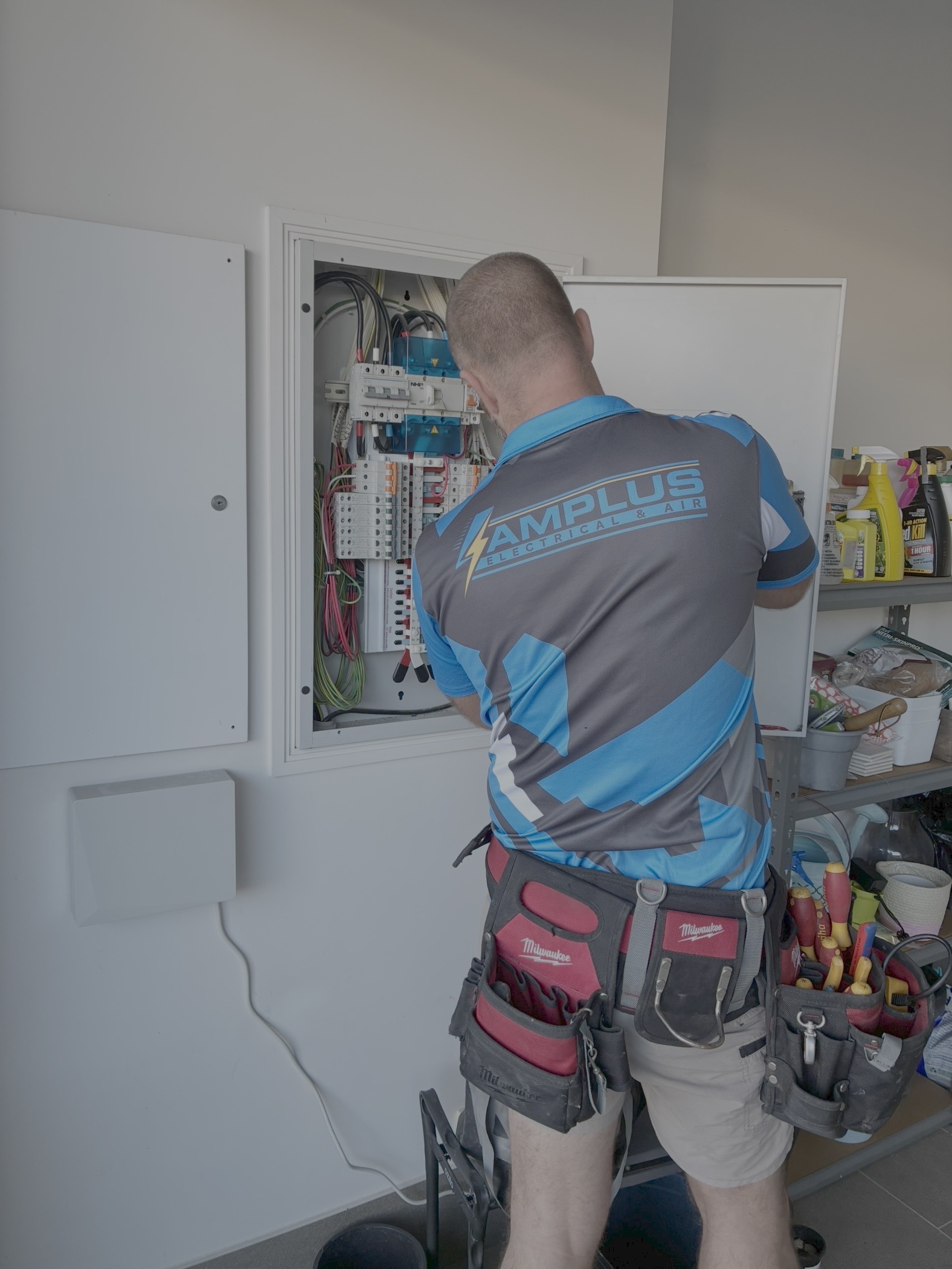
In this guide, I’ll walk you through exactly what causes circuit breakers to trip, how to diagnose the problem yourself, when it’s safe to reset the breaker, and when you absolutely need to call a licensed electrician. I’ll also cover what it costs to fix in Brisbane and how to prevent it from happening again. If you’re dealing with electrical issues, understanding the basics can save you time, money, and potentially prevent a dangerous situation. For more information on electrical safety, check out the Queensland Electrical Safety Office.
What Causes a Circuit Breaker to Trip?
Circuit breakers are designed to protect your wiring from damage and prevent electrical fires. When a breaker trips, it’s doing exactly what it’s supposed to do — cutting power to a circuit that’s unsafe. But understanding why it tripped is the key to fixing it properly.
1. Overloaded Circuit (Most Common)
This happens when you’re drawing more current than the circuit is rated for. A standard Brisbane home has 10-amp circuits for power points and 16-amp circuits for air conditioners and hot water systems. If you’re running a 2.5kW air conditioner, a 2kW kettle, and a 2.4kW oven all on the same circuit, you’re drawing nearly 30 amps on a circuit rated for 16. The breaker trips to prevent the wiring from overheating and catching fire.
Common causes in Brisbane homes:
- Running the air conditioner, oven, and kettle at the same time on the same circuit
- Plugging a high-draw appliance (space heater, pool pump, EV charger) into a general power outlet circuit
- Christmas lights and decorations overloading outdoor circuits
- Older homes with outdated wiring where multiple rooms share one circuit
Real Brisbane example: We recently worked on a home in Capalaba where the homeowner kept tripping the breaker every time they ran the air conditioner and oven together. The solution was installing a dedicated circuit for the air conditioner — $450 total, and no more tripping.
How to check: Look at which appliances are on the affected circuit. If the breaker trips when you turn on a specific device (or combination of devices), you’ve found the overload. The fix is to spread high-draw appliances across different circuits or have an electrician install a dedicated circuit for heavy loads.
2. Short Circuit
A short circuit happens when a live wire touches a neutral wire or ground directly, causing a massive current spike. The breaker trips instantly to prevent damage. Short circuits are dangerous and can cause electrical fires if not fixed immediately.
Common causes:
- Damaged appliance cords (frayed wires, chewed by pets or vermin)
- Loose connections inside power points or light switches
- Water getting into electrical fittings (common in bathrooms and outdoors)
- Wires rubbing together inside walls or switchboards
Short circuits are especially common in older Redlands homes with original wiring from the 1970s or 80s. If your home in Cleveland, Wellington Point, or Birkdale hasn’t had a switchboard upgrade, deteriorating insulation is a likely culprit.
How to check: If the breaker trips instantly when you turn on a specific appliance, that appliance likely has a short circuit. Unplug it and don’t use it until it’s repaired. If the breaker trips with nothing plugged in, you have a wiring fault — call an electrician immediately.
Not sure if your circuit breaker issue is an emergency? Our electrical emergency guide breaks down exactly when to call immediately vs. when to schedule a regular appointment.
3. Ground Fault (Earth Leakage)
A ground fault happens when current escapes the circuit and flows to ground through an unintended path — possibly through you. This is what safety switches (RCDs) are designed to detect. If you have a safety switch, it will trip within milliseconds to prevent electrocution.
Common causes:
- Water ingress in outdoor power points or light fittings
- Damaged insulation on wiring (common in older homes with deteriorating cables)
- Faulty appliances with internal insulation breakdown
- Vermin damage to cables in roof cavities or wall spaces
Ground faults are what safety switches (RCDs) are designed to detect. If you don’t have safety switches on all circuits, you’re at risk of electrocution. Queensland law requires safety switches on all power circuits in homes sold or rented since 1992.
How to check: If the switch that tripped has a “Test” button, it’s a safety switch, not a circuit breaker. The fix is the same — isolate the faulty appliance or call an electrician to find the wiring fault.
4. Faulty Circuit Breaker
Circuit breakers don’t last forever. In Queensland’s humidity, especially in coastal suburbs like Russell Island and Victoria Point, breakers can corrode, weaken, or become overly sensitive. A breaker that trips with no load connected is almost certainly faulty itself.
Signs of a failing breaker:
- Trips with nothing plugged in on that circuit
- Feels warm to the touch
- Makes a buzzing or crackling sound
- Trips more easily over time (used to handle the load, now doesn’t)
- Visible corrosion or discolouration around the switch
If you’re hearing electrical buzzing or humming from your switchboard, power points, or walls, it could be a sign of a serious fault. Read our guide on electrical buzzing sounds and what they mean to diagnose the problem.
If your breakers are more than 20 years old, they may need replacement. During a switchboard upgrade, we replace old breakers with new, reliable ones that meet current Australian Standards.
The fix: A licensed electrician can test the breaker and replace it if needed. In Queensland, replacing a circuit breaker is notifiable electrical work — it must be done by a licensed contractor and reported to the Electrical Safety Office. Don’t attempt this yourself.
How to Diagnose a Tripping Circuit Breaker (Step-by-Step)
Before calling an electrician, run through this diagnostic process. It’ll save time and money by narrowing down the cause.
Step 1: Identify the Affected Circuit
Go to your switchboard and look at which breaker has tripped (the lever will be in the middle or “Off” position). Note which areas of your home lost power — that tells you which circuit is affected.
In Queensland switchboards, circuits are typically labelled:
- Power (general power points)
- Lights
- Air conditioner
- Oven / stove
- Hot water
If your switchboard isn’t labelled, an electrician can map and label it during a visit — it makes future troubleshooting much easier.
Step 2: Unplug Everything on That Circuit
Go room by room and unplug every device on the affected circuit. Don’t just turn them off at the device — unplug them from the wall. This eliminates appliances as the cause.
Step 3: Reset the Breaker
With everything unplugged, push the breaker lever firmly to the “Off” position, then back to “On”. If it stays on with nothing plugged in, the problem is likely a faulty appliance (proceed to Step 4). If it still trips with everything unplugged, you have a wiring fault or a failed breaker — call an electrician.
Step 4: Plug Devices Back In One at a Time
If the breaker held with everything unplugged, start plugging devices back in one at a time. Turn each device on after plugging it in. When the breaker trips, you’ve found the faulty appliance. Leave that device unplugged and get it repaired or replaced.
Step 5: Check for Patterns
If the breaker doesn’t trip immediately but trips after a while (minutes, hours, or days), note the pattern:
- Trips when it rains → moisture ingress in outdoor junction box, light fitting, or underground cable
- Trips at night → timer-activated device (pool pump, outdoor lighting) or peak-load period
- Trips when hot → thermal overload; breaker is heat-sensitive or in a hot roof space
- Trips randomly → intermittent fault; could be loose wiring, vermin damage, or a failing breaker
These patterns are gold for an electrician trying to diagnose the fault. Write them down and share them when you call.
Common Causes in Brisbane Homes
After 15+ years of diagnosing tripping breakers across Brisbane’s Redlands, these four causes account for roughly 90% of the calls we get.
Older Homes with Outdated Wiring
Homes built before the 1990s in suburbs like Cleveland, Wellington Point, and Birkdale often have wiring that wasn’t designed for modern electrical loads. A 1970s home might have a single 10-amp circuit powering multiple rooms — fine when you’re running a few lights and a TV, but not when you add a 2.5kW air conditioner or an EV charger.
If your home has original wiring that’s more than 25 years old, it’s worth getting an electrical safety inspection to check for deteriorating insulation, loose connections, and overloaded circuits.
Air Conditioners on Shared Circuits
In many older Brisbane homes, the air conditioner shares a circuit with other appliances. This was fine when the AC was a small window unit, but modern split systems draw significantly more current, especially on startup. If your AC trips the breaker when it kicks in, you likely need a dedicated circuit installed.
A dedicated circuit costs $350–$600 to install, but it’s cheaper than replacing your switchboard after a fire.
Moisture Ingress in Outdoor Fittings
Brisbane’s humidity and summer storms are brutal on outdoor electrical fittings. If your breaker trips when it rains, water is getting into an outdoor light fitting, power point, or junction box. This is a serious fault that needs professional attention — water and electricity don’t mix.
Common entry points include cracked outdoor light fittings, damaged power point covers, and degraded underground cable insulation. An electrician can identify and seal the entry points before they cause a fire.
Vermin Damage in Roof Cavities
Rats and possums love Queensland roof cavities, and they chew through electrical cables. If your breaker trips randomly or you notice a burning smell, vermin damage could be the cause. An electrician can inspect your roof cavity, repair damaged cables, and recommend pest control measures.
High Humidity and Coastal Corrosion
Brisbane’s bayside suburbs — Capalaba, Cleveland, Wellington Point, Victoria Point — get hammered by humidity and salt air. This accelerates corrosion in switchboards and outdoor fittings, leading to tripping breakers. We see this constantly in homes within 2km of the bay.
EV Chargers on Undersized Circuits
More Brisbane homeowners are installing EV chargers, but many are plugging them into existing circuits that can’t handle the load. A 7kW EV charger draws 30 amps continuously — that’s more than most power circuits are rated for. If you’re installing an EV charger, you need a dedicated 32A circuit.
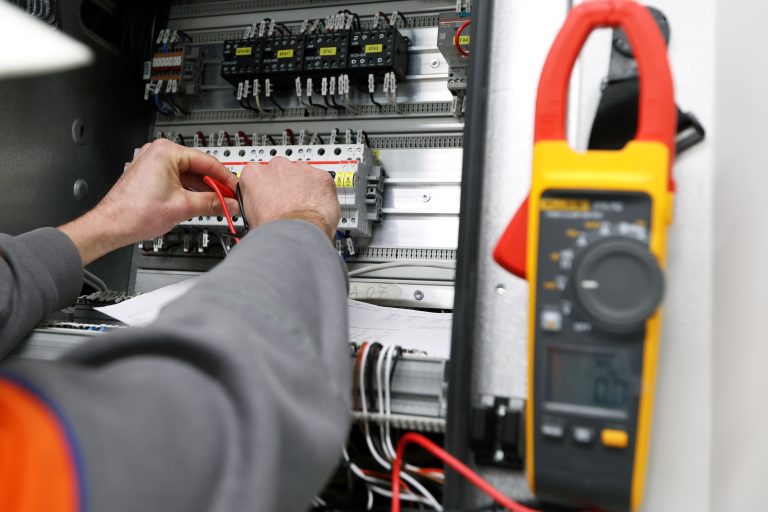
How Much Does It Cost to Fix a Tripping Circuit Breaker in Brisbane?
The cost depends on what’s causing the problem. Here’s what we typically charge in Brisbane:
| Problem | Typical Cost | Time to Fix |
|---|---|---|
| Overloaded circuit (redistribute loads) | $150–$250 | 30–60 minutes |
| Faulty appliance identified | $150 (service call only) | 30 minutes |
| Faulty power point or light switch | $150–$300 | 30–60 minutes |
| Short circuit in wiring | $300–$800 | 1–3 hours |
| Replace faulty circuit breaker | $180–$280 | 30–60 minutes |
| Install dedicated circuit for AC | $350–$600 | 2–4 hours |
| Full switchboard upgrade | $1,200–$2,500 | 1–2 days |
Pro tip: If you’re getting multiple quotes, make sure they include a full switchboard inspection. Some sparkies will quote just for the breaker replacement, but if your switchboard is old, you might need a full upgrade to be compliant. A switchboard upgrade costs $1,200–$2,500 but brings your entire system up to current safety standards.
These are ballpark figures — the actual cost depends on accessibility, the extent of the fault, and whether additional work is needed (like replacing damaged wiring or upgrading your switchboard). Get a quote from Amplus Electrical for an accurate price.
How to Prevent Circuit Breakers from Tripping
Once you’ve fixed the immediate problem, here’s how to reduce the chances of it happening again:
- Spread high-draw appliances across circuits. Don’t run the kettle, microwave, and toaster on the same power point circuit simultaneously.
- Install dedicated circuits for heavy loads. Air conditioners, ovens, EV chargers, and pool pumps should each have their own circuit.
- Replace aging appliances. If a device is more than 10 years old and causing trips, it’s probably cheaper to replace than repair.
- Get your switchboard inspected. If your home is older than 20 years and hasn’t had a switchboard upgrade, book an inspection. Old breakers become unreliable, and you may not have safety switches on all circuits.
- Check outdoor fittings annually. Before winter and storm season, inspect outdoor light fittings, power point covers, and junction boxes for cracks or degraded seals.
- Don’t ignore intermittent tripping. If a breaker trips once a month, it’s not “just being sensitive.” Something’s wrong. Get it checked before it becomes a fire hazard.
- Install surge protection. Lightning strikes and power surges can damage breakers and appliances. A whole-house surge protector costs $300–$500 installed and can save you thousands in damaged equipment.
- Label your switchboard clearly. If you can’t quickly identify which circuit is affected, you’re wasting time (and possibly your electrician’s money). We can label your switchboard during a service call.
Circuit Breaker vs Safety Switch: What’s the Difference?
Many homeowners confuse circuit breakers with safety switches. Here’s how to tell them apart:
- Circuit breaker — Protects the wiring from overload and short circuits. Rated in amps (16A, 20A, 32A). Trips from heat or magnetic force.
- Safety switch (RCD) — Protects people from electrocution. Rated at 30mA sensitivity. Has a “Test” button. Trips from earth leakage.
If the switch that tripped has a “Test” button, it’s a safety switch. If it’s labelled with an amp rating and no test button, it’s a circuit breaker. Both can cause persistent tripping, but the causes and fixes are different. For a deeper dive, read our guide on safety switch installation costs.
Can I Fix a Tripping Circuit Breaker Myself?
Here’s what you can safely do yourself, and what requires a licensed electrician in Queensland.
What You Can Do Yourself
- Reset a tripped breaker (flip it off, then on)
- Unplug devices to isolate a faulty appliance
- Visually inspect power points for burn marks or damage
- Check outdoor light fittings for visible cracks or water ingress
- Reduce load on a circuit by spreading appliances across different power points
What Requires a Licensed Electrician
- Replacing a circuit breaker or safety switch
- Repairing or replacing wiring
- Installing a dedicated circuit for an air conditioner, oven, or EV charger
- Upgrading your switchboard (especially older homes with ceramic fuses or no safety switches)
- Diagnosing wiring faults with test equipment
- Any work in wet areas (bathrooms, laundries, outdoors)
In Queensland, all notifiable electrical work must be done by a licensed electrical contractor and reported to the Electrical Safety Office. This includes replacing breakers, adding circuits, and switchboard upgrades. DIY electrical work is illegal and voids your home insurance. Learn more about what you can and can’t do yourself.
When to Call an Emergency Electrician
Some tripping situations are urgent and need immediate attention. Call an emergency electrician if:
- The breaker trips instantly and won’t reset
- The breaker feels hot to the touch
- You smell burning or see smoke around the switchboard
- The breaker trips after a storm or flooding
- You have a burning smell from a power point or light fitting
- The breaker trips and you can’t identify the cause
If you’re in the Redlands area and need an emergency electrician, we offer same-day service across Capalaba, Cleveland, Wellington Point, Ormiston, Birkdale, Thornlands, Victoria Point, and Redland Bay. Call 0419 014 146 for immediate assistance.
These are signs of a serious fault that could lead to an electrical fire. Don’t keep resetting the breaker — call 0419 014 146 and get an electrician out immediately. For more on emergency situations, read our guide on when to call an emergency electrician.
Case Study: Fixing Persistent Tripping in a Capalaba Home
Here’s a real example from a job we did in Capalaba last month. The homeowner called us because their breaker kept tripping every few days, usually at night. They’d reset it and it would be fine for a few days, then trip again.
What we found: The breaker was feeding an outdoor power point that had water ingress. Every time it rained, moisture got into the fitting and caused a ground fault. The breaker was doing its job — preventing a potential fire or electrocution hazard.
The fix: We replaced the outdoor power point with a weatherproof fitting ($180), sealed the cable entry points, and tested the circuit with an insulation resistance tester. Total cost: $330 including call-out and testing. No more tripping.
The lesson: Intermittent tripping is often a sign of a hidden fault. Don’t ignore it — get it checked before it becomes a serious problem.
For more details, see our guide on circuit breaker issues in rentals.
For more details, see our guide on circuit breaker issues.
Frequently Asked Questions
Why does my circuit breaker keep tripping with nothing plugged in?
If the breaker trips with all devices unplugged, the problem is either a faulty breaker or a wiring fault. A failing breaker can trip from internal wear or corrosion. A wiring fault could be damaged insulation, loose connections, or moisture ingress in a junction box. Both require professional diagnosis and repair.
Can a circuit breaker go bad?
Yes. Circuit breakers can wear out, especially in humid coastal areas like Brisbane’s bayside suburbs. Signs of a failing breaker include tripping with no load, feeling warm to the touch, making buzzing sounds, or tripping more easily over time. A licensed electrician can test and replace faulty breakers.
How do I know if it’s the appliance or the circuit?
Unplug everything on the circuit and reset the breaker. If it stays on, plug devices back in one at a time. When the breaker trips, you’ve found the faulty appliance. If it trips with everything unplugged, the problem is the circuit or breaker itself.
Is it safe to keep resetting a tripping breaker?
Occasionally, yes — if you’ve identified and removed the cause (like unplugging a faulty appliance). But if the breaker keeps tripping with no obvious cause, repeatedly resetting it can mask a serious fault like wiring damage or earth leakage. If it trips more than twice in a row, stop and call an electrician.
Why does my breaker trip when I turn on the air conditioner?
Air conditioners draw high current, especially on startup. If the AC shares a circuit with other appliances, the combined load can exceed the breaker’s rating. The AC might also have a failing compressor, bad start capacitor, or dirty coils causing it to draw excess current. A licensed electrician can check the circuit rating and AC’s current draw to diagnose the issue.
How much does it cost to fix a tripping circuit breaker in Brisbane?
Diagnosis and call-out typically costs $150–$220. Replacing a single breaker runs $180–$280. Wiring fault repairs range from $300–$800+ depending on accessibility. Full switchboard upgrades cost $1,200–$2,500+. Get a detailed quote before work begins.
Do I need a licensed electrician to replace a circuit breaker?
Yes. In Queensland, replacing a circuit breaker is notifiable electrical work that must be done by a licensed electrical contractor and reported to the Electrical Safety Office. DIY electrical work is illegal and voids your home insurance. See the Electrical Safety Office guidelines.
What’s the difference between a circuit breaker and a safety switch?
A circuit breaker protects the wiring from overload and short circuits (rated in amps). A safety switch (RCD) protects people from electrocution by detecting earth leakage (rated at 30mA). If the switch has a “Test” button, it’s a safety switch. Both can cause tripping, but the causes and fixes are different.
Why does my breaker trip when it rains?
Moisture is getting into an outdoor fitting, junction box, or underground cable, causing earth leakage or a short circuit. Common entry points include cracked outdoor light fittings, damaged power point covers, and degraded underground cable insulation. This is a serious fault that needs professional attention — water and electricity don’t mix.
Can I fix a tripping circuit breaker myself?
You can safely reset the breaker, unplug devices to isolate a faulty appliance, and visually inspect power points for damage. But replacing breakers, repairing wiring, installing dedicated circuits, or diagnosing faults with test equipment requires a licensed electrician. In Queensland, all notifiable electrical work must be done by a licensed contractor.
How do I stop my circuit breaker from tripping?
First, identify the cause using the diagnostic steps above. Then: repair or replace faulty appliances, spread high-draw devices across different circuits, install dedicated circuits for heavy loads (AC, oven, EV charger), replace aging breakers, and get your switchboard inspected if it’s older than 20 years. Don’t ignore intermittent tripping — it’s usually a warning of a bigger problem.
Is a tripping circuit breaker a fire hazard?
It can be. The breaker is doing its job by cutting power when it detects a problem. But if the underlying cause is a wiring fault (damaged insulation, loose connections, moisture ingress), that fault can generate heat and potentially start a fire. Don’t ignore persistent tripping — get it diagnosed by a licensed electrician.
How often should circuit breakers be replaced?
Circuit breakers typically last 20–30 years, but in Queensland’s humid coastal climate, they can degrade faster. If your breakers are tripping more frequently, feeling warm, or making noises, they may need replacement sooner. During a switchboard inspection, an electrician can test breaker response times and recommend replacements if needed.
Need a Licensed Electrician in Brisbane?
If your circuit breaker keeps tripping and you can’t identify the cause, call Amplus Electrical & Air. We’re licensed electricians based in Capalaba, working across the Redlands and Brisbane. We’ll diagnose the problem, give you an upfront quote, and fix it properly the first time.
Phone: 0419 014 146
Online booking: Book a free quote
Licence: Electrical Contractor Licence #1500996
We service Capalaba, Cleveland, Wellington Point, Ormiston, Birkdale, Thornlands, Victoria Point, Redland Bay, Sheldon, and all Brisbane suburbs.
For homes still running old ceramic fuses, our ceramic fuse box upgrade guide covers safety risks, compliance issues, and replacement costs across Brisbane.
Need a Licensed Electrician in Brisbane Bayside?
Aaron is a licensed electrician (Lic. 1500996) and ARC-certified A/C technician serving Capalaba, Cleveland, Wynnum, Manly, Birkdale, Thornlands, Victoria Point and surrounding suburbs. Honest advice, upfront pricing, and quality work guaranteed.