Air Conditioning Installers Brisbane — Honest 2026 Guide
In 2026, a Brisbane air conditioning installer needs both a Queensland Electrical Contractor Licence and an ARCtick refrigerant handling licence. Amplus (licence #1500996, ARCtick L183747) installs Daikin, Mitsubishi Electric, Mitsubishi Heavy Industries, Haier and TCL. Splits from $1,400 fully installed, ducted from $10,500.
Quick answer: Air conditioning installers in Brisbane need to hold both a Queensland Electrical Contractor Licence and an ARCtick refrigerant handling licence — the two work together, and legally you can’t install a split or ducted system without both. Aaron at Amplus Electrical & Air is one of the few air conditioning installers in Brisbane holding both credentials in-house (Queensland Electrical Contractor Licence #1500996 and ARCtick Licence L183747). We install Daikin, Mitsubishi Electric, Mitsubishi Heavy Industries, Haier and TCL on a fixed per-job basis with the compliance paperwork included. Split systems run $1,400–$4,500 fully installed, multi-heads $4,200–$8,000+, ducted from $7,500–$22,000+. Free quote, same-week bookings across Brisbane and the Redlands. Call Aaron on 0419 014 146. If you’re comparing air conditioning installers in Brisbane, get a quote from Amplus and see the difference local experience makes. Do your homework: Before getting quotes, check our split system sizing guide so you know what size system you actually need. If you live in the Redlands, check our Redlands suburb-by-suburb guide.
As a licensed air conditioning installers Brisbane homeowners call for everything from quick split replacements to full multi-head system installs, I see the same questions come up week after week. This guide covers what actually matters when you’re choosing someone to put a system in your home.
For a detailed breakdown of what happens on installation day, check our complete process guide.
Look — if you’re Googling “air conditioning installers brisbane” or “air conditioning installers near me brisbane” or “air conditioning installers near me”, you’re probably in one of three camps: the summer just broke and the old unit finally gave up, you’re building or renovating and need a proper install from day one, or you’ve had three quotes and they’re all wildly different and you can’t work out who to trust. I get most of my calls from one of those three situations.
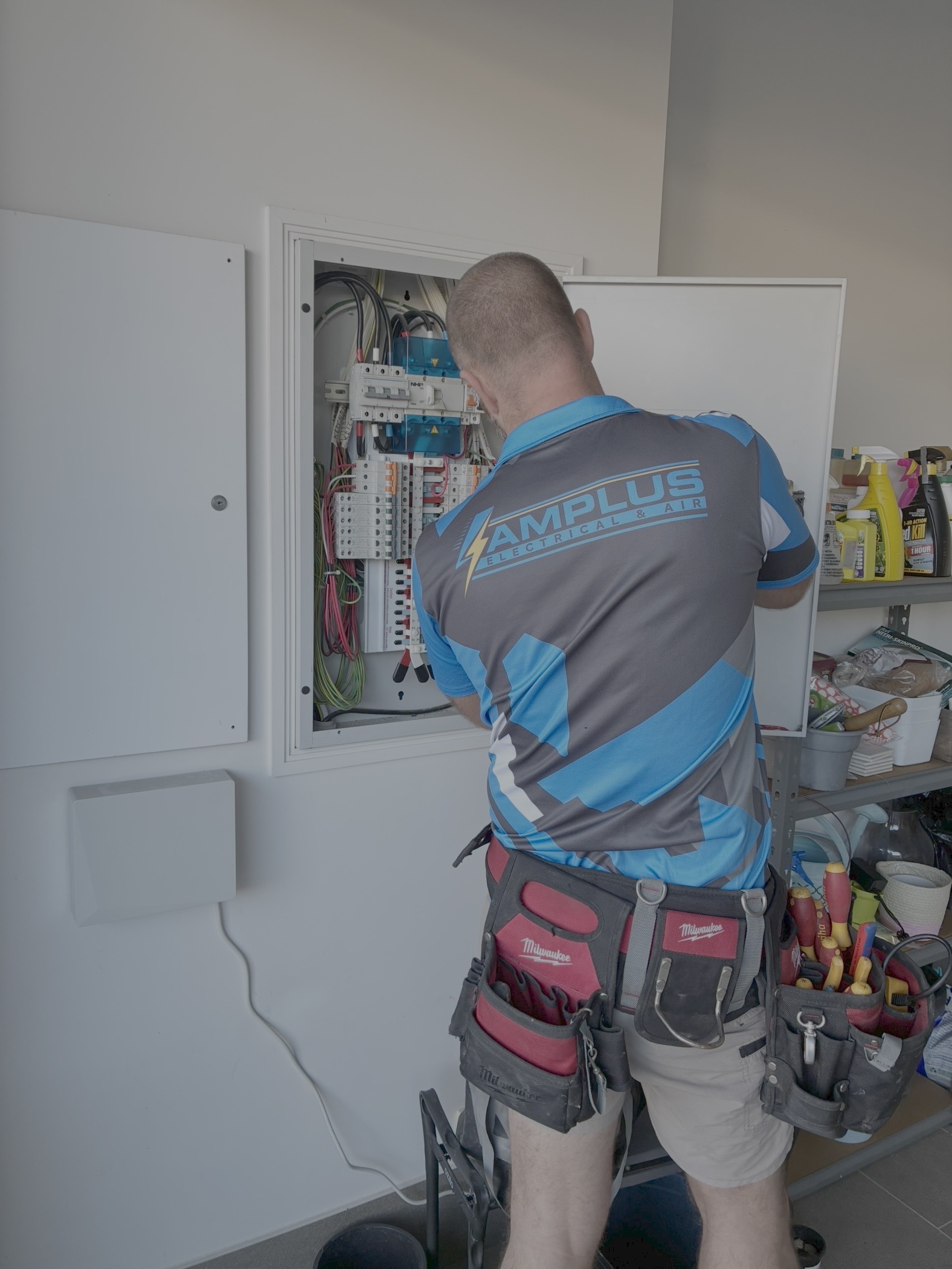
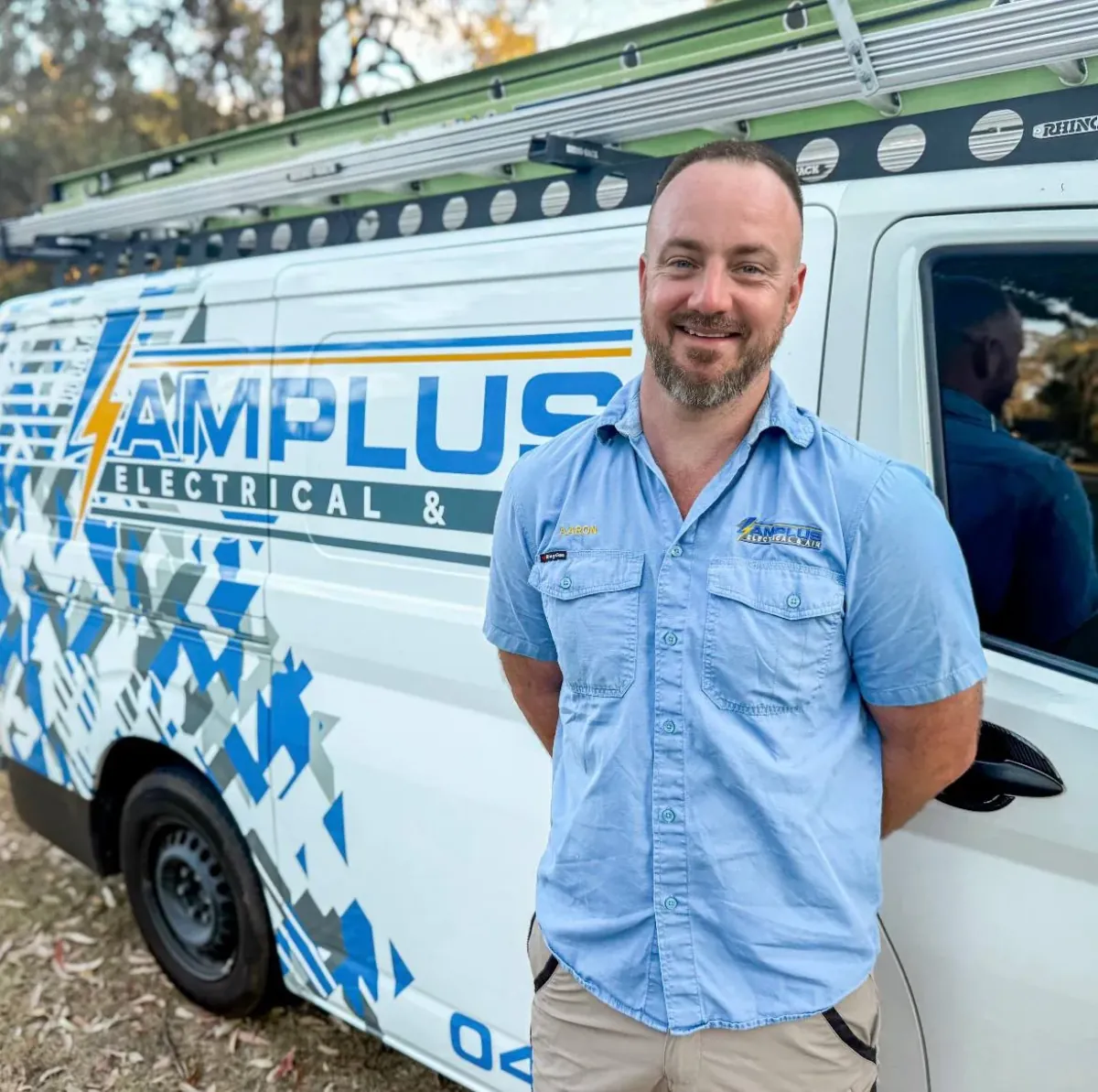
I’m Aaron, I run Amplus Electrical & Air out of Capalaba, and as one of the few licensed air conditioning installers in Brisbane holding both credentials, I’ve fitted more air conditioners across the Redlands and greater Brisbane than I can count at this point. This guide is the honest version of what to look for in an installer, what to avoid, what it actually costs, and why one licence isn’t enough to legally put a split on your wall in Queensland — written so you can make a call in about ten minutes.
For the full 2026 pricing breakdown by system size and home type, head over to our Brisbane air conditioning installation cost guide. If you’re still deciding between split and ducted, the split vs ducted comparison is worth a read before you start ringing installers.
How to Choose the Right Air Conditioning Installers in Brisbane
In short: The right air conditioning installers in Brisbane are Queensland-licensed electrical contractors who also hold a current ARCtick refrigerant licence, quote on a fixed per-job basis, name the exact brand and model in writing, and hand you an Electrical Safety Certificate on the day. If they can’t produce both licence numbers on request, keep looking.
The word “installer” gets used pretty loosely in the air con world. Every second Facebook ad promises “professional installation” but half of them are refrigeration guys with no electrical licence, or electricians with no ARCtick who quietly get someone else to do the gas connection off the books. Neither one is fully legal in Queensland, and both put your warranty and your insurance at risk if something goes wrong.
Here’s what I’d want to see before letting someone install air conditioning in my own home:
- A current Queensland Electrical Contractor Licence number you can verify on the Electrical Safety Office register — the same credential every legitimate air conditioning installers in Brisbane must hold. Ours is #1500996. This covers the 240V circuit work, isolation switch, and connection to your switchboard.
- A current ARCtick refrigerant handling licence. Ours is L183747. This is the federal licence from the Australian Refrigeration Council and it’s legally required to work with the R32 refrigerant that’s in almost every modern split. No ARCtick means they’re breaking federal law every time they cut into a pipe.
- They quote the specific brand, model number, and system capacity in writing before the job starts. “A 7kW split” isn’t a quote — a Daikin FTXV71W is a quote.
- A fixed per-job price that includes the unit, brackets, pipe run up to a stated metre length, drainage, the dedicated circuit, and testing. “We’ll see on the day” almost always means the number goes up on the day.
- You get a signed Electrical Safety Certificate before they leave your driveway. Non-negotiable in Queensland.
- They’re actually Brisbane-based. Not a national call centre dispatching whichever subcontractor is free — those installs are where warranty claims go to die.
Red flags I see all the time
The most common one lately is a “handyman” or unlicensed operator quoting $600 for a full split system install. That’s not legal in Queensland, full stop. The electrical work alone requires a licensed contractor under the Electrical Safety Act 2002, and the refrigerant work requires ARCtick. If they’re offering both for that price, something’s not right — either the licence isn’t real, or the install is going to skip half the compliance steps.
Other things worth walking away from: no written scope of work; the brand keeps shifting between the phone call and the invoice (“we can get you an equivalent”); vague pipe lengths; no isolation switch quoted (mandatory in Queensland); and quotes that “revise upwards” halfway through the job because “the wiring’s harder than expected”. A real quote factors that risk in upfront.
How Much Does Air Conditioning Installation Cost in Brisbane?
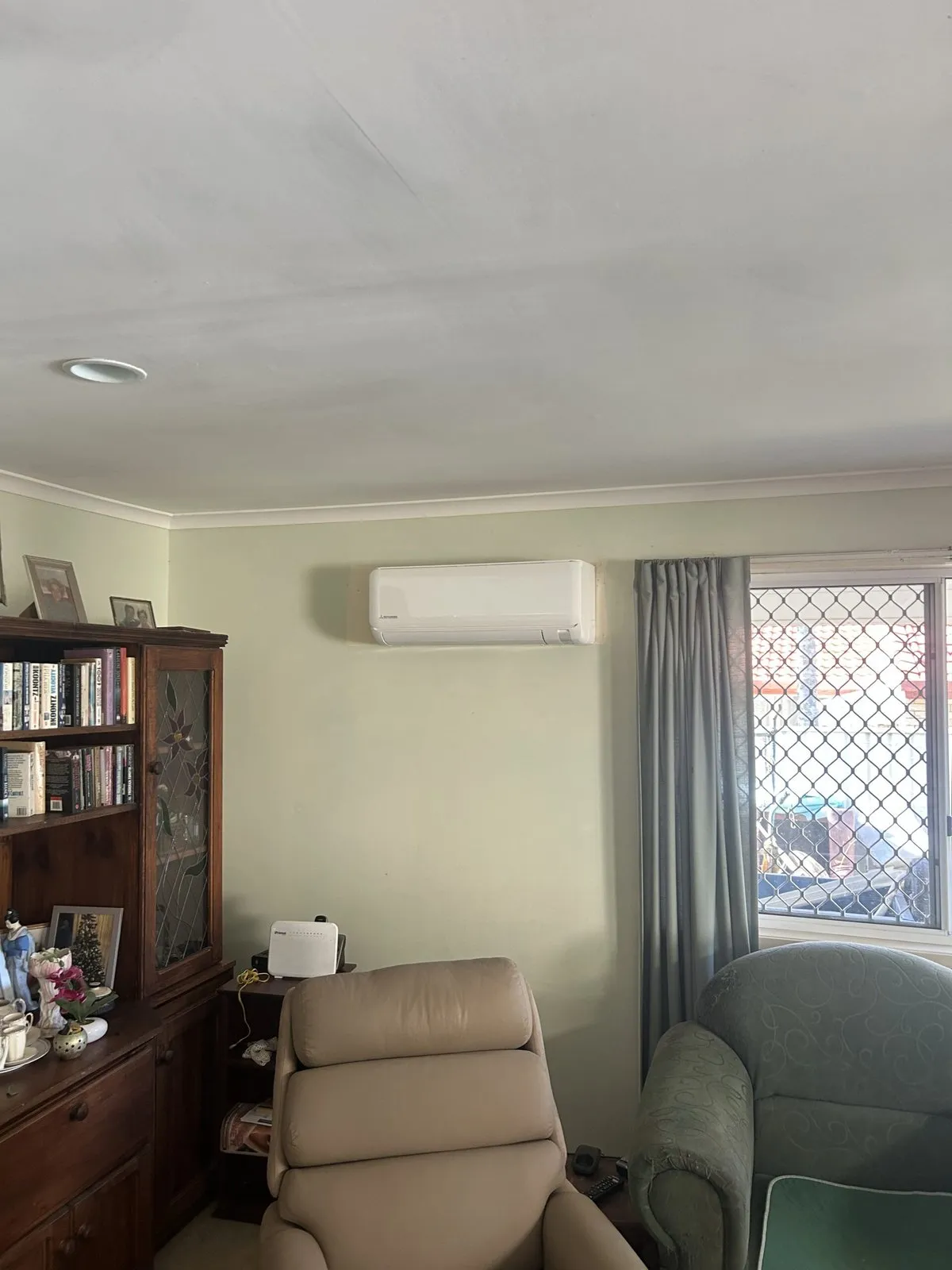
Quick answer: Split system installs in Brisbane run $1,400–$4,500 fully installed depending on capacity and access, multi-head systems $4,200–$8,000+, and ducted systems from $7,500 to $22,000+ depending on home size and zoning. The biggest price drivers are unit capacity (kW), pipe run length, switchboard condition, and whether the roof space is easy to work in.
Here’s the honest 2026 breakdown I quote from:
| System type | Typical capacity | Fully-installed price |
|---|---|---|
| Small split (bedroom / study) | 2.5–3.5 kW | $1,400–$2,200 |
| Medium split (living / master) | 5.0–6.0 kW | $2,200–$3,400 |
| Large split (open plan) | 7.0–8.0 kW | $2,900–$4,500 |
| Multi-head (2–3 indoor units) | 2× 3.5 + 5.0 kW typical | $4,200–$8,000+ |
| Ducted (3 bedroom home) | 10–12 kW | $10,500–$15,000 |
| Ducted (4 bedroom / two-storey) | 14–20 kW | $15,000–$22,000+ |
Those numbers cover about 90% of quotes I write. The ones that land outside the range are almost always older Redlands homes with switchboards that pre-date safety switches — the AC install itself is standard, but the electrical side needs upgrading first before the compliance certificate can be issued. I always quote that separately and honestly, before any work starts. No day-of surprises.
For the full room-by-room breakdown and the reason capacity sizing matters more than brand for your power bill, the air conditioning cost guide goes deeper. And if you’re weighing up whether the switchboard needs an upgrade before the AC goes in, the signs your switchboard needs replacing post is the quick sanity check.
Get a Free On-Site Quote
Fill this in and I'll come back to you within a working day. No obligation, no follow-up sales calls — just a straight quote.
Why You Need Both a Sparkie and an ARCtick Installer (or One Person With Both Licences)
In short: A split system install is legally two jobs in one — the electrical work is regulated by Queensland state law and needs a licensed electrical contractor, and the refrigerant work is regulated by federal law and needs an ARCtick licence. If your installer only holds one, they’re either subcontracting the other (extra cost, split accountability) or cutting corners (illegal).
This is the single biggest thing most homeowners don’t know when they ring around for quotes. That $850 “special” from an unlicensed operator on Facebook Marketplace? It’s cheap because it skips the compliance work — and if your insurer ever investigates a fault, an uncertified refrigerant connection or an unlicensed electrical hookup is the fastest way to have your claim denied.
The way it works at Amplus is simpler because both licences sit with one person. Aaron holds Queensland Electrical Contractor Licence #1500996 for the electrical side, and ARCtick Licence L183747 for the refrigerant side. One quote, one install, one compliance certificate, one point of accountability if something goes wrong three years down the track. That’s the model you want — whether it’s us or someone else.
What ARCtick actually covers
ARCtick is the licensing scheme run by the Australian Refrigeration Council under the federal Ozone Protection and Synthetic Greenhouse Gas Management Act 1989. Any tradesperson who handles refrigerant gas — which includes cutting into the copper pipe that runs between your indoor and outdoor units — must hold a current licence. Modern splits use R32 refrigerant, which has less environmental impact than older R410a but is still tightly regulated. Working without the licence is a federal offence with real fines attached, not a paperwork technicality.
Brands We Install and Why
When you’re comparing air conditioning installers in Brisbane, the brand conversation comes up on every second quote. Here’s my take on what actually matters.
In short: We install and warranty Daikin, Mitsubishi Electric, Mitsubishi Heavy Industries, Haier, and TCL — five brands that between them cover every budget, every home size, and every performance tier we get asked about in Brisbane.
I get asked “which brand is best?” almost daily. The honest answer is that for a properly sized, properly installed system, the differences between the top-tier brands come down to features and warranty, not reliability. Where brand matters most is at the value end of the market — a well-priced Haier or TCL will run beautifully for years if it’s the right size for the room, but the same units get a bad reputation because half the ones out there are undersized for the space they’re cooling. The install matters more than the badge.
For a deeper comparison of the top split system brands to install in Brisbane homes, including warranty terms and real-world performance, check our brand comparison guide.
Daikin
The default premium choice for good reason — Daikin has been building air conditioning longer than almost anyone, and their inverter technology is genuinely a step ahead in efficiency terms. Backed by a 5-year parts and labour warranty on residential splits when installed by an authorised dealer. Best pick if you want the quietest possible unit in a bedroom or study.
Mitsubishi Electric
Neck-and-neck with Daikin at the premium end. Mitsubishi Electric splits handle Brisbane’s humid summer heat exceptionally well and their entry-level MSZ range is a hard system to beat for the money. Also 5-year warranty when installed correctly.
Mitsubishi Heavy Industries
Yes — different company to Mitsubishi Electric, despite sharing part of the name. MHI is the newer of the two here but their multi-head systems are excellent value and the build quality is right up there with the more established brands. Good pick for a whole-home multi-split where you’re fitting three or four indoor units to one outdoor.
Haier
Chinese-owned but manufactured to very tight standards, and now one of the largest AC manufacturers globally. What used to be a budget-brand reputation has genuinely shifted over the last few years — Haier splits are quiet, efficient, and their smart-app integration is one of the better ones. Best pick if you want smart-home control without paying premium-brand prices.
TCL
The value pick. TCL splits do exactly what they’re supposed to do at a price point that puts whole-home cooling within reach for a lot more households. The trade-off is a slightly shorter warranty period and less silent operation than the top-tier brands, but for a rumpus room, granny flat, or investment property, TCL punches well above its weight.
What an Air Conditioning Installation Actually Involves
In short: When you book any air conditioning installers in Brisbane, a standard split install takes 4–6 hours and involves mounting the indoor and outdoor units, running copper refrigerant lines and drainage between them, installing a dedicated electrical circuit and isolation switch, evacuating and charging the refrigerant lines under vacuum, and testing the system across a full run cycle before handing over the compliance paperwork.
Here’s what a good install day looks like from arrival to walk-away:
- Site walkthrough and confirmation. First job is confirming the head unit location, outdoor unit position, and the exact pipe run route between them. Small changes now save big money later.
- Mount the indoor head unit. Wall bracket fitted level, drill through to the outside for the pipe run, indoor unit mounted onto the bracket.
- Run the copper and drainage. Refrigerant lines (a liquid line and a suction line), a communication cable, and a condensate drain all run from indoor to outdoor unit. Neat pipe work here is the difference between a 15-year install and a 5-year one.
- Position and mount the outdoor unit. Concrete pad, wall brackets, or roof mount depending on the site. Level, secure, with enough airflow clearance on all sides.
- Electrical work. Dedicated circuit run from the switchboard, isolation switch fitted next to the outdoor unit (mandatory in Queensland), earthing confirmed, safety switch protection verified.
- Vacuum and refrigerant charge. The pipe run is evacuated with a vacuum pump for 30–45 minutes to remove all air and moisture. Only then are the refrigerant valves opened. Skip this step and the compressor dies within 2 years.
- Commissioning and testing. Full run cycle in both heating and cooling modes, temperature differential checked at the indoor grille, drain water flow confirmed, remote paired.
- Compliance paperwork. Electrical Safety Certificate signed and handed over. Warranty registration on the brand’s website with your details.
Any installer who compresses that into 90 minutes and hands you a keyring is skipping something — usually the vacuum, sometimes the isolation switch. Both are the things that quietly fail 18 months later when it’s out of the manufacturer’s memory.
Why Choose a Brisbane-Based Air Conditioning Installer?
If you’re searching for air conditioning installers in Brisbane, you want someone who knows the local climate, the council requirements, and the types of homes in your area. That’s what a Brisbane-based air conditioning installer brings to every job — local knowledge that impacts how well your system performs and how long it lasts.
In short: Brisbane’s humid subtropical climate, older Queenslander homes, and Redlands sea-air corrosion are all specific challenges that a local installer plans for automatically. Interstate call-centre dispatches often don’t — and it shows up 2–3 years later when the outdoor unit is rusted or the sizing turns out wrong for the room.
A few things local installers factor in without thinking:
- Humidity and sizing. Brisbane summers are humid, not just hot. A properly sized inverter split runs at partial load most of the time, which lets it dehumidify as well as cool. An oversized unit short-cycles and leaves the room cold and clammy. Local installers see this daily; interstate dispatches guess based on room size alone.
- Queenslander homes and timber walls. Older Redlands and inner-Brisbane homes have thin walls, high ceilings, and often no insulation. A 5kW split that would handle a Sydney bedroom won’t do the same job in a Highgate Hill weatherboard. Sizing needs to reflect that.
- Coastal corrosion. If you’re anywhere near the bay — Wynnum, Manly, Cleveland, Wellington Point, Redland Bay, Victoria Point — the outdoor unit needs to be positioned and possibly treated to handle salt air. Some manufacturers offer “coastal spec” models with extra corrosion protection on the coil, and it’s genuinely worth the small premium.
- Same-week warranty callouts. If your unit throws a fault code in year two, you want the person who installed it to be back on your doorstep within 48 hours, not “we’ll dispatch someone next month”.
We cover Brisbane’s inner south, the entire Redlands (Capalaba, Cleveland, Victoria Point, Redland Bay, Wellington Point, Alexandra Hills, Thornlands, Birkdale, Ormiston, Mount Cotton), and the bayside suburbs (Wynnum, Manly, Lota, Chandler, Gumdale, Wakerley, Carindale). If you’re outside that footprint, ring anyway — I’ll be honest about whether we can make it work or point you at someone local who can.
Split vs Ducted — Which Is Right for Your Home?
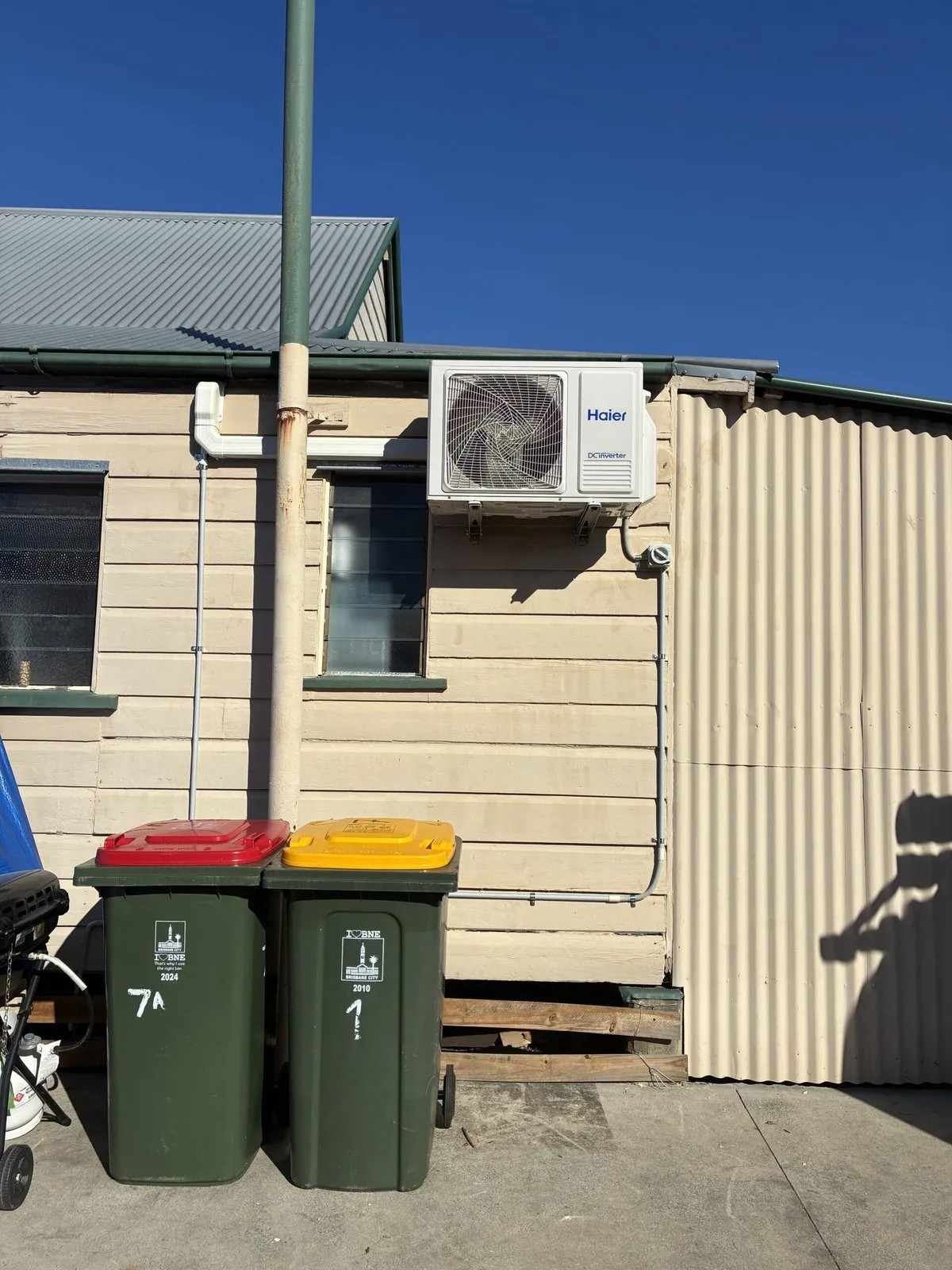
Quick answer: Splits are the right call for cooling one or two specific rooms, or a single open-plan area. Ducted is worth the extra cost when you need consistent temperature across the whole home and you plan to be there long enough to earn the investment back on your power bill.
The short version: splits are cheaper to install, cheaper to run in a single space, easier to service, and easier to replace when the time comes. Ducted costs 3–4× more upfront but disappears into the ceiling, cools the whole home evenly, and (with proper zoning) can run at similar cost to a couple of splits in the rooms you use most.
For most 3-bedroom Brisbane homes, two or three well-sized splits will outperform a poorly-zoned ducted system for a fraction of the price. For homes over about 200m², or for two-storey builds where zoning is easy to plan, ducted usually wins on comfort and resale value.
The split system vs ducted air conditioning guide walks through the decision in detail — power bill comparisons, zoning options, and which system suits which home style.
Queensland Rules and Regulations Your AC Installer Should Know
In short: Queensland AC installs must comply with AS/NZS 3000 (the wiring rules), AS/NZS 5149 (refrigerating systems), and the Electrical Safety Regulation 2013. An isolation switch next to the outdoor unit is mandatory, a dedicated circuit is required for anything over about 2.4kW, and the Electrical Safety Certificate must be issued on the day.
Your installer should be able to answer, in plain English, why each of those requirements exists:
- Isolation switch. Lets a service tech kill power to the outdoor unit before opening it up, without needing to trip the whole home. Non-negotiable in Queensland.
- Dedicated circuit. Big appliances shouldn’t share a circuit with power points and lights. Nuisance tripping, undersized cable heating, all bad news over time.
- Safety switch (RCD) protection. Queensland has required safety switches on power circuits since 1992 and lighting circuits since 2000. Your AC circuit must be RCD-protected. The safety switch testing guide covers the ongoing homeowner responsibilities.
- Electrical Safety Certificate. The document that proves the install meets code. You need it for insurance, for landlord compliance, and for peace of mind. Some installers “forget” to leave it — always ask on the day.
If you’re a landlord fitting AC into a rental, the landlord electrical compliance checklist covers the extra bits you need to have on file for QLD tenancy law. If it’s a renovation, the renovation electrical preparation guide walks through how AC fits into the wider electrical plan (and why doing it during a reno is usually 30% cheaper than retrofitting later).
How to Save Money on AC Installation Without Cutting Corners
In short: The three legitimate ways to save real money on an AC install are: right-size the unit (don’t oversize, don’t undersize), do it during a renovation not after, and choose an installer with fixed pricing so you don’t get hit with day-of surprises. Everything else is either a false economy or an installer cutting corners at your expense.
Right-size the unit
The single most expensive mistake I see is homeowners buying a bigger unit than they need because they think it’ll cool faster. It won’t — it’ll just short-cycle, dehumidify poorly, and cost more upfront and more to run. A properly sized 5kW inverter split will cool a 30m² living room more comfortably than a 7kW unit for the same job, and you’ll save $600–$1,000 on the unit itself. Get the sizing right and everything downstream gets cheaper.
Time it with a renovation
Retrofitting AC into a completed home costs 20–30% more than fitting it during a renovation, because the sparky has to fish cables through finished walls and roofs instead of running them through open framing. If you’ve got a reno coming up, add AC to the electrical scope. See the renovation electrical preparation guide for what to plan for.
Get fixed pricing in writing
Any installer who won’t quote a fixed price before starting the job is telling you the price is negotiable — usually upward, mid-install, when you’re not in a great bargaining position. A real installer walks the site, quotes the pipe run to a stated metre length, and prices switchboard work separately if it’s needed. No surprises.
Things that AREN’T saving money
Going with the cheapest quote is usually the most expensive decision in the medium term. Unlicensed installers, ionisation refrigerant handling, no vacuum step, no isolation switch, no compliance certificate — every one of those “savings” bites you within 2–3 years, usually at the worst possible time. Insurance claims, warranty voids, and premature compressor failure all start here.
Ready to Book an Air Conditioning Installer in Brisbane?
If you’ve been searching for air conditioning installers near me in Brisbane or across the Redlands, let’s cut through the noise and get you a straightforward quote.
In short: Amplus Electrical & Air offers same-week bookings for air conditioning installers across Brisbane and the Redlands. Free written quote before any work starts, fixed per-job pricing, all licences current, Electrical Safety Certificate handed over on the day. Ring Aaron on 0419 014 146, or use the quote form below and I’ll come back to you within a working day.
If you know exactly what you want — brand, size, room — I can usually quote over the phone or from a couple of photos. If it’s more of a “what would you recommend?” call, I’ll come out for a free on-site assessment and walk through the options. No pressure, no follow-up sales calls, no lock-in. That’s it.
📞 Call Aaron: 0419 014 146
Request a Free Quote
Get a Free On-Site Quote
Fill this in and I'll come back to you within a working day. No obligation, no follow-up sales calls — just a straight quote.
Once you’ve chosen your installer, understanding split system running costs guide helps you budget for ongoing expenses.
Frequently Asked Questions About Air Conditioning Installers in Brisbane
Whether you’re comparing air conditioning installers Brisbane-wide or just need a quick answer on what to look for, here are the questions I hear most from homeowners across the Redlands and bayside area.
If you’re still researching air conditioning installers in Brisbane, these answers cover the most common questions I hear from homeowners across the Redlands and greater Brisbane area.
Do I need a licensed electrician to install a split system in Brisbane?
Yes. Under the Queensland Electrical Safety Act 2002, the electrical side of any split or ducted install — the dedicated circuit, isolation switch, and connection to your switchboard — must be done by a licensed electrical contractor. That’s separate from the refrigerant side, which requires an ARCtick licence. Some installers hold both; others sub-contract one side. Either way, both licences must be current for the install to be legal.
What is ARCtick and why does my AC installer need it?
ARCtick is the federal refrigerant handling licence issued by the Australian Refrigeration Council under the Ozone Protection and Synthetic Greenhouse Gas Management Act 1989. Anyone who cuts, joins, or charges refrigerant lines — which includes every split system install — must hold a current ARCtick licence. Amplus Electrical & Air holds ARCtick Licence L183747. You can look up any installer’s ARCtick status on the arctick.org register.
How much does it cost to install a split system in Brisbane in 2026?
Split system installation in Brisbane costs $1,400–$4,500 fully installed depending on capacity. A small 2.5–3.5kW bedroom split runs $1,400–$2,200, a medium 5.0–6.0kW living-area split is $2,200–$3,400, and a large 7.0–8.0kW open-plan split is $2,900–$4,500. Multi-head systems start at $4,200 and ducted systems range from $10,500 to $22,000+ depending on home size and zoning.
How long does a split system installation take?
A standard single-split install takes 4–6 hours from arrival to walk-away, including the vacuum step, commissioning, and paperwork. Multi-head systems take a full day; ducted installs take 2–3 days depending on home size and complexity. Any installer promising a 90-minute job on a full split is skipping steps.
Which brand of air conditioner should I install in Brisbane?
For premium performance and warranty, Daikin and Mitsubishi Electric lead the market. For mid-tier value and multi-head systems, Mitsubishi Heavy Industries is excellent. For smart-home features at a mid-price point, Haier is a strong pick. For genuine budget-friendly installs in secondary rooms or investment properties, TCL is the best value. All five brands are properly warranty-supported in Australia when installed by an authorised licensed contractor.
Do I need an isolation switch for my air conditioner in Queensland?
Yes. Queensland’s electrical wiring rules (AS/NZS 3000) and the Electrical Safety Regulation 2013 require an isolation switch to be installed within sight of the outdoor unit, on a dedicated circuit protected by a safety switch (RCD). Any installer quoting a job without an isolation switch is either unfamiliar with Queensland requirements or planning to cut corners.
Can I install a split system myself if I buy the unit?
No. Both the electrical work and the refrigerant handling require appropriate licences. DIY installs are illegal in Queensland, void almost every manufacturer’s warranty, and are one of the most common reasons for denied home insurance claims after a fault or fire. Buying the unit yourself and hiring an installer to fit it is legal, but many licensed installers won’t do supply-only fits because the warranty and product-fault liability get muddy — always confirm before buying.
What areas of Brisbane does Amplus Electrical & Air service?
We’re based in Capalaba and cover the entire Redlands (Cleveland, Victoria Point, Redland Bay, Wellington Point, Alexandra Hills, Thornlands, Birkdale, Ormiston, Mount Cotton), the bayside suburbs (Wynnum, Manly, Lota, Chandler, Gumdale, Wakerley, Carindale), and Brisbane’s inner south. Outside that footprint, ring anyway on 0419 014 146 and we’ll be honest about whether we can make it work.
What’s included in your fixed-price installation quote?
Our written quote includes the exact brand and model of the unit, all brackets and mounting hardware, up to a stated metre length of copper pipe run, drainage, the dedicated electrical circuit, an isolation switch, refrigerant charge, full commissioning, remote pairing, the Electrical Safety Certificate, and manufacturer warranty registration. Anything outside that scope (e.g. switchboard upgrades on older Redlands homes) is quoted separately and honestly before work starts.
Need a Licensed Electrician in Brisbane Bayside?
Aaron is a licensed electrician (Lic. 1500996) and ARC-certified A/C technician serving Capalaba, Cleveland, Wynnum, Manly, Birkdale, Thornlands, Victoria Point and surrounding suburbs. Honest advice, upfront pricing, and quality work guaranteed.