Home Renovation Electrical Preparation Guide
Planning a renovation? Here's what your electrical actually needs — wiring upgrades, switchboard checks, costs, and the safety boxes you can't skip.
If you’re renovating in Brisbane, the electrical side needs to be planned before demolition starts — not after cabinets, tiles, and plaster are locked in. The big questions are usually the same: will the existing switchboard cope, how many new circuits or power points are needed, and when should the electrician come in so the project doesn’t get held up? For pricing on outlet installation, see our power point installation cost guide.
Get it right from the start and everything flows smoothly. Get it wrong, and you’re looking at expensive rework, failed inspections, and delays that blow out your timeline.
Here’s everything Brisbane and Redlands homeowners need to know about preparing the electrical side of a renovation — from a licensed Capalaba electrician who works on renovation projects every week. If your project also involves older wiring, it’s worth reviewing whether a partial or full rewire should be bundled into the job while the walls are open.
Get an Electrician Involved Early
Get an Electrician Involved Early
If your renovation includes adding or upgrading air conditioning, read our Brisbane air conditioning installers guide first — it covers what licences your installer legally needs, what a fixed-price quote should include, and how to coordinate the electrical rough-in with the rest of your reno.
Understanding split system running costs before your renovation helps you budget for ongoing expenses and choose the right system size.
This is the number one mistake homeowners make: leaving the electrical to the last minute. Your electrician should be one of the first tradespeople you consult — ideally during the planning phase, before walls go up or layouts are finalised. If you’ve just bought a house and are planning renovations, start with a pre-purchase electrical inspection to identify any hidden issues before you commit to the project.
Here’s why early involvement matters:
- Power point and switch placement — hard and expensive to move once plaster is up. Decide now, not later.
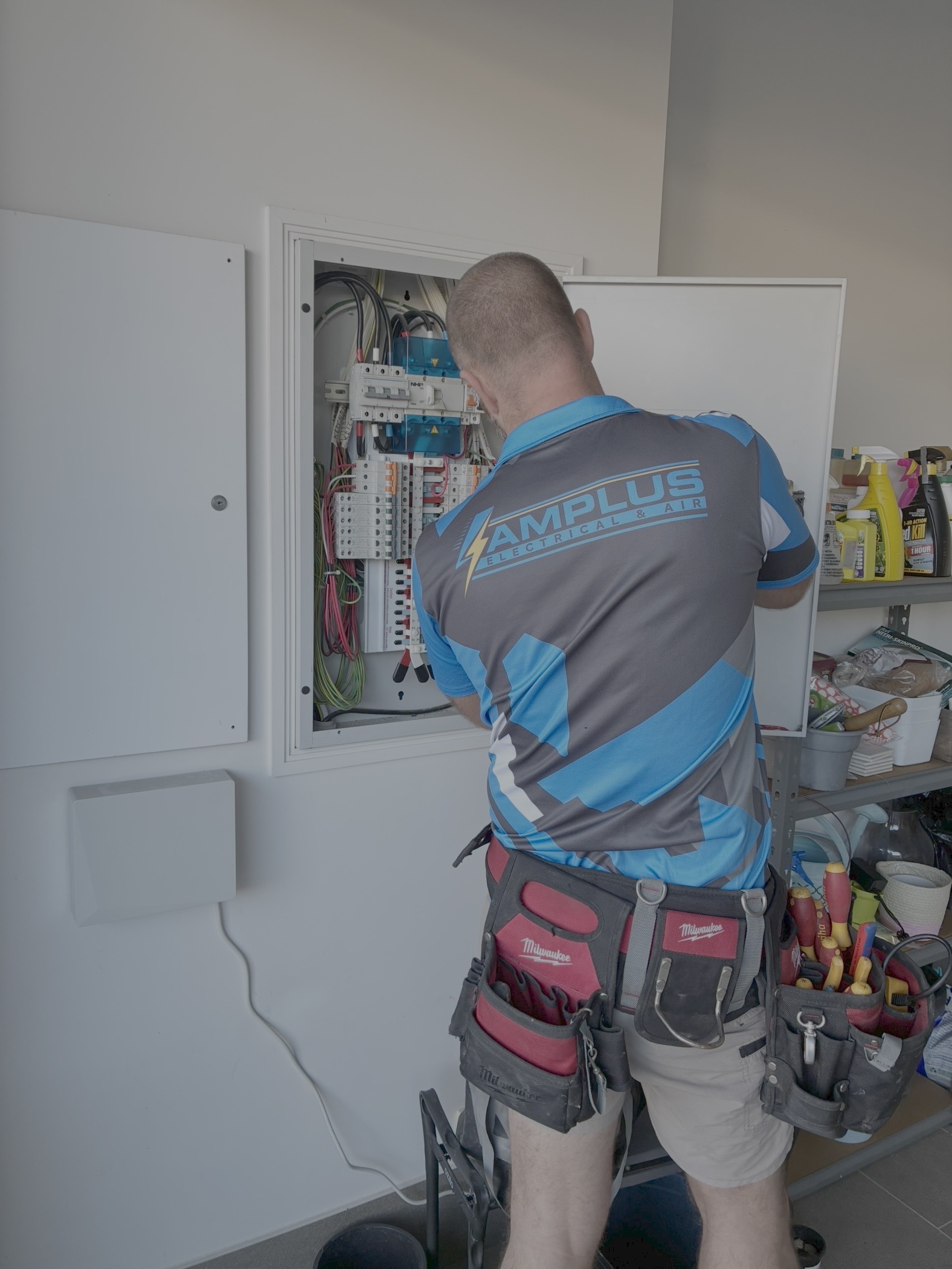
- Switchboard capacity — your existing switchboard may not handle the additional load. Better to find out before demolition starts.
- Lighting design — recessed downlights, pendants, under-cabinet LEDs, and outdoor lighting all need different wiring runs.
- Air conditioning requirements — size, location, and electrical supply need to be planned around the renovation layout.
- Compliance — any renovation that involves electrical work must meet current Australian Standards and Queensland regulations. An electrician can flag compliance issues early.
A 30-minute consultation at the planning stage can save thousands in rework costs later.
Common Electrical Work by Renovation Type
Kitchen Renovations
Kitchens are the most electrically demanding rooms in a home. A typical kitchen renovation involves:
- New power points — more than you think you need. Plan generously. A modern kitchen easily needs 8-12 power points for small appliances, charging stations, and countertop devices.
- Dedicated circuits — ovens, cooktops, and dishwashers each need their own circuit. Induction cooktops draw particularly heavy loads.
- LED lighting — under-cabinet task lighting, pendant lights over islands, and recessed downlights for general illumination.
- Rangehood connection — wiring and sometimes ducting for ventilation.
- Safety switch upgrades — kitchen circuits must have RCD protection.
Budget tip: Kitchen electrical work typically runs $1,500–$4,000 depending on the scope. The “rough-in” phase (running cables before plaster) is the cheapest time to do it. Adding power points after the walls are finished costs 2-3x more per point.
Bathroom Renovations
Bathrooms have strict electrical safety requirements because of water proximity. Queensland and Australian Standards define specific “zones” that dictate where electrical fittings can and can’t be placed:
- Zone restrictions — power points and standard switches cannot be placed within certain distances of showers, baths, and basins. Your electrician knows the exact zones.
- Exhaust fan installation — essential for moisture control in Brisbane’s humidity. Timer or humidity-sensor models are best.
- Heated towel rail wiring — needs a dedicated circuit with appropriate protection.
- Mirror lighting and vanity power points — placement is critical for both aesthetics and compliance.
- Safety switches — mandatory on all bathroom circuits. Non-negotiable.
Budget tip: Bathroom electrical work typically runs $800–$2,500 depending on complexity.
Extensions and Additions
Adding a room, granny flat, or extending your home is the most substantial electrical work you’ll encounter in a renovation:
- New circuits — run from the switchboard to the new space. Multiple circuits for power, lighting, and dedicated loads.
- Switchboard upgrade — almost always required for extensions. Older boards rarely have spare capacity.
- Power, lighting, and data cabling — for the entire new space.
- Air conditioning provision — plan the electrical supply for AC during construction, even if you’re not installing it immediately.
- Ceiling fan provision — add wiring and switching for ceiling fans in new bedrooms and living areas while the walls are open. Our ceiling fan installation cost guide covers typical pricing for the Redlands.
- Smoke alarm additions — new bedrooms require new interconnected alarms to meet Queensland law.
- Electrical inspection and certification — mandatory for all new construction and extensions.
Budget tip: Extension electrical work typically runs $3,000–$8,000+ depending on the size and complexity.
Will Your Switchboard Handle the Renovation?
This is one of the most common issues during renovations. Your existing switchboard may not have enough capacity for the additional electrical load. Signs you’ll need an upgrade:
- No spare circuit breaker positions — if every slot is full, there’s nowhere to add new circuits
- Ceramic fuses instead of circuit breakers — these boards are too old for modern renovations
- Missing or incomplete safety switch coverage — needs addressing as part of any renovation
- Load calculation shows existing supply is at capacity — your electrician will calculate this
A switchboard upgrade during a renovation is more efficient and often cheaper than doing it separately later. The electrician is already on site, the power is already being worked on, and it can be coordinated with the other trades. If you’re unsure whether yours is overdue, compare it against the warning signs in our guide to switchboards that need replacing.
The Renovation Electrical Timeline
Understanding when electrical work happens during a renovation prevents delays:
| Renovation Phase | Electrical Work |
|---|---|
| Planning | Consultation, power point layout, lighting design, switchboard assessment, quote |
| Demolition | Disconnect and make safe existing circuits, remove old fittings |
| Rough-in (before plaster) | Run all new cables, install back boxes, switchboard upgrades, new circuits |
| Fit-off (after plaster/paint) | Install power points, switches, light fittings, fans, appliance connections |
| Final | Testing, certification, handover, smoke alarm compliance check |
The rough-in phase is the most important for electrical planning. Once plaster goes on, adding or moving cables becomes significantly more expensive.
10 Planning Tips for a Smooth Renovation
- Plan power point locations based on furniture layout. Think about where beds, desks, TVs, and kitchen appliances will go. Mark them on your floor plan.
- Add more power points than you think you need. The cost difference between 4 and 6 power points during rough-in is minimal. You’ll thank yourself later.
- Think about lighting layers. Combine general lighting (downlights), task lighting (under-cabinet LEDs), and accent lighting (pendants, wall sconces) for the best result.
- Consider smart home wiring. Even if you’re not going smart now, running extra data cables and neutral wires to switch locations keeps your options open.
- Don’t forget outdoor areas. Decks, patios, and outdoor lighting need power too. Easier to run cables during renovation than after.
- Plan for EV charging. Even if you don’t have an electric vehicle yet, running a cable to the garage during renovation is cheap insurance for the future.
- Book smoke alarm compliance before final inspection. If your renovation involves any wall or ceiling work, it’s the ideal time to bring in a licensed Brisbane smoke alarm installer — running interconnect cables is cheapest during rough-in, and you’ll have your compliance certificate before you hand back to council.
- Budget 10-15% for electrical. Cutting corners on electrical work is the worst place to save money. It’s a safety and compliance issue.
- Use a licensed electrician for everything. All electrical work in Queensland must be done by a licensed electrician. Unlicensed work is illegal, uninsurable, and dangerous.
- Get the quote before demolition starts. Electrical surprises during renovation are expensive. A proper assessment and quote prevents budget blowouts.
- Coordinate with other trades. Your electrician needs to work around the plumber, plasterer, and builder. Schedule the rough-in phase to avoid clashes.
Brisbane-Specific Renovation Considerations
- Queenslander renovations. Highset homes in Capalaba, Alexandra Hills, and surrounding suburbs often have accessible subfloors, making cable runs easier and cheaper. However, the wiring in these older homes is often original and may need partial or full rewiring.
- Queensland humidity and ventilation. Brisbane’s climate makes exhaust fans essential in every bathroom and laundry renovation. Moisture damage from poor ventilation is a common (and expensive) issue.
- Storm season considerations. If your renovation includes exposed or external electrical work, plan around Brisbane’s storm season (October–March). Surge protection is worth adding to your switchboard during the upgrade.
- Council approvals. Major renovations in the Redlands may require Redland City Council approval. Your electrician can advise on what triggers electrical compliance requirements.
Electrical Considerations for Different Room Renovations
Each room in your home has unique electrical requirements. Understanding these helps you plan effectively and avoid costly changes mid-renovation.
Kitchen Renovations
Kitchens are the most electrically demanding rooms in any home. A proper kitchen renovation typically requires:
- Dedicated circuits for major appliances — Your oven, cooktop, dishwasher, and refrigerator each need their own circuit. Sharing circuits risks overloading and tripping breakers.
- Multiple GPO points above benchtops — Modern kitchens need at least 6-8 power points for small appliances, coffee machines, toasters, and charging devices. Position these 150-200mm above the benchtop for convenience and safety.
- Under-cabinet lighting circuits — LED strip lighting under cabinets has become standard. Plan the wiring during the framing stage so cables can be concealed within the cabinetry.
- Island bench power — If you’re adding an island bench, consider floor-mounted or bench-integrated power points. These require floor channel wiring or concealed cable runs.
- Exhaust fan wiring — Rangehoods need dedicated wiring, either ducted to exterior (preferred) or recirculating with carbon filters. Ensure the wiring is accessible for future maintenance.
Bathroom Renovations
Bathrooms require special attention to electrical safety due to the presence of water. Key considerations include:
- Zone-based electrical planning — Australian Standards define specific zones around baths and showers where certain electrical equipment is prohibited or requires special protection. Your electrician will map these zones before any work begins.
- IP-rated fittings — All electrical fittings in wet areas must have appropriate Ingress Protection (IP) ratings. Typically, IP44 minimum for zones near water sources.
- Heated towel rail wiring — These are popular additions but require dedicated circuits. Plan the wiring before tiling so cables can be concealed within walls.
- Extractor fan installation — Essential for preventing mould and moisture damage. Modern fans are quiet and energy-efficient, often with humidity sensors for automatic operation.
- Shaver sockets and GPO points — Position these away from direct water spray zones. Shaver sockets must be the isolated type specifically designed for bathroom use.
Outdoor and Alfresco Areas
Outdoor living spaces are increasingly important in Brisbane’s climate. Electrical planning for these areas should include:
- Weatherproof power points — IP56-rated outlets positioned for outdoor entertainment, charging devices, or powering garden tools. Mount these under eaves or in protected locations.
- Outdoor lighting circuits — Path lighting, deck lighting, and security lighting all require separate circuits with appropriate timers or motion sensors. LED lighting is essential for energy efficiency.
- Ceiling fan wiring for covered areas — If you’re adding a pergola or covered deck, plan the ceiling fan wiring during construction. Ensure the mounting point can support the fan’s weight and vibration.
- Spa or hot tub circuits — These require dedicated circuits with specific RCD protection. The circuit must be isolated and clearly labelled in your switchboard.
Frequently Asked Questions
How much does electrical work cost during a renovation?
It depends on the scope. A bathroom renovation might need $800–$2,500 in electrical work. A kitchen runs $1,500–$4,000. A full extension can be $3,000–$8,000+. The rough-in phase is always cheaper than adding things after walls are finished.
Can I do any electrical work myself during a renovation?
No. All electrical work in Queensland must be performed by a licensed electrician. This includes installing power points, light fittings, switches, fans, and any wiring. The only thing you can do yourself is change a light bulb.
Do I need a switchboard upgrade for my renovation?
Possibly. If your renovation adds significant electrical load (new rooms, air conditioning, induction cooktop) and your switchboard is at capacity or outdated, an upgrade is likely needed. Your electrician will assess this during the planning consultation.
When should I book the electrician?
As early as possible — ideally during the planning phase, before any demolition begins. This allows time for a proper assessment, accurate quoting, and coordination with other trades.
Do I need new smoke alarms after a renovation?
If your renovation adds new bedrooms, you’ll need additional interconnected photoelectric alarms to meet Queensland’s smoke alarm requirements. Even if you’re not adding bedrooms, it’s a good time to upgrade any non-compliant alarms. If your existing alarms are beeping or acting up during the renovation, check our guide to smoke alarm beeping to diagnose the issue before the work starts.
What happens if my renovation doesn’t have an electrical certificate?
All electrical work requires a Certificate of Compliance from the licensed electrician who did the work. Without it, the work is technically non-compliant. This can cause problems when selling the property, making insurance claims, or if an incident occurs.
Can the same electrician handle my air conditioning?
If they’re also ARC-licensed for refrigerant handling, yes. At Amplus, Aaron holds both an electrical licence and an ARC refrigerant handling licence — so electrical and air conditioning work can be done by the same person, saving coordination hassle.
Should I rewire the whole house during a renovation?
Not necessarily. If your renovation only affects one area, rewiring the entire home may be overkill. However, if the existing wiring is old (pre-1980s), damaged, or aluminium, a full or partial rewire during the renovation makes sense. It’s much cheaper to rewire when walls are already open.
Planning a Renovation? Talk to Us First
The best time to involve your electrician is before the renovation starts — not halfway through when you realise the switchboard can’t handle the new kitchen.
Amplus Electrical & Air works with renovators across Capalaba, Alexandra Hills, Cleveland, Thornlands, Wellington Point, Birkdale, Victoria Point, Ormiston, Wynnum, Manly, and surrounding Bayside suburbs.
Aaron is a fully licensed Queensland electrician (Lic. #1500996) and ARCtick-certified air conditioning technician (ARC Lic. #L183747). He can handle your renovation electrical, lighting, switchboard upgrade, and air conditioning — all as one coordinated project.
📞 Call Aaron: 0419 014 146
📅 Book a renovation consultation online
Need a Licensed Electrician in Brisbane Bayside?
Aaron is a licensed electrician (Lic. 1500996) and ARC-certified A/C technician serving Capalaba, Cleveland, Wynnum, Manly, Birkdale, Thornlands, Victoria Point and surrounding suburbs. Honest advice, upfront pricing, and quality work guaranteed.