Split System vs Ducted Air Conditioning — Which Is Right for Your Home?
Split system ($1,500–$3,000 per room) is cheaper for 1–3 rooms. Ducted ($8,000–$22,000+) is better for whole-home cooling in larger homes. Choose based on budget, home size, and how many rooms you actually use.
Split System Air Conditioning — The Basics
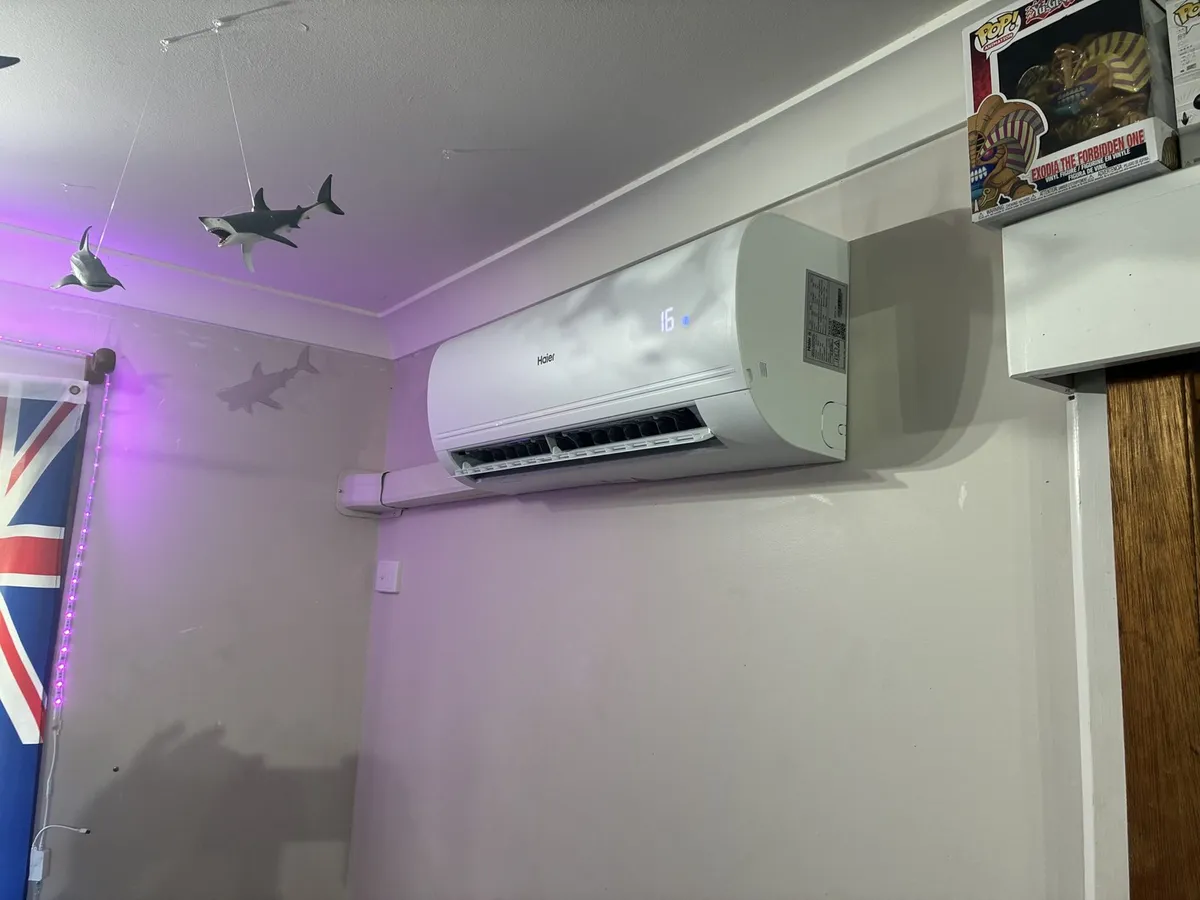
A split system consists of an indoor unit mounted on the wall and an outdoor compressor unit. Each indoor unit cools one room or area. If you want to cool multiple rooms, you install multiple split systems (or a multi-split system with one outdoor unit serving several indoor units). If you live in the Redlands, read our Redlands-specific guide.
See what to expect on split system installation day.
Best for:
- Cooling 1–3 specific rooms
- Smaller homes, apartments, and townhouses
- Homeowners on a tighter budget
- Homes where you don’t need whole-house cooling
- Rentals and investment properties
Ducted Air Conditioning — The Basics
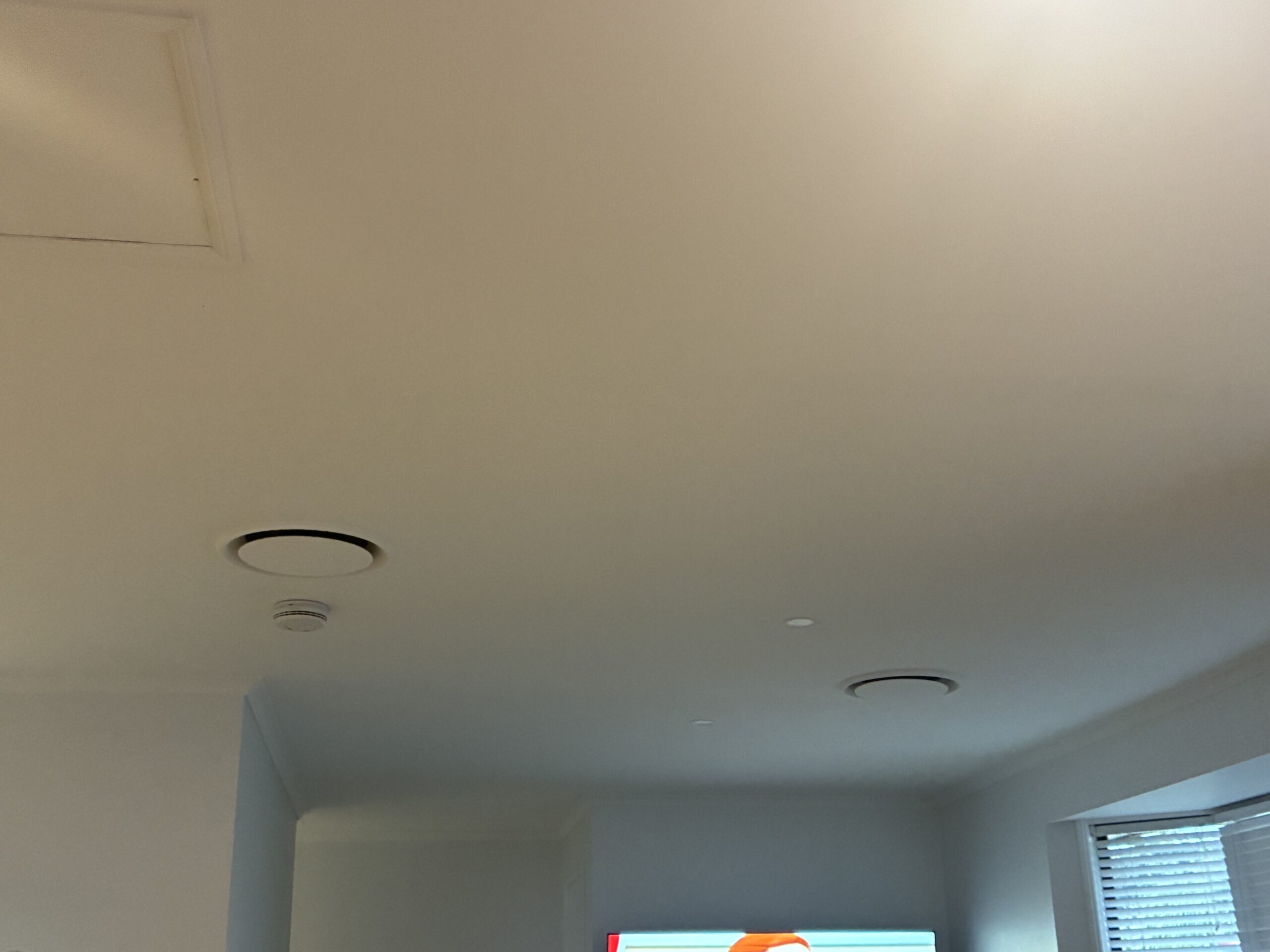
A ducted system has a central unit (usually in the ceiling or under the floor) that distributes cooled or heated air through ducts to every room via ceiling vents. A single system cools your entire home.
Best for:
- Cooling the whole house at once
- Larger homes with 4+ bedrooms
- Homeowners who want a clean, invisible look (no wall units)
- New builds and major renovations
- Families who use most rooms throughout the day
Head-to-Head Comparison
| Factor | Split System | Ducted |
|---|---|---|
| Upfront cost | $1,500 – $3,000 per unit installed | $8,000 – $20,000+ installed |
| Running cost | Lower (only cools rooms in use) | Higher (cools whole home), but zoning helps |
| Coverage | One room per unit | Whole home from one system |
| Appearance | Visible wall-mounted unit in each room | Hidden — only ceiling vents visible |
| Installation time | 2–4 hours per unit | 1–3 days for a full system |
| Installation disruption | Minimal | Significant (ceiling access needed) |
| Zoning | Each unit is its own zone | Zone controllers available (at extra cost) |
| Heating | Reverse cycle (most models) | Reverse cycle (most models) |
| Lifespan | 10–15 years | 15–20 years |
| Maintenance | Filter cleaning + professional service | Filter cleaning + professional service + duct inspection |
| Resale value | Neutral (buyers expect it) | Positive (buyers pay more for ducted) |
Cost Breakdown for Brisbane Homes
Here’s what Brisbane homeowners typically pay for each option:
Split System Costs
| Room Size | Unit Size | Typical Cost (Installed) |
|---|---|---|
| Small bedroom (up to 20m²) | 2.5kW | $1,200 – $1,800 |
| Standard bedroom / study (20–35m²) | 3.5kW | $1,500 – $2,200 |
| Living area (35–50m²) | 5.0–7.0kW | $2,000 – $3,000 |
| Large open plan (50–65m²) | 7.0–8.5kW | $2,500 – $3,500 |
Ducted System Costs
| Home Size | System Size | Typical Cost (Installed) |
|---|---|---|
| Small home (2–3 bedrooms) | 7–10kW | $8,000 – $12,000 |
| Medium home (3–4 bedrooms) | 10–14kW | $10,000 – $16,000 |
| Large home (4–5 bedrooms) | 14–20kW | $14,000 – $22,000 |
For a detailed breakdown of split system costs in Brisbane, see our split system installation cost guide.
Running Costs — What to Expect in Brisbane’s Climate
Brisbane’s hot summers and mild winters mean air conditioning is a major household expense. Here’s how the running costs compare:
Split System Running Costs
- Summer (night use in 1–2 bedrooms): $20–$40 per month extra on your power bill
- Summer (daytime living area + night bedrooms): $60–$120 per month extra
- Winter reverse-cycle heating: $10–$30 per month extra (intermittent use)
Ducted Running Costs
- Whole home (all zones active): $120–$250 per month extra in peak summer
- Single zone (e.g. bedrooms only at night): $40–$80 per month — comparable to running 1–2 split systems
- Winter heating (zonal): $30–$60 per month
Zoning makes a huge difference with ducted systems. If you zone off unused areas (guest bedrooms, formal dining), your running costs stay manageable. Without zoning, you’re cooling the whole house every time.
A well-zoned ducted system costs roughly the same to run as 2–3 split systems running simultaneously. If you’d run more than 3 splits, ducted can actually be cheaper to operate.
Pros and Cons at a Glance
Split System Pros & Cons
| Pros | Cons |
|---|---|
| Low upfront cost — start with one room | Wall-mounted units in every room (visible) |
| Cheap to run if you only use 1–2 rooms | Multiple outdoor units can clutter your exterior |
| Quick installation — 2–4 hours per unit | Each room needs its own remote and controls |
| Easy to add later — no major retrofitting | Ceiling cassette or ducted options not available |
| Less disruptive to install | Lower resale value compared to ducted |
Ducted System Pros & Cons
| Pros | Cons |
|---|---|
| Whole-home cooling from one system | High upfront cost — $8,000–$22,000+ |
| Clean, invisible look — only ceiling vents | Expensive to retrofit in existing homes without ceiling access |
| Zone control lets you cool specific areas | Installation takes 1–3 days, significant disruption |
| Single wall controller — simple to use | Running costs higher than 1–2 split systems |
| Adds resale value — buyers prefer ducted | Duct maintenance needed (dust, leaks, insulation) |
| Quieter indoors — no indoor unit noise | Takes longer to cool down if zoning is active |
Brisbane-Specific Considerations
Brisbane’s subtropical climate and building styles affect which system works best for you: Once installed, check our Brisbane summer prep guide for your aircon.
Queenslander Homes
Traditional Queenslanders typically have high ceilings, timber floors, and limited ceiling access. Ducted systems require significant ceiling space for the ductwork, which many Queenslanders don’t have. Unless you have a raised Queenslander with underfloor access or a renovated ceiling cavity, split systems are usually the practical choice. Modern split systems are also popular for home renovations where whole-of-house rewiring isn’t on the cards.
Modern Brick and Tile Homes
Homes built from the 1990s onwards generally have sufficient ceiling space for ducted systems. If you own a newer home in suburbs like Capalaba or Thornlands, ducted air conditioning is worth serious consideration — especially if you plan to stay in the home long-term. The return on investment over 10–15 years is strong when multiple rooms need cooling.
Brisbane’s Urban Heat Island Effect
Inner-city suburbs like East Brisbane, Woolloongabba, and Kangaroo Point experience higher ambient temperatures due to urban density. Homes in these areas tend to need more cooling capacity, which can tilt the scales toward a properly sized ducted system with zoning rather than multiple undersized split units that struggle on 38°C+ days. Getting the size right: Before choosing between split and ducted, make sure you know what size system your space needs. Check our split system sizing guide first.
Which One Should You Choose? A Decision Framework
Answer these questions to find your match:
Choose Split System Air Conditioning If…
- You only need to cool 1–3 rooms
- Your home is a Queenslander, apartment, or unit
- You’re on a tight budget — start with one room and add more later
- You’re renting or don’t plan to stay more than 3–5 years
- You want the lowest possible power bill for occasional cooling
- Different household members want different temperatures in their rooms
- You’re adding cooling to an existing home without a renovation
Choose Ducted Air Conditioning If…
- You want to cool 4+ rooms or your whole home
- You own a modern home with good ceiling access
- Aesthetics matter — you don’t want wall units in your living spaces
- You’re building a new home or doing a major renovation
- You plan to stay in your home for 7+ years
- You want to increase your home’s resale value
- Energy efficiency with zoning is important to you
Consider a Hybrid Approach
Some homeowners choose a ducted system for the main living areas and a small split system in a separate granny flat, studio, or garage. This gives you the best of both worlds — whole-home comfort where it matters, and cost-effective zonal cooling for separate structures.
Installation Considerations for Brisbane Homes
Switchboard Capacity
Before installing any air conditioning system, check your switchboard capacity. Many older Brisbane homes in suburbs like Wynnum and Manly have original fuse boxes or outdated switchboards that can’t handle the load of modern air conditioning. A switchboard upgrade costs $800–$2,500 and might be needed regardless of which system you choose.
Electrical Safety and Compliance
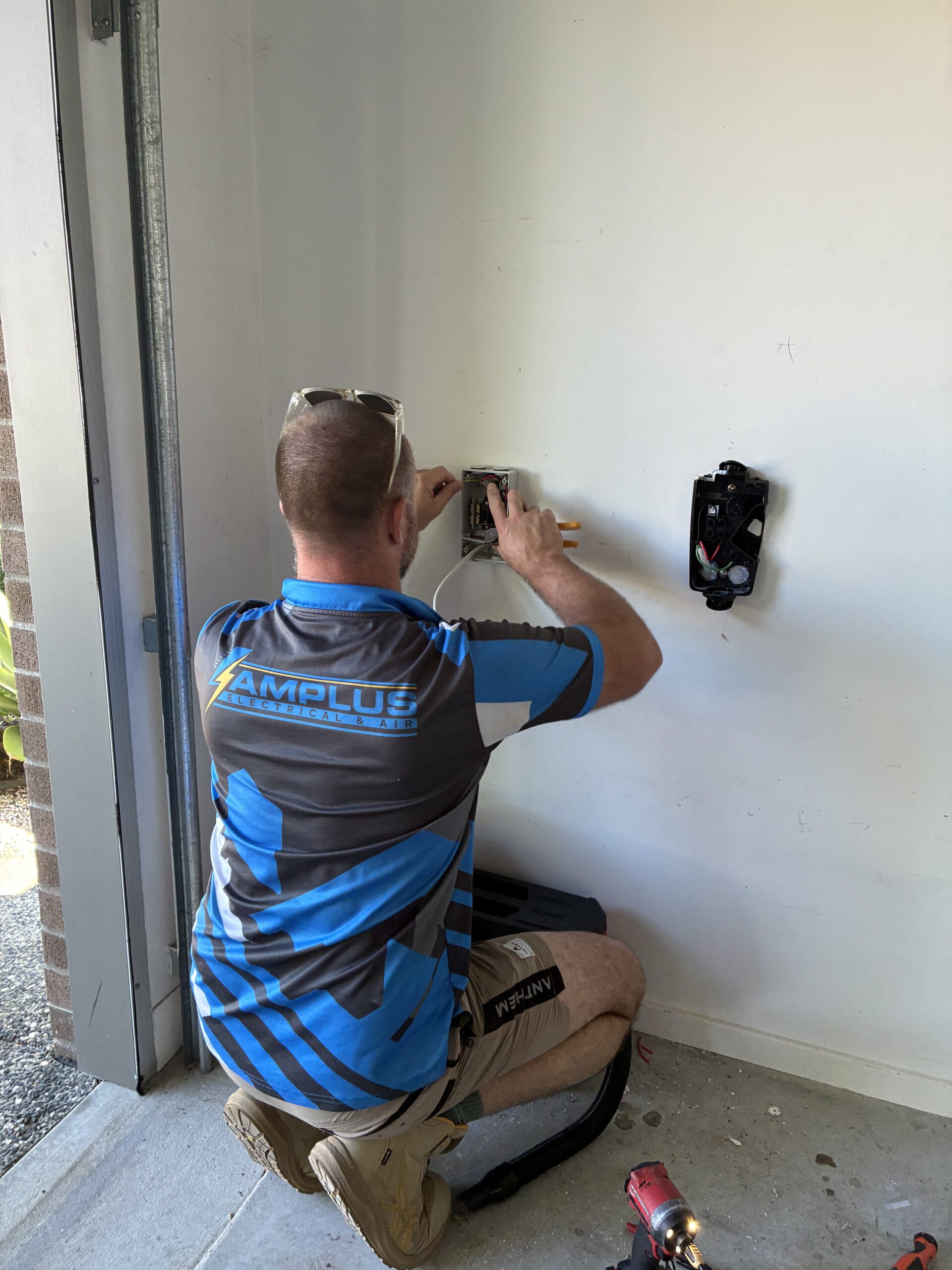
All air conditioning installations in Queensland must be done by a licensed electrician with an ARCtick licence (Refrigerant Handling Licence). This isn’t a DIY job. Incorrect installation can void warranties, create fire risks, and damage your compressor. Aaron holds both licences and is fully insured.
Council Approvals
In Brisbane, most split system and ducted installations don’t require council approval as long as the outdoor unit meets noise regulations (Brisbane City Council noise laws). However, if you’re in a heritage-listed home or a body corporate complex, check with your body corporate or council first. Outdoor units must be at least 1.5m from property boundaries in most cases.
Frequently Asked Questions
Is ducted air conditioning worth the extra cost in Brisbane?
Yes, for larger homes (4+ bedrooms) where you plan to stay long-term. Ducted air conditioning adds to your home’s value and provides whole-home comfort. For smaller homes, the extra cost is harder to justify — multiple split systems are often more practical.
Can I install a split system in a Queenslander home?
Absolutely. Split systems are actually the most common choice for Queenslanders. The indoor unit mounts on an internal wall, and the pipework runs externally or through the underfloor area. Just make sure the outdoor unit is securely mounted away from the timber structure.
How long does ducted air conditioning take to install?
A standard ducted installation takes 1–3 days depending on the size of the home and complexity of the ceiling access. Split systems take 2–4 hours per unit. Your specific timeline depends on switchboard requirements, duct routing, and whether any structural work is needed.
Which is cheaper to run — split system or ducted?
If you only run 1–2 split systems, they’re cheaper than ducted. If you’d need 4+ split systems running simultaneously to cool your home, ducted with zoning can be more cost-effective. The key variable is how many rooms you actually cool at once.
Can ducted air conditioning be retrofitted into an existing home?
Yes, but it’s more expensive and disruptive than installing during a build. The installer needs to run ductwork through ceiling cavities, which may require cutting access panels and patching ceilings afterward. Homes with tile roofs are easier to retrofit than those with tin roofs due to insulation and access constraints.
What size split system do I need for a standard Brisbane bedroom?
Most standard Brisbane bedrooms (15–25m²) need a 2.5–3.5kW split system. Master bedrooms or larger rooms may need 5.0kW. Ceiling height, window orientation, and insulation quality also affect the sizing. A site visit from a licensed installer gives you the exact recommendation.
Does split system or ducted air conditioning require a switchboard upgrade?
It depends on your current switchboard. Many Brisbane homes, especially those over 20 years old, have switchboards that can’t handle the additional load of air conditioning. A switchboard upgrade is often required for ducted systems (which draw more power) and may be needed for multiple split systems as well.
Can I use the same ducted system for both heating and cooling?
Yes, most modern ducted systems are reverse-cycle, meaning they provide both cooling in summer and heating in winter using the same ductwork. This is especially useful in Brisbane where winter mornings can be cold but you don’t want a separate heating system.
How do I maintain my air conditioning system?
Split systems need filter cleaning every 4–6 weeks in summer and a professional service every 12 months. Ducted systems need the same filter maintenance plus annual duct inspections for leaks, dust buildup, and insulation degradation. Regular servicing keeps efficiency high and prevents breakdowns on hot days.
Which Redlands suburbs do you install air conditioning in?
Aaron covers Capalaba, Cleveland, Wynnum, Manly, Birkdale, Thornlands, Victoria Point, Alexandra Hills, Ormiston, Wellington Point, Redland Bay and surrounding suburbs. Call 0419 014 146 for a quote on any split system or ducted installation.
Energy Efficiency — Star Ratings and What They Mean for Your Power Bill
Every air conditioning system sold in Australia carries a Zonal Energy Rating Label (ZERL) showing a star rating from 1 to 10 stars. The more stars, the more energy-efficient the system. For Brisbane homes running aircon 4–6 months of the year, choosing a higher-rated unit pays for itself within 2–3 years.
Split System Energy Efficiency
Modern inverter split systems achieve very high star ratings (4–6 stars typically) because they only cool one room at a time. Since you’re not wasting energy on unoccupied spaces, the actual real-world efficiency is excellent. A 3.5kW split system with a 5-star rating uses roughly 40–60% less power than an older non-inverter unit.
Key efficiency features to look for: inverter compressor (variable speed), DC fan motor, programmable timer, sleep mode, and Wi-Fi control for remote scheduling. Brands like Daikin, Mitsubishi Electric, and Fujitsu offer excellent inverter split systems for Brisbane conditions.
If you’re comparing options, our guide to the best split system brands on the market breaks down warranty, noise levels, and efficiency across the top picks for Brisbane.
Ducted System Energy Efficiency
Ducted systems have improved dramatically in the last decade. A modern 14kW ducted system with 6-star inverter technology and zoning can achieve similar real-world efficiency to running 2–3 split systems. However, the overall system star rating is often lower than a single split system because ducted systems have inherent energy losses from ductwork (heat gain/loss through the ducts themselves).
Insulated ductwork, proper sealing, and zoning controls are essential for energy-efficient ducted operation. Without zoning, you’re cooling your entire home every time the system runs. With zoning, you only cool the areas you’re actually using, which closes the efficiency gap with split systems significantly.
What This Means for Brisbane Homeowners
In Brisbane’s climate, the difference between a 3-star and 5-star system on your power bill is roughly $100–$200 per year for a medium-sized unit. Over a 10-year lifespan, that’s $1,000–$2,000 in savings. Always check the ZERL label before purchasing, and ask your installer about the highest-rated models within your budget.
Brisbane’s subtropical summer means your aircon runs hard from November through March. The efficiency you choose today affects every summer bill for the next decade. Don’t just buy the cheapest unit upfront — buy the one with the best lifetime cost.
Zoning Deep Dive — How Ducted Zoning Actually Works
Zoning is the single most important feature for managing ducted system running costs in a Brisbane home. Here’s how it works and what you should know before buying.
A typical zoning system divides your home into zones (e.g., bedrooms zone, living zone, study zone). Motorised dampers inside the ductwork open or close based on which zones you’ve selected on the wall controller. A 3-zone system might cost an extra $800–$1,500 installed, but it pays for itself in reduced running costs within 1–2 years.
What to Zone in a Typical Brisbane Home
- Zone 1: Living areas (lounge, dining, kitchen) – used most in daytime
- Zone 2: Bedrooms – used at night, can be set to a cooler temp while living zone is off
- Zone 3: Study/rumpus/guest rooms – occasional use only, zone off when not occupied
Many modern ducted systems also support smart zoning via Wi-Fi controllers. This lets you adjust zones from your phone, set schedules, and even use geofencing (system knows when you’re coming home and pre-cools the right zones). Brands like Daikin, Mitsubishi Heavy, and ActronAir offer excellent smart zoning options popular in Brisbane.
One gotcha: zoning only works well if your system is properly sized. An undersized ducted system running on a single zone can freeze up or short-cycle. This is why a proper heat load calculation from a licensed installer is essential before buying any ducted system.
Noise Considerations — What to Expect from Each System
Noise is a surprisingly common factor in choosing between split and ducted systems, especially in quiet Brisbane suburbs.
Split System Noise
Indoor units produce a gentle whoosh sound that’s typically 19–45 dB depending on fan speed setting (19 dB = whisper quiet, 45 dB = normal conversation level). Most people find it fine for sleeping once the fan is set to low. Outdoor units at full compressor speed produce 50–65 dB, which can be noticeable if the unit is near a bedroom window or neighbour’s fence.
Tip: Position the outdoor unit away from bedroom windows and property boundaries. Brisbane City Council noise regulations require outdoor units to operate within certain decibel limits after 10pm on weekends.
Ducted System Noise
Ducted systems are quieter indoors because the noisy components (compressor, fan) are outside or in the ceiling cavity. You’ll hear a soft whoosh from ceiling vents, typically 20–35 dB at normal fan speed. The outdoor unit noise is similar to split systems (55–65 dB), but since there’s only one unit, you only have one noise source to manage.
Note for ducted: Poorly installed or under-insulated ductwork can whistle or rattle. This is uncommon with a quality installer but worth asking about. Always use an ARCtick-licensed installer who understands proper duct sealing.
Warranty Comparison — What’s Covered and for How Long
| Component | Split System (Typical) | Ducted System (Typical) |
|---|---|---|
| Compressor | 5–7 years (varies by brand) | 5–7 years |
| Parts | 1–5 years | 1–5 years |
| Installation workmanship | Varies by installer | Varies by installer |
| Ductwork | N/A | 1–5 years (varies) |
Aaron offers a full workmanship guarantee on all installations. Always ask about warranty terms before choosing an installer — some brands require annual professional servicing to keep the warranty valid.
Smart Home Integration — Controlling Your Air Conditioning
Both split and ducted systems increasingly offer smart home features. Here’s what to expect in 2026:
- Split system: Many brands offer Wi-Fi controllers (built-in or add-on). Control via app, set schedules, monitor energy usage. Add-on Wi-Fi kits cost $150–$300.
- Ducted system: Most modern systems include a central touchscreen controller with scheduling. Smart Wi-Fi controllers add $400–$1,000 but give you full zone control, energy monitoring, and app access.
- Voice control: Both types work with Google Home and Amazon Alexa with the right controller.
- Geofencing: Higher-end ducted controllers can detect when you’re on your way home and pre-cool the right zones. A great feature for Brisbane’s hot afternoons.
Related Articles
- Split System Installation Cost Brisbane — Detailed cost guide for split system installations
- Ducted Air Conditioning Installation — What to expect from a ducted install
- Electrical Mistakes to Avoid When Renovating — Wire for aircon before closing up walls
- Signs Your Switchboard Needs Replacing — Check capacity before booking an install
- Air Conditioning Service & Maintenance — Keep your system running efficiently
- Pre-Purchase Electrical Inspection Checklist — Know what you’re getting into
- Air Conditioner Installation Cost Brisbane 2026 — Comprehensive pricing guide for all systems
Article updated: July 2026. All pricing is indicative and subject to site inspection. Contact Amplus Electrical & Air for a firm quote.
Need a Licensed Electrician in Brisbane Bayside?
Aaron is a licensed electrician (Lic. 1500996) and ARC-certified A/C technician serving Capalaba, Cleveland, Wynnum, Manly, Birkdale, Thornlands, Victoria Point and surrounding suburbs. Honest advice, upfront pricing, and quality work guaranteed.